You have not yet added any article to your bookmarks!
Join 10k+ people to get notified about new posts, news and tips.
Do not worry we don't spam!
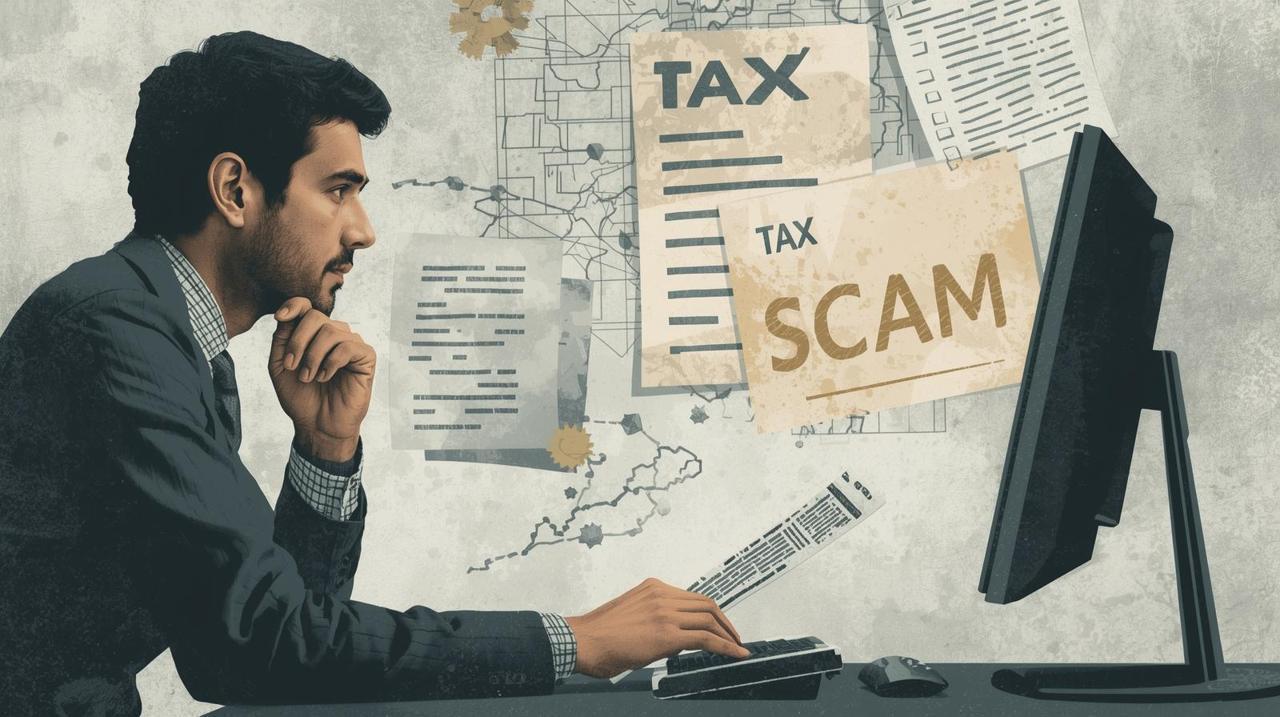
Post by : Samjeet Ariff
As tax scams grow increasingly advanced, fraudsters leverage technology to pose as government entities, siphoning personal data and misleading individuals into making fraudulent payments. With a surge in digital communications and online storage of financial data, the risk of email scams, fake calls, deepfake recordings, and deceptive refund schemes is at an all-time high. To combat this threat, AI-driven fraud detection tools are emerging as an essential defense mechanism. This guide delves into the mechanics of contemporary tax scams, illustrates how AI can identify them, and provides practical measures for staying secure throughout tax season.
Cases of tax fraud are escalating as scammers swiftly adapt to digital channels.
A rise in online tax submissions.
Lack of public awareness regarding new fraudulent tactics.
The use of deepfake voice technology and AI-generated emails by criminals.
Insufficient verification practices by taxpayers.
As traditional detection methods fall short, advanced solutions are necessary for personal protection.
Recognizing the various scams is your first line of defense.
Scammers assert that you are due for a refund and solicit your banking information.
Fraudsters impersonate tax officials and demand immediate payment.
Fraudulent emails mimic official government institutions, redirecting you to counterfeit login portals.
Scam artists file taxes under another person's name to capture illegitimate refunds.
Fraudsters employ fake forms and altered PDFs to obtain personal information.
These scams exploit urgency and fear, making AI detection all the more crucial.
AI technologies scrutinize patterns, behaviors, and information to flag suspicious activities that may go unnoticed by humans.
AI can distinguish fraudulent email domains, misleading identities, and language patterns linked to scam campaigns.
Advanced tools alert users of unusual login attempts or form submissions.
AI can recognize atypical vocal patterns in calls claiming to represent tax authorities.
AI verifies tax forms, refund receipts, and financial statements for authenticity.
AI notifications can inform you if your Social Security Number, PAN, or other sensitive details show up in suspicious contexts online.
These tools significantly mitigate the likelihood of falling victim to sophisticated scams.
No technical expertise required—individuals have access to AI services.
AI features in Gmail, Outlook, and other platforms automatically block scam correspondence.
These services notify you if your login information appears in compromised databases.
Some apps monitor the dark web for your financial and tax-related data.
These tools prevent access to fraudulent websites masquerading as legitimate tax portals.
AI can identify spoofed government numbers and alert users beforehand.
Utilizing a mix of these technologies greatly enhances your security posture.
AI systems process vast data sets to uncover patterns indicative of fraud.
Imposter email senders posing as officials.
Attachments harboring concealed malware.
Links redirecting to unofficial sites.
Solicitations for immediate payments or gift cards.
Language patterns typical of organized scam operations.
As AI learns from extensive datasets, it strengthens its detection accuracy over time, making it a reliable partner in scam prevention.
Tax identity theft remains a looming threat, where fraudsters file returns under someone else's name.
Repeated refund requests from a single IP address.
Inconsistent information across various filings.
Unusual time stamps or device signatures.
If flagged early, victims can take action to freeze accounts, report fraud, and minimize financial losses.
The evolution of AI will enhance defenses even further.
Customized fraud detection dashboards.
Direct integration of AI frameworks with tax authorities.
Instantaneous facial verification for legitimate tax filings.
More intelligent predictive algorithms aimed at catching fraud proactively.
These innovations promise to make tax systems safer and more transparent.
With the sophistication of tax scams growing, basic awareness is no longer sufficient. AI-driven fraud detection tools are vital for monitoring emails, identifying deepfake calls, verifying documents, and safeguarding personal information. By merging intelligent technology with cautious online practices, you can maintain safety and confidence during tax season, regardless of how inventive scammers may become.
This article serves informational purposes and should not be construed as financial, legal, or professional tax guidance. Tax laws and fraudulent activities vary regionally, and security protocols may differ based on individual situations. Readers are encouraged to seek professional advice from certified tax experts or cybersecurity specialists for personalized support.










Jacob Bethell Returns as England Name Squads for Australia Tour
England name ODI and T20 squads for the Australia tour, with Jacob Bethell returning from injury and

Beauden Barrett Opens Up About Mental Struggles During All Blacks Exile
Beauden Barrett discusses his confidence struggles after missing six tests, his return against Austr

IMF Says AI Investment Supports Global Growth Despite Energy Shock
IMF says AI investment is supporting global growth near 3%, with Asian economies benefiting from ris

Will O'Rourke Ruled Out of New Zealand's India Series
New Zealand fast bowler Will O'Rourke will miss the India series with hamstring and calf injuries as

AI Companies Expected to Drive Most US Earnings Growth in Q3
AI companies are expected to drive US third-quarter earnings growth as investors assess tech profits

Money Market Funds See Record Inflows as Global Bond Selloff Intensifies
Global money market funds attract $153.81 billion as bond yields rise, inflation fears persist and i