
You have not yet added any article to your bookmarks!
Join 10k+ people to get notified about new posts, news and tips.
Do not worry we don't spam!
Post by : Anis Farhan
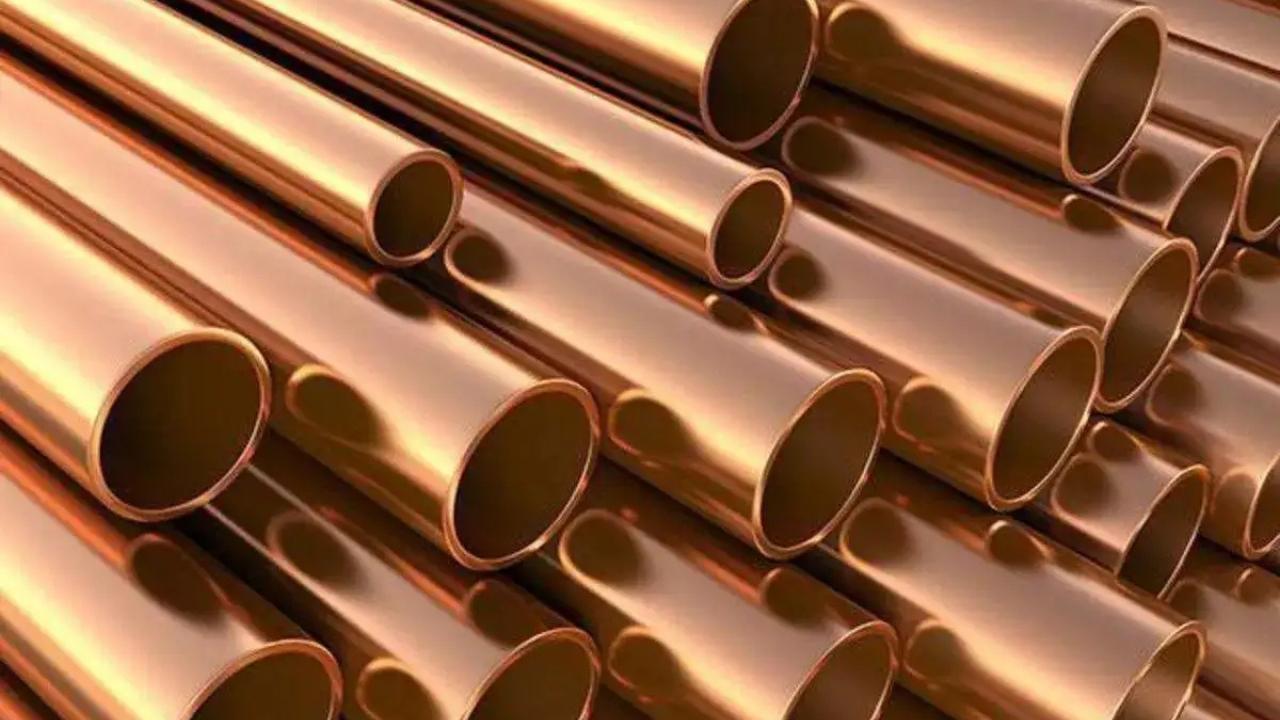
Copper — a metal widely regarded as a bellwether for global economic activity — reached astonishing new heights on January 29, 2026, with prices surpassing $14,000 per metric ton on the London Metal Exchange (LME). This milestone reflects unprecedented bullish sentiment in commodity markets, where investors and traders have pushed prices well beyond previous records amid a confluence of macroeconomic, geopolitical, and market-specific factors. The surge in copper has not occurred in isolation; it forms part of a broader rally that has drawn attention from policymakers, industrial consumers, and financial markets worldwide.
Copper’s rise represents not just a price phenomenon, but a signal of evolving investor psychology driven by uncertain global conditions — from geopolitical conflicts to shifts in currency valuations and speculative trading patterns. In this article, we will explore the factors behind this dramatic rally, how it compares with other metals markets, the implications for global economies, and the risks that lie ahead for investors and industry players.
Copper plays a pivotal role in modern economies due to its extensive use in electrical systems, infrastructure, renewable energy technologies, and manufacturing processes. As a result, copper prices are often viewed as a reliable indicator of global economic health. When industrial activity expands — especially in rapidly growing nations — demand for copper typically rises. Conversely, declining prices can reflect economic slowdown or weaker industrial investment.
However, the current surge goes beyond traditional demand-driven price movements. Instead, the rally appears rooted in a combination of speculative trading, currency dynamics, and geopolitical risk hedging — marking a departure from fundamental supply-demand influences alone.
On January 29, copper prices surged to an all-time high of $14,527.50 per metric ton on the LME before settling slightly lower. This jump represented one of the most dramatic one-day gains in over fifteen years for the metal. At the same time, Shanghai Futures Exchange contracts reached more than 110,970 yuan per ton, signaling strength across global trading venues.
These levels far exceed typical prices seen just months earlier, reflecting the intense degree of momentum that has built up in copper markets. In context, copper had traditionally traded well below these heights in previous economic cycles, even during peak industrial expansion periods.
Heightened geopolitical tensions — ranging from fears of conflict in the Middle East to broader global instability — have heightened traders’ appetite for tangible assets perceived as stores of value. While gold and silver often serve this role, copper’s dual nature as both an industrial metal and an investment asset has drawn capital flows from a wide spectrum of market participants.
These conditions have pushed investors to seek commodity exposure for hedging against broader risk, especially during periods of market volatility and geopolitical uncertainty.
The dollar’s relative weakness has also underpinned the copper rally. Since commodities like copper are priced in U.S. dollars, a weaker dollar effectively lowers the cost for buyers using other currencies, increasing global demand. This dynamic has contributed significantly to price gains in commodities across the board, including copper, gold, and silver.
Currency traders and macro investors have been positioning around expectations of sustained softness in the dollar, reinforcing upward pressure on hard assets.
Perhaps most notable in this surge is the role of speculative trading, particularly from funds and individual investors betting on continued price acceleration. As prices climbed, momentum trading intensified — often driving further inflows into copper futures and other metals contracts. Some analysts warn that these speculative elements may be detached from the immediate supply-demand fundamentals, leading to a market environment that could be vulnerable to rapid adjustments.
China, in particular, has seen heightened speculative activity, with investors pushing prices higher amid broader bullish sentiment about global infrastructure demand and economic expansion.
Copper’s surge did not occur in isolation. Other key metals markets experienced significant movements:
Silver reached record nominal peaks, briefly crossing $120 per ounce before retracing, reflecting strong safe-haven and industrial interest.
Gold also approached historic highs, buoyed by safe-haven demand and currency weakness.
Aluminum, tin, and nickel joined the rally, exhibiting broad price gains as metals markets responded to macro drivers.
This wider rally underscored market conditions where hard assets, particularly metals, have become focal points for investors seeking protection from volatility and potential economic realignment.
Despite copper’s record prices, some analysts caution that the fundamental industrial demand picture may not fully support such elevated levels. Demand from key sectors — such as construction and manufacturing — especially in China, has shown signs of slowing or remaining sluggish. This discrepancy suggests that prices are being driven more by financial market behaviors than by immediate consumption needs.
Industrial consumers may reduce purchases at these elevated price points, preferring to delay investment or seek substitutes where possible. If physical demand softens, the current price surge could face downward pressure.
A recent Reuters poll among commodities analysts showed that the expected average copper price for 2026 has risen above $11,000 per metric ton for the first time. This revised forecast reflects both the recent price surges and expectations for continued market tightness. However, analysts also remain cautious, noting that current prices may be elevated relative to fundamentals and subject to downward adjustments if investor sentiment shifts.
These forecasts highlight the complexities facing markets: while near-term demand drivers and speculative flows may sustain elevated prices, longer term equilibrium often depends on balanced supply-demand dynamics.
The copper rally has had a tangible impact on mining companies and resource-focused investment vehicles. In some cases, share prices for major miners have climbed sharply in response to higher underlying commodity prices, boosting valuations across the sector.
Investors and analysts will be monitoring upcoming production reports, output forecasts, and potential supply challenges — particularly in major copper-producing regions — to gauge how sustainable these price levels might be.
One key risk in the current environment is heightened volatility, which can lead to rapid price swings. Metals markets have already experienced episodes of sharp pullbacks after record highs, driven by profit-taking, leveraged positions, or shifts in risk sentiment.
Margin pressures in futures trading can exacerbate this dynamic, forcing traders to unwind positions quickly during turbulent conditions.
Macroeconomic factors — such as interest rate policy changes, currency fluctuations, or shifts in government infrastructure spending — could also influence copper prices. For example, expectations around Federal Reserve decisions or changes in global monetary policy might alter investment flows into commodities versus financial assets.
If central banks pivot toward tighter monetary policy or if geopolitical tensions ease, investors might reallocate away from hard assets, dampening prices.
Copper’s record rally offers several key takeaways for markets and economies:
Risk Hedging Behavior: Investors are seeking refuge in commodities amid uncertainties, reflecting broader concerns about economic stability and currency performance.
Industrial Signals: Despite prices being driven by speculative flows, copper’s ascent still draws attention to potential long-term structural demand — particularly in infrastructure and green technologies.
Currency Considerations: A weak dollar environment tends to support commodity price gains, but also introduces complexities for international trade and investment.
Copper’s unprecedented surge above $14,000 per metric ton in January 2026 represents a striking development in global commodities markets. Fueled by geopolitical risks, a weaker U.S. dollar, and speculative trading dynamics, this rally has reshaped perceptions about metals investing and industrial demand outlooks.
While the momentum may persist in the short term, risks related to fundamentals, volatility, and policy shifts remain salient. For investors, industrial users, and policymakers, the current environment underscores the importance of balancing optimism with caution — especially when commodity prices diverge sharply from traditional supply-demand indicators.
Understanding these dynamics can help stakeholders navigate a complex landscape where geopolitics, finance, and real economic demand intersect in profound ways.
Disclaimer: This article is for informational purposes only and does not constitute financial or investment advice. Commodity markets can be volatile and influenced by multiple uncertain factors. Always consult with a qualified financial advisor before making investment decisions.









PM Modi Pays Tribute to Mahatma Gandhi, Urges People to Support Khadi
PM Modi pays tribute to Mahatma Gandhi on Gandhi Jayanti and urges citizens to support Khadi and the

Amazon Seeks to Offload $8 Billion in Nvidia Chips to Investors
Amazon plans to move $8 billion in Nvidia chips to investors, using a new financing model to strengt

Samsung Raises Galaxy S26 Prices as Memory Chip Costs Rise
Samsung raises Galaxy S26 prices in South Korea as rising memory chip costs put pressure on smartpho

Lewis Hamilton Calls Singapore Grand Prix One of F1's Toughest Races
Lewis Hamilton discusses the demanding Singapore Grand Prix and brings Plus44 and Almave to Singapor

Denmark's Pandora Opens World's Largest Jewellery Factory in Vietnam
Pandora opens its largest jewellery factory in Vietnam, expanding global production, strengthening s

Gautam Gambhir Questions Batting-Friendly Pitches After India's Record ODI Chase
Gautam Gambhir questions batting-friendly ODI pitches after India’s record chase, calling for a bett

