You have not yet added any article to your bookmarks!
Join 10k+ people to get notified about new posts, news and tips.
Do not worry we don't spam!
Post by : Rameen Ariff
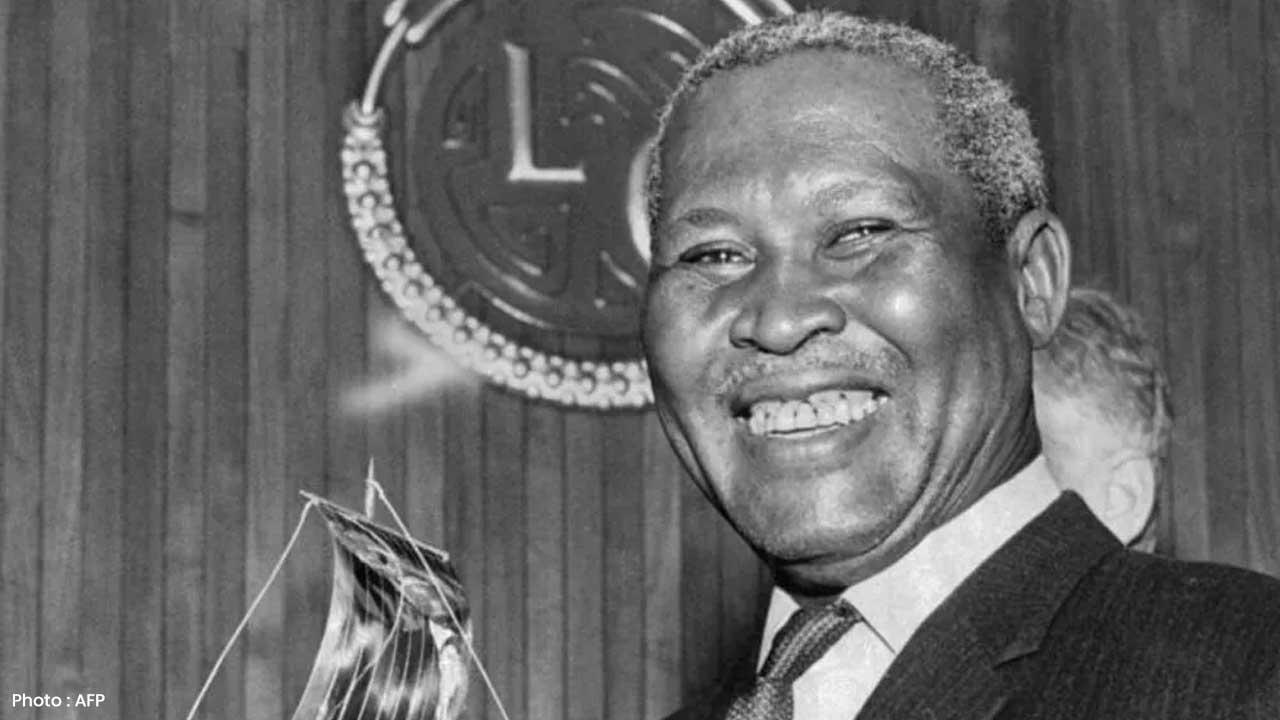
In a historic judgment, a South African court has ruled that Nobel Peace Prize winner and anti-apartheid icon Albert Luthuli was killed by apartheid police in 1967—ending nearly six decades of uncertainty and correcting a long-standing distortion of history.
The court’s decision overturns the apartheid-era claim that Luthuli’s death was an accident caused by a train strike. Judge Nompumelelo Radebe, delivering the verdict at the Pietermaritzburg High Court, found that the leader of the then-banned African National Congress (ANC) died from a fractured skull and cerebral haemorrhage linked to an assault.
“It is found that the deceased died as a result of a fractured skull, cerebral haemorrhage, and concussion of the brain associated with an assault,” Judge Radebe declared.
The ruling confirmed that members of the apartheid regime’s special branch police, in coordination with railway officials, were responsible for the murder of Albert Luthuli. Seven individuals were named as suspects, though their current whereabouts remain unknown. Authorities said they could face criminal prosecution if located.
Luthuli’s family welcomed the verdict, describing it as the first step toward long-delayed justice. “This ruling restores dignity to our father’s memory and to all those who suffered under apartheid’s brutality,” said a family spokesperson.
The ANC also hailed the decision, calling it a monumental moment of truth and justice. Party spokesperson Mahlengi Bhengu said, “This ruling corrects a historical wrong and brings closure to the memory of one of South Africa’s greatest sons.”
Albert Luthuli, awarded the Nobel Peace Prize in 1960, was celebrated for leading a non-violent struggle against racial segregation and white-minority rule. His leadership of the ANC laid the foundation for South Africa’s liberation and democracy in 1994.
The National Prosecuting Authority reopened the case earlier this year following new evidence and long-standing suspicions that apartheid forces had staged Luthuli’s death to appear accidental.
This ruling follows renewed efforts to deliver justice for victims of apartheid-era crimes. Similar investigations have been reopened into the deaths of anti-apartheid activists, including Steve Biko, who died in police custody in 1977 after being tortured.
President Cyril Ramaphosa has also established a judicial commission to examine the delayed prosecution of apartheid-era cases, signaling a renewed national commitment to truth and accountability.
For South Africans, the verdict marks not just legal justice—but emotional closure for a nation still grappling with the legacy of apartheid.








Rabada Misses First Australia Test as South Africa Pick Two Spinners
Kagiso Rabada misses the opener as South Africa vs Australia begins, with Anrich Nortje returning an

Starc Compares Australia's Tough Year to McIlroy's Major Sweep
Mitchell Starc says Australia winning three away Test series and the World Cup would match Rory McIl

France’s Sesterce Plans $11 Billion AI Data Centre in Finland
Sesterce plans a $11 billion AI data centre in Finland, with major expansion, green energy plans and

Danaher to Launch AI-Powered Autonomous Research Lab in 2027
Danaher plans an AI research lab for 2027, combining robotics and automation to speed up drug discov

Musk Welcomes German Support for Tesla Driver Assistance Tech as EU Approval Push Continues
Elon Musk welcomes Germany's backing for Tesla FSD as the company seeks EU approval amid speed, safe

Microsoft and Nvidia CEOs to Unveil AI Laptop at San Francisco Event
Microsoft and Nvidia showcase a new AI laptop with RTX Spark chips as they push powerful local AI co