You have not yet added any article to your bookmarks!
Join 10k+ people to get notified about new posts, news and tips.
Do not worry we don't spam!
Post by : Saif Rahman
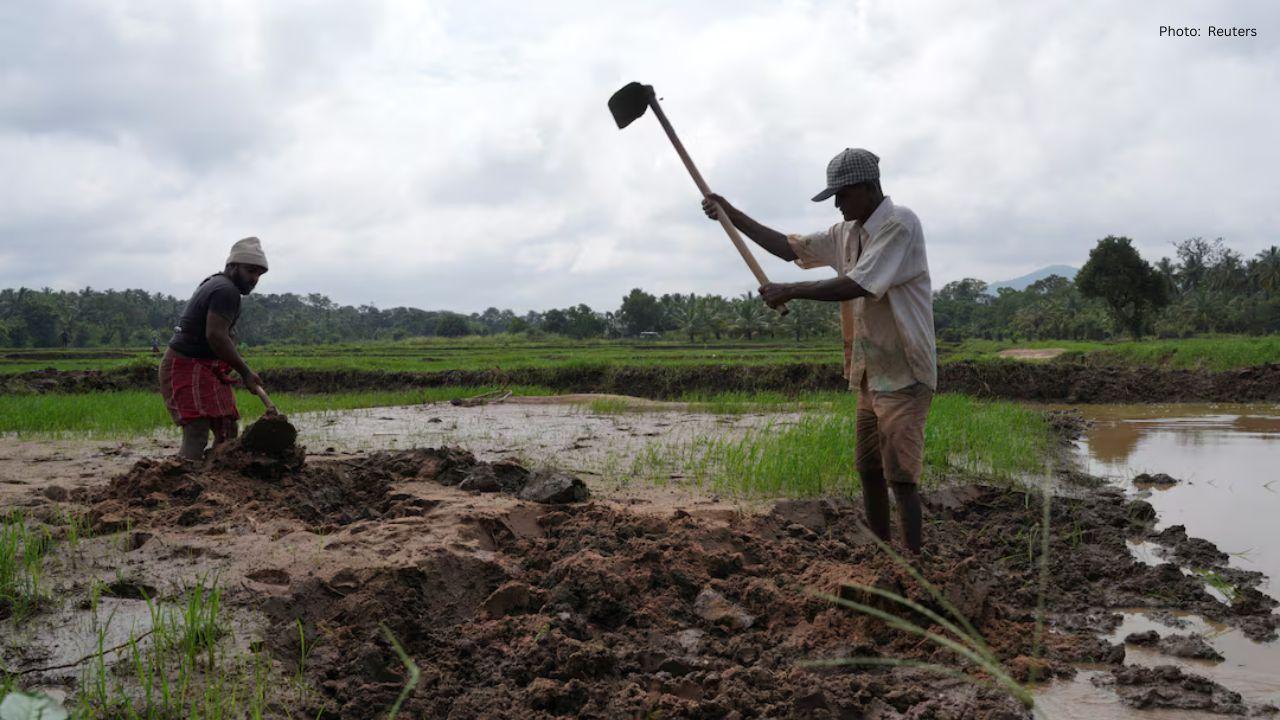
Sri Lanka’s farming sector is in dire straits following the onslaught of Cyclone Ditwah, which ravaged the island and left countless farmers in turmoil. This devastating storm has wrecked crops and irrigation infrastructure, forcing many rural households deeper into financial woes as they awaited a fruitful yield.
Across the picturesque villages of central Sri Lanka, fields of rice that had just begun to flourish are now engulfed in mud and debris. Kalanchi Dewage Risman, a 55-year-old farmer, feels the weight of this devastation. His two-acre rice paddy was nearing harvest readiness before the cyclone obliterated it. Now, he faces the daunting task of clearing and replanting.
Replanting is fraught with difficulties, especially as mid-December approaches; late rice planting often yields subpar results. Moreover, Risman finds himself needing to secure further loans for machinery, seeds, and fertilizers, all while grappling with existing debts from earlier borrowings.
Cyclone Ditwah struck in November, wreaking havoc in crucial agricultural districts that supply rice, vegetables, and maize. The tempest claimed over 643 lives, displacing more than 70,000 people into emergency shelters. Approximately 1.8 million farming households were impacted across the nation.
Government reports indicate that more than 535,000 hectares of cropland suffered flooding, with over 120,000 hectares entirely devastated or buried in debris. Other vital crops, including vegetables and maize, likewise faced significant losses, intensifying concerns about upcoming food supplies.
The destruction of irrigation systems adds another layer of challenge to recovery efforts. Numerous dams and roughly 2,000 canals used for agricultural water supply were breached by heavy rains. Farmers struggle to replant and shield their crops from future threats without swift repair work.
In response to the crisis, some farmers have rallied together, pooling their labor and tools to clear fields and restore canals. Nevertheless, many express that their resources are thin, and without robust government assistance, long-term recovery appears daunting.
The cyclone also displaced many families. Niluka Yaparatne, age 48, lost her home to a landslide, which claimed several neighbors’ lives. She and her family, having fled during the night, are currently staying with relatives. Securing affordable rent near her children’s school has proven challenging, especially as housing costs have surged. The family bears the additional strain of a substantial loan taken out for their home.
To compound matters, her husband’s rice field was also damaged, stripping away their primary source of income. Authorities have designated the region as hazardous due to the potential for further landslides, barring families from returning.
Experts caution that food prices may see significant increases, with food inflation, which was around 3% in November, poised to potentially double shortly. Damaged rice and vegetable stocks could result in shortages if recovery is not rapid. Economists highlight the urgent need for financial aid to farmers, not only for crop losses but also to rebuild and purchase vital resources.
The government has pledged 150,000 rupees in compensation for farmers whose crops were completely destroyed, with over 15 billion rupees set to be distributed this week. Officials are urging farmers to replant before the end of December, indicating hopes of salvaging much of the rice yield.
However, anxiety plagues many farmers. For Risman, the costs associated with restarting operations surpass the government’s compensation. He aspires to have his land prepared for the next planting cycle in May.
Cyclone Ditwah has laid bare the vulnerabilities of Sri Lankan farmers in the face of extreme weather. Without strategic long-term planning, increased support systems, and enhanced disaster preparedness, these communities face ongoing hardship each time a major storm strikes.









Study Warns Using AI for Medical Advice Is ‘Dangerous’ as Users Get Inaccurate Health Guidance
A major new study reveals that artificial intelligence (AI) chatbots and tools may give misleading o

Top Sci-Fi Movies Streaming on Netflix This February: Must-Watch Picks for Genre Fans
A curated news-style guide to the best science fiction films currently available on Netflix in Febru

BCCI Central Contracts Shake-Up: Kohli, Rohit Moved to Grade B as Board Reshapes 2025–26 List
Virat Kohli and Rohit Sharma have been placed in Grade B in the BCCI’s 2025–26 central contract list

Dalal Street Spotlight: Top 10 Stocks Investors Are Watching as Markets Open on a High
Indian stock markets begin the week with strong momentum, and several blue-chip and mid-cap stocks a

Market Movers Today: Key Stocks Set To Watch In Indian Markets
Indian equity markets are poised for active trading as several major companies, including Bharti Air

Milan Welcomes the World: Inside the Grand Opening Ceremony of the 2026 Winter Olympics
The 2026 Winter Olympics opening ceremony in Milan marked a defining moment for global sport, blendi