
You have not yet added any article to your bookmarks!
Join 10k+ people to get notified about new posts, news and tips.
Do not worry we don't spam!
Post by : Mikael Ariff
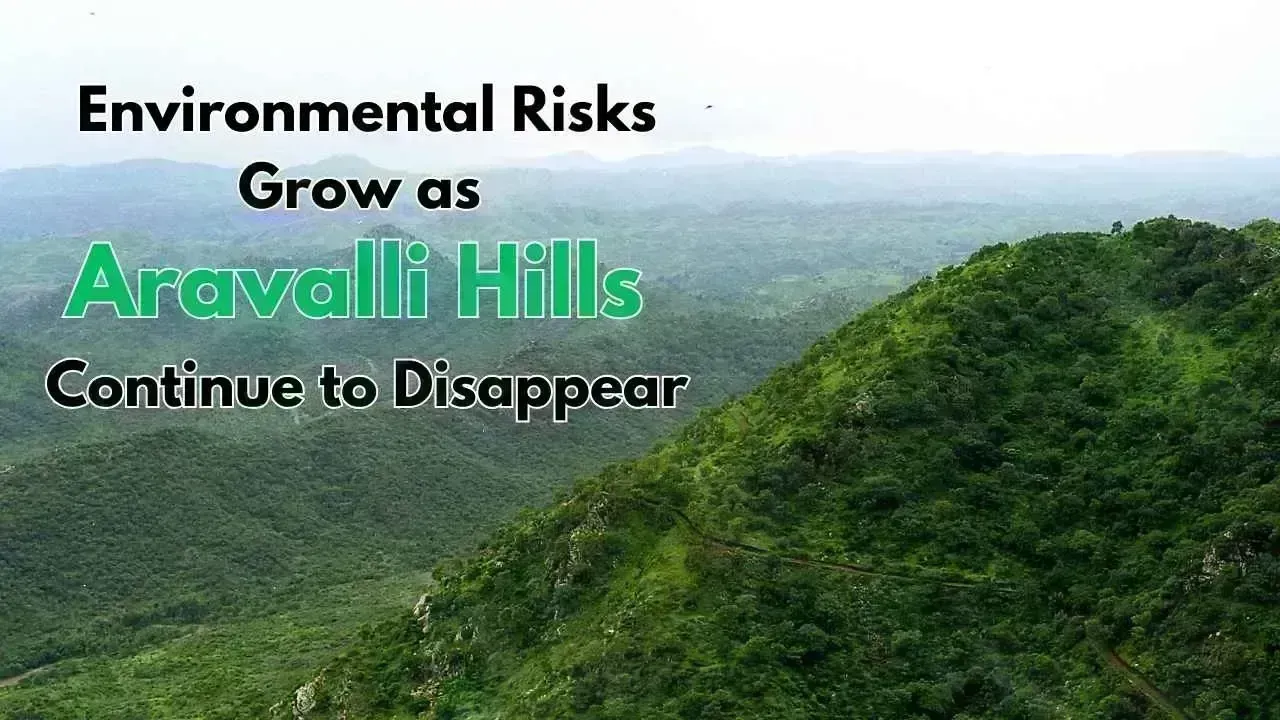
The Aravalli range stands as one of North India’s most invaluable natural assets, boasting a history that stretches back nearly 1.5 to 2 billion years. Older than the Himalayas, these hills spread across Rajasthan, Haryana, Delhi, and Gujarat, serving as a vital barrier for the region.
Currently, this natural heritage is under siege. A significant portion of the Aravalli hills has suffered destruction or removal, primarily due to human intervention. Environmental specialists caution that the repercussions will extend beyond Rajasthan; Delhi, Haryana, and adjacent areas could soon grapple with severe ecological issues.
Formed through geological shifts millions of years ago, the Aravalli hills have been shaped by the elements over time. Historically, they acted as a natural barrier, preventing desert sands from encroaching on fertile lands.
This region was once abundant in flora and fauna, providing essential resources for ancient communities. Modern trade routes trace their paths through the Aravallis, which remain interconnected with seasonal rivers and groundwater sources.
The Aravalli hills are crucial for maintaining ecological balance in North India, offering several practical benefits that extend to everyday life.
The Aravallis contribute by:
Halting the spread of desertification
Mitigating dust storms and reducing air contamination
Capturing rainwater and replenishing aquifers
Supporting biodiversity, including forests and wildlife
Regulating local temperatures and precipitation
Metropolises such as Delhi, Gurugram, and Faridabad rely on these hills for improved air quality and cooler climates, often referring to the forests as the “green lungs” of the area.
In spite of their ecological importance, the Aravalli hills have faced rampant degradation in recent decades due to:
Illegal extraction of stones and minerals
Deforestation for urban development
Unregulated urban expansion
Building of highways and residential projects
In numerous instances, entire hills have been leveled, disrupting natural water routes and diminishing the Aravallis' protective capacity.
As the Aravalli hills continue to fade, experts assert that the ecological risks are intensifying.
Amplified Air Pollution:
With diminished greenery to capture dust, pollution is on the rise, with dust storms becoming increasingly frequent in Delhi and surrounding areas.
Desert Encroachment:
The Thar Desert may gradually advance into Haryana and Delhi, rendering fertile lands barren.
Groundwater Depletion:
The capacity for rainwater storage has plummeted, exacerbating water shortages.
Heightened Temperatures:
The loss of vegetation drives increased heat, resulting in more severe summers.
Biodiversity Decline:
Numerous species are losing their habitats, resulting in a downward spiral of biodiversity.
Experts warn that sustained destruction could lead to long-lasting ecological crises that may take decades to mend.
Delhi and Haryana are already grappling with issues such as pollution and water scarcity. The disintegration of the Aravalli hills exacerbates these challenges.
Air quality in Delhi may worsen
Water scarcity could become more acute
Agricultural land in Haryana may dry up
Flooding risks could heighten with poor water absorption
Environmental scientists assert that the Aravalli hills act as a protective barrier. Their destruction exposes millions to increased climate and health threats.
It is imperative to safeguard what remains of the Aravalli hills. Experts propose the following actions:
Enforce strict measures against illegal mining
Implement large-scale afforestation initiatives
Regulate construction in ecologically sensitive zones
Stringently apply environmental regulations
Raising public awareness is vital. Society must recognize that the Aravallis are not merely empty land, but a lifeline for North India.
The Aravalli hills represent a unique natural heritage that has been safeguarding Rajasthan, Delhi, and Haryana for millennia. Their enduring significance underscores their necessity for ecological balance, water security, and environmental health.
The continuing degradation of this ancient mountain range is more than a local concern; it serves as a dire warning for the future. If immediate action is not taken, the consequences may become irreversible.
Protecting the Aravallis equates to ensuring the health and future of millions. Saving what remains is imperative before it is too late.
This article is published for general awareness and informational purposes only. The content is based on publicly available reports, environmental studies, and expert opinions available at the time of writing. Environmental conditions, policies, and conservation efforts may change over time. Readers are advised to follow official government sources and verified environmental authorities for the most accurate and updated information. The article does not intend to create fear or misinterpretation but aims to responsibly highlight environmental concerns.







Will O'Rourke Ruled Out of New Zealand's India Series
New Zealand fast bowler Will O'Rourke will miss the India series with hamstring and calf injuries as

AI Companies Expected to Drive Most US Earnings Growth in Q3
AI companies are expected to drive US third-quarter earnings growth as investors assess tech profits

Money Market Funds See Record Inflows as Global Bond Selloff Intensifies
Global money market funds attract $153.81 billion as bond yields rise, inflation fears persist and i

Meta Bans TikTok Ads on Facebook and Instagram in Seven Countries
Meta has banned TikTok ads in seven countries, escalating competition over social media users, adver

ASML and Zeiss Target Next-Generation Chip Technology in 10 Years
ASML and Carl Zeiss are developing Hyper NA technology to print smaller chip circuits, with the next

Rabada Misses First Australia Test as South Africa Pick Two Spinners
Kagiso Rabada misses the opener as South Africa vs Australia begins, with Anrich Nortje returning an

