You have not yet added any article to your bookmarks!
Join 10k+ people to get notified about new posts, news and tips.
Do not worry we don't spam!
Post by : Anis Farhan
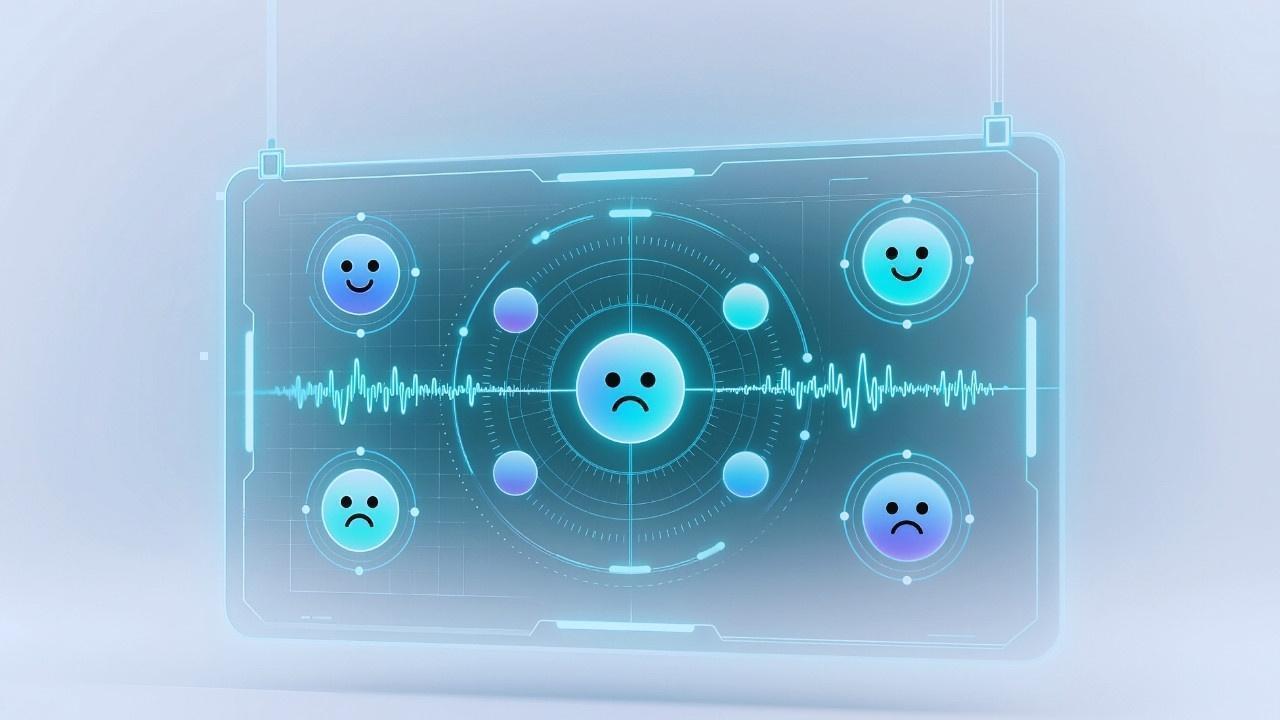
Emotion AI, also known as affective computing, refers to the technology that enables machines to detect, interpret, and respond to human emotions. It operates on the idea that facial expressions, vocal tones, gestures, and physiological signals such as heart rate or pupil dilation can reveal how a person feels. Through machine learning models trained on massive datasets of human expressions and behavioral cues, these systems attempt to decode emotions in real time.
For instance, algorithms analyze micro-expressions—those fleeting, involuntary facial movements that last less than a second—to determine whether someone is stressed, happy, or suspicious. Similarly, voice analysis tools pick up on subtle variations in pitch and rhythm that can indicate excitement or frustration. Combined, these inputs allow emotion recognition systems to make educated guesses about a person’s mood or mental state, even if they never explicitly state it.
This fusion of psychology and technology promises a world where machines can interact more naturally with humans, bridging the emotional gap that once defined our relationship with artificial intelligence.
Emotion AI is no longer confined to research labs—it’s quietly integrated into everyday systems across industries. In marketing, companies use it to gauge consumer reactions to advertisements, allowing brands to refine campaigns based on emotional engagement rather than guesswork. Customer service bots equipped with sentiment analysis can adapt their tone depending on whether a caller sounds frustrated or satisfied.
In education, emotion AI tools monitor student engagement during virtual lessons, helping teachers identify when attention levels drop. In healthcare, emotion detection assists in diagnosing depression or anxiety by tracking subtle behavioral changes over time. Even automobiles now come with built-in cameras and sensors that monitor a driver’s eyes and expressions to detect fatigue or distraction, alerting them before an accident occurs.
These real-world applications illustrate the growing belief that technology can enhance human understanding and safety. Yet, the more emotion AI becomes embedded in our lives, the greater the risk of misuse and ethical oversights.
One of the biggest appeals of Emotion AI is its potential to make interactions more empathetic. For years, one of the key criticisms of AI systems has been their inability to understand context and emotion. A chatbot may respond accurately to a question but fail to recognize sarcasm or distress. Emotion AI changes that dynamic.
By analyzing tone, facial expression, and body language, AI can tailor its responses more appropriately. Imagine a virtual assistant that softens its tone when it detects stress in your voice, or a healthcare monitoring device that reaches out when it senses early signs of emotional exhaustion. The human-machine interaction becomes less mechanical and more intuitive.
In workplaces, emotion recognition could help managers understand team morale or detect burnout before it impacts productivity. For mental health professionals, AI-powered tools could provide early insights into a patient’s emotional state, allowing for faster intervention. These benefits showcase the potential of AI not as a replacement for human empathy, but as a tool to amplify it.
Despite its promise, emotion AI raises a fundamental ethical question: should machines be allowed to read emotions that people do not willingly share? The ability to analyze faces, voices, and physiological signals without explicit consent challenges long-standing notions of privacy and autonomy.
Unlike traditional data such as browsing history or location, emotional data is deeply personal—it reveals what someone feels, not just what they do. When companies or governments deploy emotion recognition in public spaces, it opens the door to a form of surveillance that extends beyond the physical into the psychological realm.
Critics argue that emotion AI can easily cross ethical lines. A store might monitor shoppers’ expressions to see which products attract positive reactions. Employers might use emotion detection to gauge engagement during meetings. Even law enforcement could use it to assess “suspicious behavior,” risking discrimination and false positives. The danger lies not just in how the technology works, but in how it’s used and who controls it.
Emotion recognition systems are only as good as the data they are trained on, and human emotions are far from universal. Cultural differences, individual variation, and contextual nuances mean that a smile in one culture may not signify the same feeling in another. If AI systems are trained predominantly on data from one demographic, they risk misinterpreting expressions from others.
For example, an algorithm might wrongly classify a neutral face as angry or sad simply because it differs from the dataset’s norm. In hiring or security settings, such inaccuracies can lead to real-world harm. Beyond accuracy, there’s also the issue of reductionism—translating complex emotional states into simplistic categories like “happy,” “sad,” or “angry.” Emotions are often layered, contradictory, and context-dependent, something AI still struggles to grasp.
The challenge for developers is not just to make emotion AI more precise, but to ensure it reflects the full diversity of human experience without amplifying existing biases.
As emotion AI continues to advance, global regulators are beginning to take notice. Some countries are exploring frameworks that treat emotional data as a sensitive category, similar to biometric or medical information. These guidelines emphasize transparency, consent, and purpose limitation—ensuring that users know when and why their emotions are being analyzed.
Tech companies are also under pressure to adopt responsible AI principles. This means designing systems that can be audited, explainable, and aligned with human rights standards. Ethical oversight boards, independent audits, and clear opt-in policies are becoming essential components of trustworthy emotion AI development.
The future of this technology depends on striking a balance: encouraging innovation while protecting individuals from emotional exploitation or manipulation.
Corporate adoption of emotion recognition tools is on the rise, with companies using them for everything from recruitment to employee wellness programs. On paper, it sounds beneficial—tools that detect stress could help prevent burnout, while emotion tracking during interviews might identify empathy or enthusiasm.
However, these systems can also create pressure and mistrust. Employees may feel constantly monitored or judged based on emotional responses, which can be affected by factors unrelated to work. Without strict regulation and ethical boundaries, emotion AI in the workplace could blur the line between wellness support and emotional surveillance.
Transparency becomes key: workers should know what data is collected, how it’s analyzed, and how it will—or won’t—impact their evaluations or career opportunities.
For all its advancements, emotion AI cannot truly “feel.” It recognizes patterns, not pain. It detects excitement but does not share it. The essence of human emotion—its subjectivity, its connection to experience and memory—remains beyond the reach of machines.
That distinction is vital. While AI can support mental health efforts, improve safety, and enhance customer experiences, it should never replace genuine human empathy. The goal must be to complement, not compete with, human understanding. Recognizing this boundary ensures that emotion AI develops as a responsible partner to humanity rather than a manipulative observer.
Emotion AI stands at a crossroads of innovation and introspection. On one hand, it offers unprecedented opportunities for creating emotionally intelligent technology that understands users better. On the other, it raises urgent questions about privacy, consent, and fairness.
If governed responsibly, emotion AI could become a tool for greater connection, enhancing well-being, communication, and safety. But if left unchecked, it risks turning into a mechanism for emotional exploitation. The challenge before policymakers, technologists, and society is clear: to build systems that can read emotions without stealing them.
Emotion AI’s promise lies not just in how accurately it detects feelings—but in how respectfully it handles them.
This article is intended for informational and educational purposes only. It provides a general overview of trends in emotion recognition technology and its ethical implications. The content does not constitute professional, legal, or policy advice. Readers are encouraged to seek expert consultation before applying any insights discussed herein.








Singapore Haze: PM2.5 Pollution Rises in Three Regions
Singapore haze worsens as PM2.5 reaches high levels in three regions. Check air quality, health risk

G7 to Hold AI Cybersecurity Exercises to Protect Financial Systems
G7 finance leaders will conduct AI cybersecurity exercises to prepare for cyber attacks and protect

Spain's Diego Poncelet Sets Skateboarding World Speed Record
Spain's Diego Poncelet reaches 151.83 km/h in a record-breaking downhill skateboard run in Canada, s

Hyundai Recalls 94,622 US Vehicles Over Potential Fire Risk
Hyundai recalls 94,622 US vehicles over overheating seat motors. Check affected Genesis models, fire
Nvidia Pledges $250 Million for UK AI Safety Research
Nvidia will provide $250 million in computing resources over five years to support AI safety researc

Jacob Bethell Returns as England Name Squads for Australia Tour
England name ODI and T20 squads for the Australia tour, with Jacob Bethell returning from injury and