You have not yet added any article to your bookmarks!
Join 10k+ people to get notified about new posts, news and tips.
Do not worry we don't spam!
Post by : Rohit Dhiman
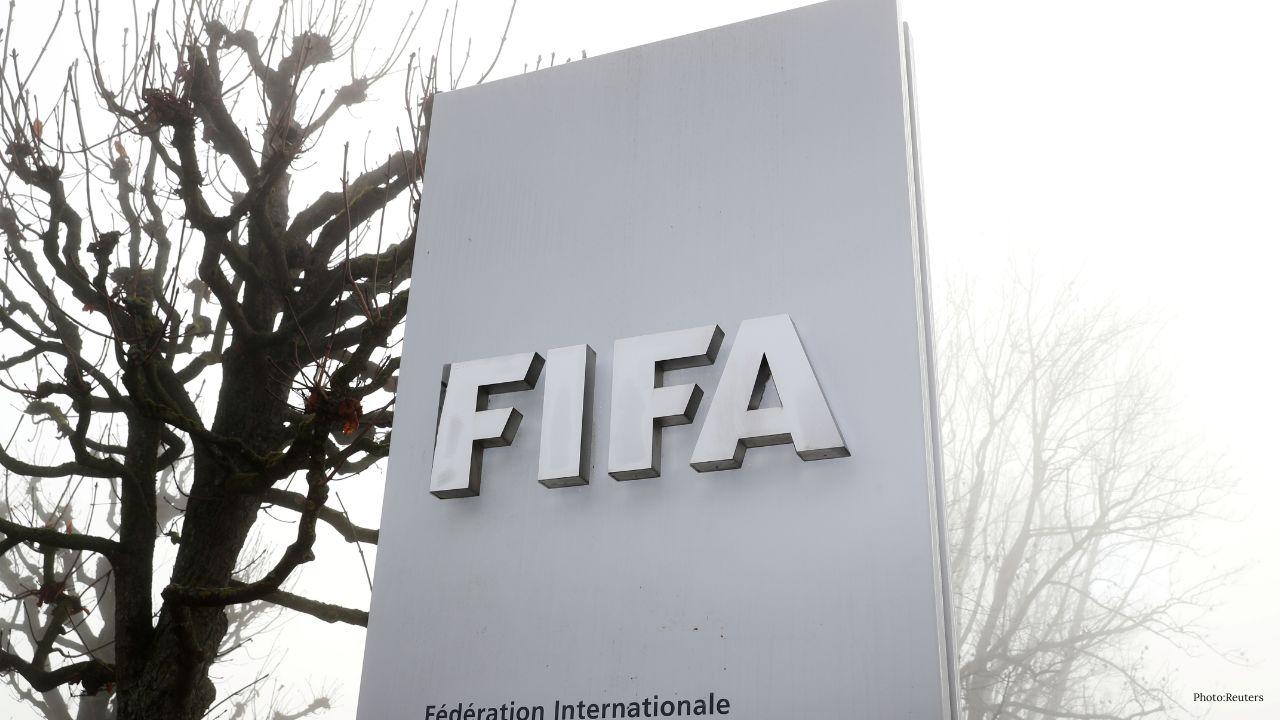
Four of Europe's leading domestic football competitions have jointly called for major changes to the way FIFA operates, demanding stronger checks on decision-making and greater involvement for the organisations and people affected by its decisions. The Premier League, Germany's Bundesliga, Italy's Serie A and Spain's LaLiga issued a coordinated statement on September 25, calling for a broad review of FIFA's governance structure. Their demands include clearer constitutional limits, stronger oversight and a more distinct separation between FIFA's regulatory responsibilities and its commercial activities. The statement comes at a sensitive moment for world football. FIFA has faced increasing criticism following the collapse of its proposed FIFA Forward Enterprise investment plan, while questions over the organisation's decision-making process have continued to grow.
The latest dispute reflects a wider disagreement over who should have a meaningful voice when FIFA makes decisions that affect domestic competitions, clubs, players and national football associations. European leagues have increasingly raised concerns about the expansion of international competitions and the effect of a crowded football calendar on domestic competitions and player workload. The latest statement brings those concerns together with broader demands for institutional reform.
The joint statement was issued by the Premier League, Bundesliga, Serie A and LaLiga. These competitions are among the most commercially important domestic leagues in world football. Their clubs provide a large proportion of the players involved in major international competitions, while their matches attract large global television and commercial audiences. The leagues say that FIFA's future matters not only to national associations but also to clubs, players, supporters and domestic competitions. Their central argument is that stakeholders directly affected by FIFA's decisions should have a meaningful role in shaping those decisions. They are seeking a permanent structure through which national associations, leagues, clubs and players from both men's and women's football can participate in discussions over major strategic decisions.
The leagues have identified several areas where they want FIFA to make changes. One major demand is stronger checks and balances around FIFA's leadership. They want clearer limits on constitutional powers so that major decisions cannot become overly concentrated within one office. They are also calling for evidence-based decision-making. In their view, major changes affecting international football should be supported by clear reasoning and involve consultation with the stakeholders who will be directly affected.
The latest demand follows the collapse of the FIFA Forward Enterprise proposal. The project involved plans for outside investment linked to FIFA's commercial operations and rights associated with major competitions. The proposal faced strong opposition from several football confederations and was abandoned in July. UEFA, the Asian Football Confederation and CONCACAF were among the organisations that opposed the proposal. The dispute raised wider questions about transparency, consultation and the process used to develop major FIFA initiatives. The abandoned plan has since become a central part of the wider FIFA governance debate. Critics have argued that proposals involving major commercial rights should not move forward without broad consultation with the organisations responsible for different parts of the global game.
The relationship between FIFA and European football leagues has been under pressure for several years, particularly over the international football calendar. Domestic competitions already occupy much of the football season. When international tournaments are expanded or additional competitions are introduced, clubs have to release players while also managing their domestic schedules. Leagues and clubs have repeatedly expressed concern about the additional physical demands placed on players and the potential impact on domestic competitions. FIFPRO Europe has also called for players, clubs and leagues to have a formal role in FIFA's governance, arguing that major decisions should involve the stakeholders most directly affected. The debate therefore covers more than FIFA's internal administration. It also involves player workload, competition scheduling, commercial rights and the future structure of international football.
FIFA President Gianni Infantino has already responded to the growing criticism. Earlier this week, Infantino wrote to FIFA's Council and the presidents of all 211 member associations proposing an independent external review of FIFA's governance framework for major strategic initiatives. He also proposed consultations with confederations, national associations and other stakeholders about how decision-making could be strengthened. Infantino said he remained committed to leading FIFA and presented the proposed review as part of an effort to improve transparency and accountability.
Several European football officials have argued that the proposed changes do not go far enough. Germany, the Netherlands, Sweden and Wales have all raised concerns about the depth or scope of the proposed reforms.
The response from the four leagues shows that criticism of FIFA is not limited to one national federation or one football organisation. UEFA President Aleksander Ceferin has also questioned whether trust has been restored following the collapse of the private investment plan. He has emphasised transparency, unity and governance that serves the wider football community. UEFA has previously demanded an independent external review of the abandoned investment project and argued that governance questions remain unresolved even after FIFA withdrew the proposal. This has shifted the discussion from the investment proposal itself toward a broader examination of FIFA's structure. The key question is now how much authority should be concentrated within FIFA's presidency and what formal mechanisms should exist to ensure that major decisions receive wider scrutiny.
Read Also: Iran Proposes Reopening Strait of Hormuz Within Seven Days
Clubs and players are directly affected by many of FIFA's decisions. Clubs release players for international competitions and must manage their schedules around national-team commitments. Players face the physical demands of increasingly busy calendars, while domestic leagues compete for dates, audiences and commercial attention. That is why the demand for stakeholder representation extends beyond league executives. FIFPRO Europe has argued that players, clubs and leagues should be formally included alongside national associations when major decisions about the future of football are discussed.
One of the most important issues raised by the European leagues is the relationship between FIFA's regulatory and commercial roles. As football's global governing organisation, FIFA establishes frameworks that affect competitions and national associations. At the same time, it controls valuable commercial rights connected to major tournaments. The four leagues want stronger protection around this dual role. Their argument is that regulatory decisions should be made through transparent governance procedures and should not be influenced by commercial objectives. A clearer separation could also provide greater confidence to clubs, players, leagues and national associations when major changes are proposed.
The current dispute could have consequences well beyond the four European leagues. FIFA has 211 member associations, meaning changes to its governance structure would involve football organisations from across the world. The European leagues are calling for a system that gives affected stakeholders a permanent voice, while other football bodies have also pushed for independent reviews and greater transparency. At the same time, FIFA is continuing to defend its role in global football development and has proposed consultations as part of its response. The outcome of this debate could influence how future international competitions are planned, how commercial initiatives are approved and how much influence domestic leagues and other stakeholders have over global football decisions.
The immediate dispute began with the abandoned FIFA Forward Enterprise proposal, but the argument has now expanded into a much wider discussion about institutional power. The four leagues say stronger constitutional boundaries and checks and balances are required. FIFA, meanwhile, has proposed an independent review and consultations with its wider football community. The disagreement therefore centres on how global football should be governed in the future. If FIFA introduces deeper stakeholder participation, it could change the way major strategic initiatives are developed and approved. If the proposed changes remain limited, pressure from European leagues, national associations, players and other football organisations is likely to remain an important issue.
The next stage will depend on how FIFA responds to the coordinated demands from the Premier League, Bundesliga, Serie A and LaLiga, as well as criticism from other football organisations. Infantino's proposed governance review provides a formal process through which some of these concerns could be examined. However, the European leagues are asking for structural changes rather than only procedural adjustments.



Mohammed Shami Retires From Test Cricket, Eyes White-Ball Career
Mohammed Shami retires from Test cricket after 13 years, with 229 wickets. He will continue playing

Singapore Warns Users About Privacy and Security Risks of AI Agents
Singapore warns users about AI agent security risks, data privacy, online scams and unauthorised acc

Chris Lynn Completes One-Month Ban After Positive Cocaine Test
Australian cricketer Chris Lynn completes a one-month ban after a positive cocaine test during the T
Djokovic Eyes Strong Season Finish as Health Improves Ahead of Paris Masters
Novak Djokovic reports improved health and performance as he targets a strong Paris Masters finish a

SpaceX in Talks to Buy Boost Mobile or Use Its Network
SpaceX reportedly explores a Boost Mobile deal with EchoStar to expand Starlink Mobile and challenge
Erik ten Hag Warns Manchester United Face Real Relegation Risk
Erik ten Hag warns Manchester United face relegation danger after falling to 17th in the Premier Lea