You have not yet added any article to your bookmarks!
Join 10k+ people to get notified about new posts, news and tips.
Do not worry we don't spam!
Post by : Rohit Dhiman
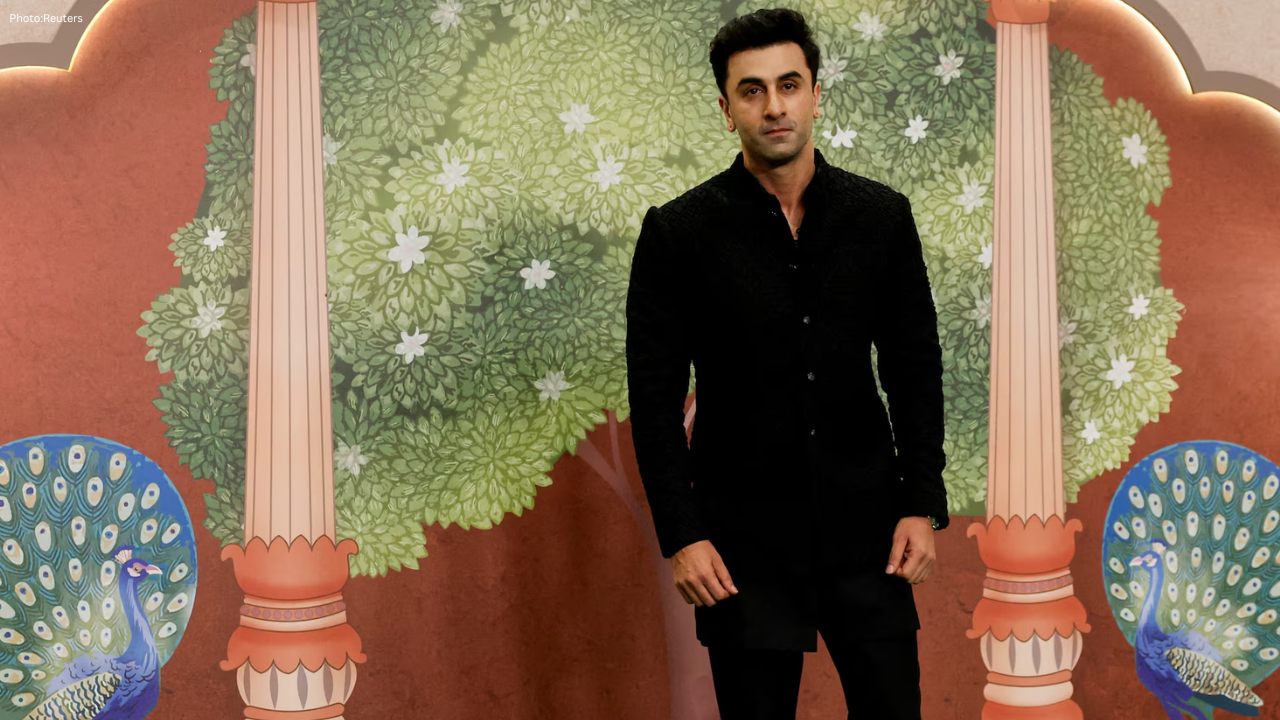
India's ancient epic Ramayana is receiving a major cinematic presentation with an ambitious film that brings together leading Indian actors, internationally recognised creative professionals and large-scale visual effects. The makers believe the production has the potential to introduce one of India's most significant traditional stories to a much wider international audience. Titled Ramayana: Rise of a Legend, the film features Ranbir Kapoor as Lord Rama, Kannada cinema star Yash as Ravana and Sai Pallavi as Sita. Directed by Nitesh Tiwari and produced by Namit Malhotra, the project combines Indian mythology with filmmaking techniques and technical expertise associated with major international productions. The first instalment arrived in cinemas worldwide on November 5, 2026, with the makers preparing both Hindi and English-language versions to reach viewers across different markets. The project has attracted attention because of its ambitious production scale, international creative partnerships and the cultural importance of its source material. Its creators see the film as an opportunity to demonstrate how Indian stories can be presented on a global cinematic platform without losing their original identity.
Bringing the Ramayana to the big screen on such an extensive scale has required years of preparation. The project has reportedly been in development for more than a decade, with the production involving multiple creative departments and teams working across international locations. The planned adaptation is structured as a two-part cinematic project. Its reported combined production budget is approximately US$420 million, placing it among the most expensive Indian film projects ever attempted. Namit Malhotra has played a central role in bringing the project together. His production company, Prime Focus Studios, is working alongside Yash's Monster Mind Creations, while Sony Pictures is handling international distribution. The production has also drawn on the experience of DNEG, the visual effects company associated with Malhotra. The company has worked on internationally recognised films, including Inception and Dune, and has earned eight Academy Awards for its visual effects contributions. The scale of the production reflects the complexity of adapting an ancient epic that features vast kingdoms, supernatural characters, powerful battles and locations deeply connected with Indian cultural traditions.
The casting of the leading characters has become one of the biggest talking points surrounding the film. Ranbir Kapoor takes on the role of Lord Rama, a character widely associated with righteousness, courage, responsibility and moral strength. His journey forms the central narrative of the epic, including his exile, the abduction of Sita and the eventual confrontation with Ravana. For Kapoor, portraying a figure with such deep cultural and religious significance represents a major responsibility. Lord Rama is not simply a fictional character for millions of people; he is an important figure in India's religious traditions and cultural imagination. Yash, who has built a massive following through Kannada cinema, appears as Ravana. The character is the powerful ruler of Lanka whose actions set the central conflict of the story in motion. Yash is also associated with the production through Monster Mind Creations. His involvement brings together two major Indian film industries, Hindi and Kannada cinema, in a project designed for international audiences. Sai Pallavi plays Sita, whose abduction becomes the turning point in the narrative. The filmmakers have presented her character as a strong and determined figure rather than limiting her to a supporting role in Rama's journey.
One of the most ambitious aspects of the production is its visual presentation. The Ramayana contains elements that are difficult to recreate through conventional filmmaking alone, including extraordinary creatures, enormous battlefields, mythical landscapes and supernatural events. To bring these elements to the screen, the production has involved experienced visual effects artists and technical teams working in different countries. DNEG has been a major contributor to the film's visual effects work. Its previous involvement in large international productions has given the project access to professionals experienced in creating detailed digital environments and complex cinematic sequences. The film features digitally created elements such as flying elephants, enormous demons and large-scale mythological battles. These sequences require a combination of computer-generated imagery, animation, digital compositing and carefully planned live-action performances. The filmmakers have also constructed a large physical set in Mumbai to recreate important locations connected with the story. Additional visual effects work has been carried out by teams in London and Vancouver.
The music of the film has attracted international interest because of the collaboration between two award-winning composers, Hans Zimmer and AR Rahman. Zimmer is known for his work on major Hollywood productions, while Rahman is one of India's most internationally recognised music composers. Their collaboration brings together different musical approaches for a story rooted in ancient Indian tradition. Music plays an important role in mythological storytelling. It helps establish the atmosphere of a kingdom, communicate the emotions of its characters and build intensity during moments of conflict and transformation. For a story such as the Ramayana, the musical arrangements must support both its spiritual character and its large-scale cinematic presentation. The involvement of Zimmer and Rahman is therefore an important part of the production's international creative strategy. Their work also reflects the wider idea behind the film: bringing together Indian artistic traditions and international filmmaking experience to create a distinctive cinematic identity.
The comparison with The Lord of the Rings has become a major part of the film's international publicity. Both stories are built around expansive fictional or mythological worlds, powerful characters, major conflicts and journeys that involve questions of duty, courage, sacrifice and the struggle between good and evil. However, the makers have emphasised that the Ramayana is an Indian story with its own cultural identity and narrative traditions. The intention is not to imitate Western fantasy cinema but to present an original Indian epic using production techniques that can compete with major international releases. The Ramayana has been retold through different literary, theatrical, artistic and cinematic traditions over centuries. Its characters and central events have remained familiar to audiences across India and several other countries. This long-standing cultural connection gives the film a foundation that goes beyond visual spectacle.
The makers have developed the film with audiences outside India in mind. Along with the Hindi version, a separate English-language version has been prepared for international markets. Although the film was originally shot in Hindi, the production team developed an English screenplay and incorporated English dialogue into a separate master version. The process involved the original cast as well as voice artists, with traditional lip-syncing techniques used to match the English dialogue with the performances on screen. Sony Pictures is handling the film's international distribution, helping the production reach cinema audiences beyond the domestic Indian market. This approach reflects a wider shift in Indian filmmaking, where producers are increasingly considering international audiences during the early stages of production. Indian films have already developed a strong overseas presence through cinema releases, streaming services and the country's large diaspora communities. The Ramayana project aims to build on that reach by presenting a familiar Indian story through an international distribution and production framework.
Despite the involvement of international artists and technical specialists, the filmmakers have repeatedly highlighted the importance of retaining the story's Indian identity. The Ramayana is an ancient Sanskrit epic traditionally attributed to the sage Valmiki. It has influenced religious practices, literature, classical and folk performances, visual art and popular culture over generations. The central story follows Rama's struggle to rescue Sita after she is abducted by Ravana. Along the way, it explores themes of duty, loyalty, sacrifice, family relationships, leadership and the consequences of personal choices. These themes remain relevant beyond the historical and cultural setting of the epic. Director Nitesh Tiwari has highlighted the timeless nature of the emotions and values represented by the story. The filmmakers want viewers from different backgrounds to connect with its human elements, even if they are encountering the epic for the first time. This approach is particularly important for an international release, where the audience may have different levels of familiarity with Indian mythology.
Portraying characters from the Ramayana involves a different kind of challenge compared with playing ordinary fictional roles. For many Indian viewers, Rama, Sita and Ravana are familiar figures with deep cultural associations. Their portrayal on screen can therefore attract considerable attention and expectations. Sai Pallavi has spoken about the challenge of playing Sita and the importance of allowing the character's emotions to emerge naturally. The filmmakers have described Sita as a fearless and determined character who has an important presence in the narrative. Her role is central to the story's emotional journey, particularly because the separation between Rama and Sita becomes the driving force behind the conflict with Ravana. The cast's comments about their responsibility underline the importance of balancing cinematic interpretation with respect for the source material.
India is one of the world's largest film-producing countries, with thousands of films made annually across Hindi and regional-language industries. However, international recognition has traditionally been uneven, with different Indian productions reaching audiences abroad through cinema distribution, festivals and streaming platforms. In recent years, Indian filmmakers have increasingly explored international partnerships, larger production budgets and technical collaborations to expand their reach. The Ramayana adaptation represents an ambitious example of this approach. Its combination of established Indian actors, international composers, advanced visual effects and overseas distribution has created considerable interest around the project. The English-language version is also intended to make the story accessible to viewers who may not usually watch Indian-language films. At the same time, the film's long-term international impact will depend on audience response to its storytelling, performances, technical quality and interpretation of the epic. The project may become an important example of how Indian mythology can be adapted for a worldwide cinematic audience.
Read Also: Republicans Urge Trump to Change Course After Midterm Election Defeat
The Ramayana has been adapted for television, cinema, animation, theatre and digital platforms numerous times. Its popularity across generations has made it one of the most frequently revisited stories in Indian entertainment. The new production distinguishes itself through its international creative team, extensive visual effects, reported production investment and worldwide release strategy. Rather than presenting the story only for domestic audiences, the filmmakers have developed a separate English-language version and involved professionals with experience in major international productions. The two-part structure also gives the creators more room to present the characters and central events across a larger cinematic narrative. Its use of modern visual technology aims to recreate the scale of the epic in a way that can engage contemporary cinema audiences.






Singapore Warns Users About Privacy and Security Risks of AI Agents
Singapore warns users about AI agent security risks, data privacy, online scams and unauthorised acc

Chris Lynn Completes One-Month Ban After Positive Cocaine Test
Australian cricketer Chris Lynn completes a one-month ban after a positive cocaine test during the T

Djokovic Eyes Strong Season Finish as Health Improves Ahead of Paris Masters
Novak Djokovic reports improved health and performance as he targets a strong Paris Masters finish a
SpaceX in Talks to Buy Boost Mobile or Use Its Network
SpaceX reportedly explores a Boost Mobile deal with EchoStar to expand Starlink Mobile and challenge

Erik ten Hag Warns Manchester United Face Real Relegation Risk
Erik ten Hag warns Manchester United face relegation danger after falling to 17th in the Premier Lea

Auqib Nabi Added to India Squad for First Three New Zealand ODIs
Auqib Nabi replaces injured Prasidh Krishna in India's squad for the first three New Zealand ODIs, s