
You have not yet added any article to your bookmarks!
Join 10k+ people to get notified about new posts, news and tips.
Do not worry we don't spam!
Post by : Badri Ariffin
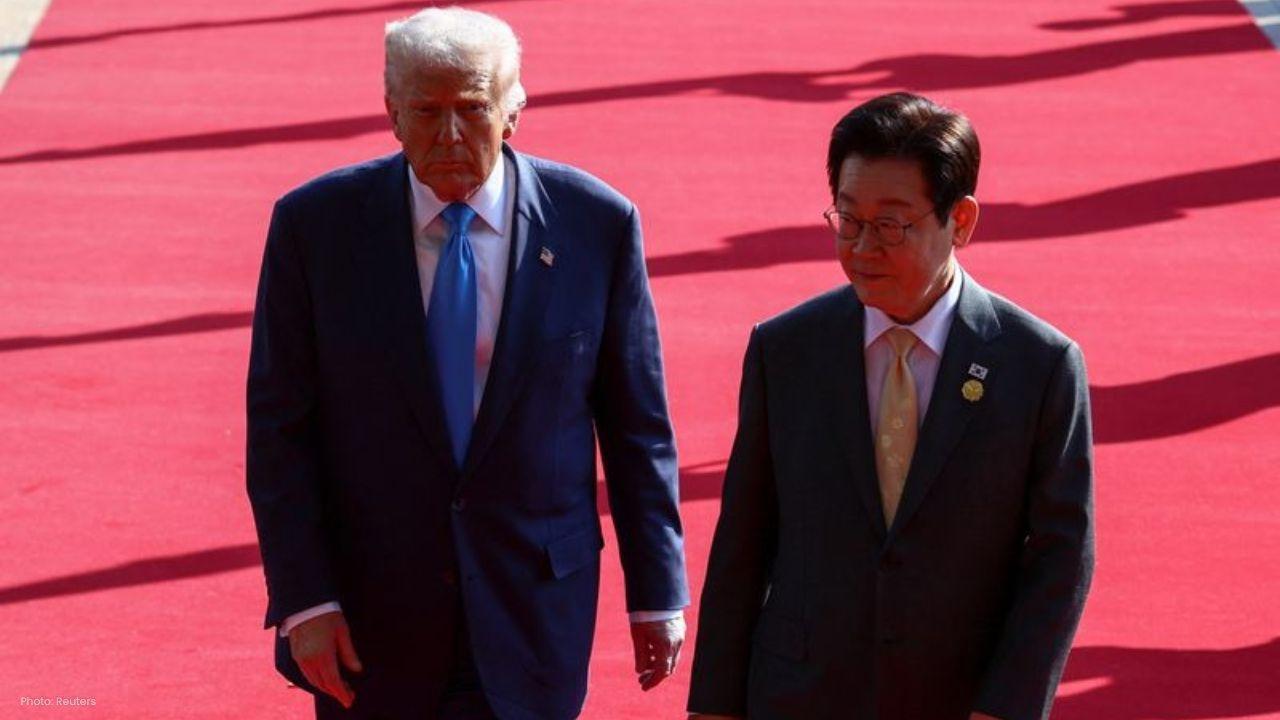
In a significant move to strengthen bilateral trade, the United States and South Korea have finalized an agreement reducing tariffs and boosting investments in strategic sectors. The announcement follows last month’s summit between U.S. President Donald Trump and South Korean President Lee Jae Myung.
Under the deal, U.S. imports of Korean automobiles and auto parts will face a 15% tariff, down from 25%, aligning them with Japanese competitors. The reduction will be retroactive to November 1, pending the passage of a $350 billion South Korean investment package in the U.S. Congress. Wood products and pharmaceuticals from South Korea will face tariffs capped at 15%, while aircraft parts and generic drugs will be tariff-free.
Semiconductors, a key sector for both economies, are also covered under the agreement. South Korea will receive trade terms no less favorable than those extended to Taiwan, ensuring fair competition in this critical industry.
The pact addresses non-tariff barriers in agriculture and digital services, aiming to improve market access for U.S. meat, streamline online platform regulations, and facilitate cross-border transfers of location data.
While South Korea will not invest directly in the Alaska LNG project proposed by Trump, the country remains committed to purchasing U.S. liquefied natural gas. Government-controlled Korea Gas has signed long-term agreements to acquire about 3.3 million metric tons annually.
The $350 billion investment package includes $200 billion in phased cash payments to the U.S., capped at $20 billion annually to maintain currency stability. South Korea will fund these installments through means that minimize market disruption, with disbursements tied to project milestones selected by U.S. authorities.
The remaining $150 billion focuses on shipbuilding cooperation, including loans, guarantees, and private-sector investments. Profits from these investments will initially be split evenly, with adjustments possible based on the projects’ commercial viability. South Korea plans to use operating income from its foreign assets, reducing the need for domestic bond issuance.
This agreement represents a deepening of U.S.-South Korea economic relations, balancing trade, strategic investment, and sectoral cooperation while addressing market fairness in critical industries.










PM Modi Pays Tribute to Mahatma Gandhi, Urges People to Support Khadi
PM Modi pays tribute to Mahatma Gandhi on Gandhi Jayanti and urges citizens to support Khadi and the

Amazon Seeks to Offload $8 Billion in Nvidia Chips to Investors
Amazon plans to move $8 billion in Nvidia chips to investors, using a new financing model to strengt

Samsung Raises Galaxy S26 Prices as Memory Chip Costs Rise
Samsung raises Galaxy S26 prices in South Korea as rising memory chip costs put pressure on smartpho

Lewis Hamilton Calls Singapore Grand Prix One of F1's Toughest Races
Lewis Hamilton discusses the demanding Singapore Grand Prix and brings Plus44 and Almave to Singapor

Denmark's Pandora Opens World's Largest Jewellery Factory in Vietnam
Pandora opens its largest jewellery factory in Vietnam, expanding global production, strengthening s

Gautam Gambhir Questions Batting-Friendly Pitches After India's Record ODI Chase
Gautam Gambhir questions batting-friendly ODI pitches after India’s record chase, calling for a bett

