You have not yet added any article to your bookmarks!
Join 10k+ people to get notified about new posts, news and tips.
Do not worry we don't spam!
Post by : Anis Farhan
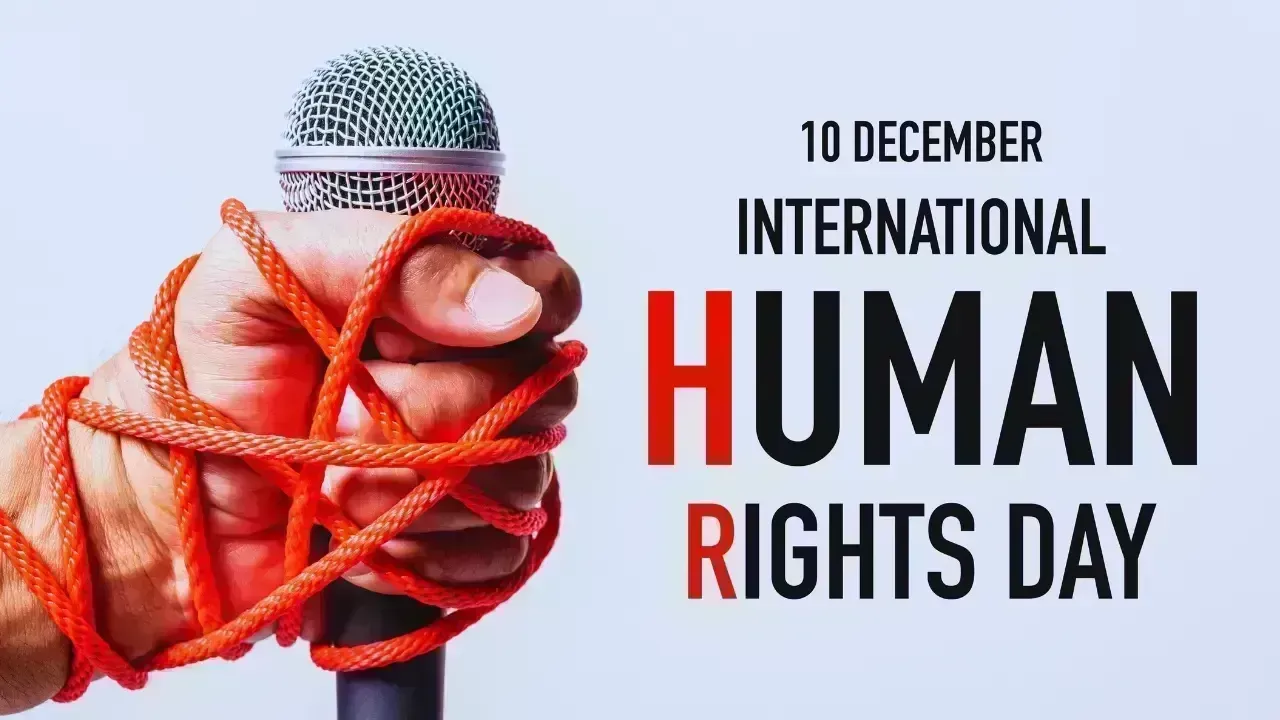
Human Rights Day 2025 arrives at a moment of intense global introspection. Around the world, nations are facing questions about freedom, justice, equality, and the very principles that hold democratic societies together. As conflicts intensify, technology transforms human interactions, and economic disparities widen, the commitment to protecting fundamental rights becomes both more challenging and more essential. Human Rights Day, observed each year on December 10th, commemorates the adoption of the Universal Declaration of Human Rights in 1948 — a landmark document that laid the foundation for modern human rights protections.
Seventy-seven years later, the vision outlined in the declaration remains just as relevant, though the world has become far more complex. In 2025, this day serves as a reminder that safeguarding human rights is not the responsibility of governments alone but of individuals, communities, institutions, and the global community as a whole. It reminds us that rights are universal, indivisible, and interdependent — values that must be upheld even when societies face pressure, division, or crisis.
This article explores the significance of Human Rights Day 2025, the global challenges affecting human rights today, the role of technology, the emerging movements shaping tomorrow’s rights landscape, and the responsibilities shared by governments and citizens alike.
When the United Nations General Assembly adopted the Universal Declaration of Human Rights, the world was emerging from the devastation of World War II. The declaration was not merely a document; it was a pledge to prevent atrocities and affirm that every human life carries inherent value and dignity. It outlined rights related to freedom, equality, education, health, expression, and protection under the law.
Over the decades, the declaration inspired constitutions, international treaties, civil rights movements, and global activism. Its influence spread across continents, driving reforms and setting standards against which nations are still evaluated. Human Rights Day celebrates this legacy, but it also encourages countries to reflect on progress, identify gaps, and recommit themselves to the principles enshrined in the document.
In 2025, human rights discussions are no longer limited to politics or law. They intersect with climate change, artificial intelligence, gender equality, income inequality, public health, migration, and digital privacy. The world has become interconnected, and challenges in one region often have ripple effects elsewhere. Human Rights Day offers a platform for understanding these interconnected issues and for promoting action that protects the vulnerable and strengthens justice systems.
Global conflicts have surged in recent years, displacing millions of people. Wars, civil unrest, and extremist violence have created humanitarian crises that strain international systems. Civilians — especially women, children, and minorities — face violence, displacement, and the erosion of basic rights such as access to food, shelter, education, and healthcare.
Human Rights Day 2025 draws attention to these ongoing crises and urges the international community to prioritize humanitarian aid, support conflict resolution, and hold violators accountable.
Climate change has emerged as a central human rights issue. Rising temperatures, natural disasters, water scarcity, and loss of biodiversity affect livelihoods, homes, and food security. Communities in coastal, rural, and economically disadvantaged regions experience these impacts first and most severely.
Environmental justice, therefore, has become part of the human rights discourse. The right to clean air, safe water, sustainable land use, and disaster protection is increasingly recognized as essential to human dignity.
Around the world, economic inequality continues to widen. Wealth is concentrated in fewer hands, while millions struggle with access to quality education, healthcare, and fair employment. Poverty affects rights in profound ways, influencing opportunities and access to services.
Human Rights Day 2025 urges nations to examine their economic frameworks, ensure fair wages, support social welfare systems, and remove barriers that limit upward mobility.
As technology advances, individuals’ digital footprints have become increasingly vulnerable. Governments and corporations collect massive amounts of personal data, raising concerns around privacy, consent, and surveillance. From financial information to biometric details, the question of who controls data and how it is used has become crucial.
Human Rights Day 2025 emphasizes the need for robust digital protections, ethical data usage, and transparency to prevent misuse, discrimination, or manipulation.
Artificial intelligence influences decision-making in areas such as hiring, lending, healthcare, policing, and education. However, AI systems can perpetuate biases if algorithms are trained on skewed data. Discrimination, unfair profiling, and misidentification are emerging global concerns.
This year’s theme encourages governments and businesses to adopt ethical AI standards, ensure accountability, and prevent technology from reinforcing inequality.
Social media platforms have become modern public squares. They enable activism, knowledge-sharing, and community-building. But they have also seen rising censorship, misinformation, hate speech, and online harassment. Protecting freedom of expression while ensuring digital safety is increasingly challenging.
Human Rights Day calls for a balance — safeguarding voices while preventing harm.
Women’s rights movements have grown stronger, but significant obstacles remain. Issues like domestic violence, gender-based discrimination, unequal pay, limited political representation, and social restrictions continue to limit women’s freedoms in many regions.
Human Rights Day 2025 highlights these challenges and advocates for legal, social, and educational reforms that empower women and girls.
Violence against women remains widespread, often hidden behind cultural norms or inadequate legal systems. Strengthening laws, ensuring survivor support, improving policing, and fostering societal change are vital goals this year.
Access to education remains uneven globally, particularly in conflict zones, rural regions, and impoverished urban areas. Digital learning widened the gap between children with and without access to technology.
Human Rights Day stresses the importance of quality education as the foundation for social growth and equality.
Child labor, trafficking, exploitation, and abuse continue in many parts of the world. Governments are urged to enforce strict child protection laws and provide safe environments for every child.
Around the world, ethnic minorities face discrimination, cultural suppression, lack of representation, and limited access to opportunities. Protecting their identity, culture, and equal rights remains a key priority.
Millions of refugees are fleeing conflict, persecution, or climate-induced disasters. Ensuring their safety, legal protection, and access to essential services is one of the greatest human rights challenges of our time.
Inclusive infrastructure, accessible education, equal employment opportunities, and social acceptance are essential for empowering persons with disabilities. Human Rights Day reinforces the global commitment to inclusion.
Young people are leading movements advocating for climate justice, equality, anti-discrimination, and transparent governance. Their voice is shaping public discourse and influencing policy-making.
Youth participation is crucial because they bring new perspectives and are deeply invested in the future.
Increasing awareness of rights, responsibilities, and democratic values helps build more informed, engaged citizens. Education systems worldwide are being encouraged to incorporate human rights learning from early grades.
Governments must ensure that human rights protections are codified into law and effectively enforced. Transparency, accountability, and judicial independence are necessary to uphold rights and deliver justice.
Healthcare, education, housing, and fair labor systems must be accessible and inclusive. Social support systems reflect a nation’s commitment to human dignity.
Human rights are universal, but protecting them begins at an individual level. Standing against discrimination, supporting vulnerable communities, and staying informed are essential steps.
Small acts — supporting victims, educating others, challenging stereotypes — contribute to a more just society. Human Rights Day 2025 underscores that protecting rights is not just a legal duty but a moral one.
Human Rights Day 2025 serves as a powerful reminder that humanity’s shared values — dignity, justice, equality, and freedom — require continuous effort to uphold. The world is facing unprecedented challenges, from technological transformations to political conflict and environmental crises. Yet, the core principle remains unchanged: every human being deserves rights that cannot be taken away.
This year’s observance encourages nations, communities, and individuals to reflect deeply on how far we have come and how much work still lies ahead. Human Rights Day is not just about history; it is about shaping the future. By strengthening protections, promoting compassion, embracing equality, and ensuring that rights are accessible to all, the global community can move closer to realizing the promise of the Universal Declaration of Human Rights — a world where every person lives with dignity and justice.
This article is for informational and educational purposes only and does not promote political agendas or legal interpretations.





Beauden Barrett Opens Up About Mental Struggles During All Blacks Exile
Beauden Barrett discusses his confidence struggles after missing six tests, his return against Austr

IMF Says AI Investment Supports Global Growth Despite Energy Shock
IMF says AI investment is supporting global growth near 3%, with Asian economies benefiting from ris

Will O'Rourke Ruled Out of New Zealand's India Series
New Zealand fast bowler Will O'Rourke will miss the India series with hamstring and calf injuries as

AI Companies Expected to Drive Most US Earnings Growth in Q3
AI companies are expected to drive US third-quarter earnings growth as investors assess tech profits

Money Market Funds See Record Inflows as Global Bond Selloff Intensifies
Global money market funds attract $153.81 billion as bond yields rise, inflation fears persist and i

Meta Bans TikTok Ads on Facebook and Instagram in Seven Countries
Meta has banned TikTok ads in seven countries, escalating competition over social media users, adver