You have not yet added any article to your bookmarks!
Join 10k+ people to get notified about new posts, news and tips.
Do not worry we don't spam!
Post by : Anis Farhan
India’s renewable energy journey reached a defining moment as the country added a record 31.25 GW of clean energy capacity, underscoring the pace at which the power sector is transforming. This milestone reflects years of policy support, private sector participation, and rising demand for sustainable power solutions.
The latest capacity addition not only strengthens India’s electricity supply but also reinforces its position as one of the world’s fastest-growing renewable energy markets. At the heart of this expansion lies solar power, which continues to lead the charge and reshape the country’s energy mix.
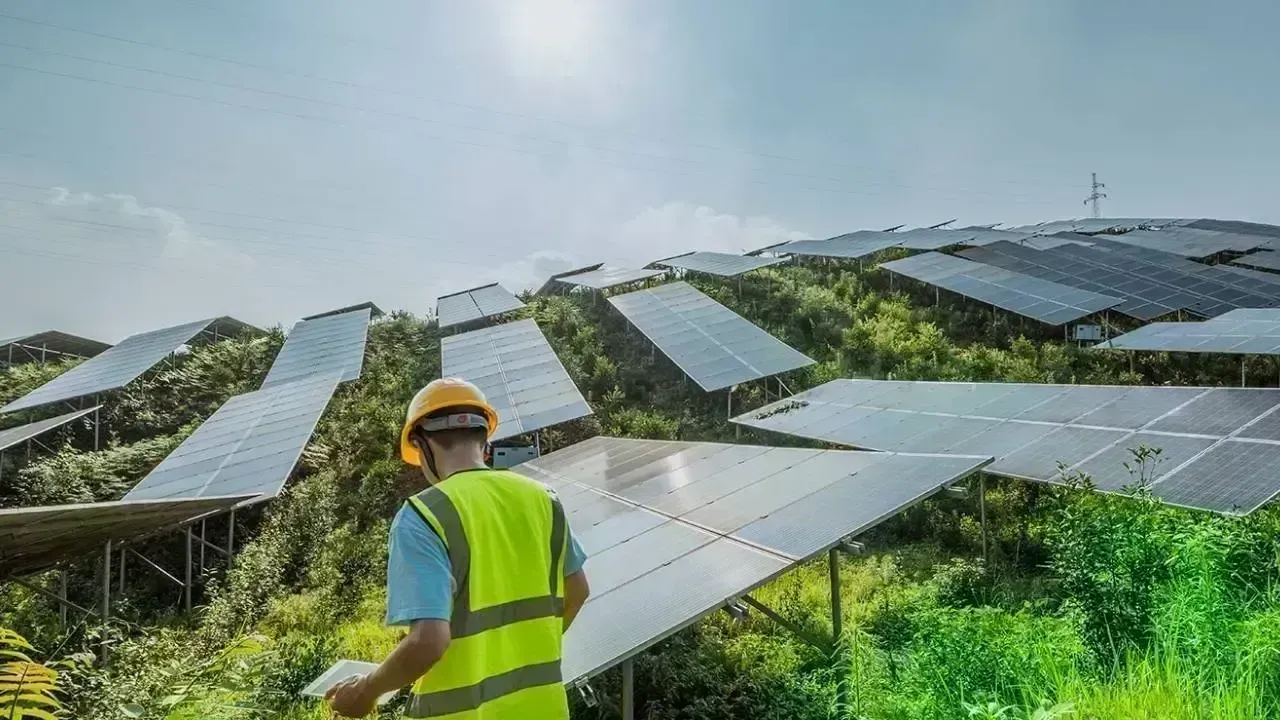
Solar energy accounted for the largest share of the newly added capacity. Utility-scale solar parks, rooftop installations, and hybrid projects collectively drove growth, highlighting solar’s cost competitiveness and scalability.
Falling panel prices, improved efficiency, and faster project execution timelines have made solar the preferred choice for both public and private developers. As a result, several states witnessed a sharp rise in solar installations over the year.
While solar dominated, wind energy also contributed meaningfully to the overall addition. Wind projects, particularly in coastal and high-wind regions, continued to expand, supported by repowering initiatives and hybrid wind-solar models.
Other renewable sources, including small hydro and biomass, added incremental capacity, helping diversify the clean energy portfolio.
India’s ambitious renewable energy targets have played a central role in accelerating capacity additions. Clear long-term goals have provided visibility and confidence to investors, encouraging large-scale participation across the value chain.
Supportive policies related to land allocation, grid connectivity, and competitive bidding have further reduced project risks, enabling faster execution.
Domestic manufacturing incentives have boosted local production of solar modules and components. This has not only reduced dependence on imports but also created jobs and strengthened the overall renewable ecosystem.
The push for local manufacturing aligns with broader economic objectives while supporting clean energy growth.
One of the key reasons behind solar’s rapid rise is its declining cost. Solar power tariffs have become increasingly competitive, often undercutting conventional fossil fuel-based generation.
This cost advantage has encouraged utilities and industries to sign long-term solar power purchase agreements, ensuring steady demand for new projects.
Solar projects can be deployed faster than many other forms of power generation. Large solar parks can be commissioned in relatively short timeframes, making solar an attractive option for meeting growing electricity demand.
This scalability has been crucial in achieving record annual capacity additions.
States with high solar potential and proactive policies emerged as major contributors to the clean energy surge. Large tracts of land, favorable sunlight conditions, and streamlined approvals helped accelerate installations.
These states have become hubs for renewable energy investment, attracting both domestic and international developers.
Beyond traditional renewable leaders, newer regions also recorded notable growth. Improved grid infrastructure and policy alignment enabled broader participation in the clean energy push.
This geographic diversification strengthens grid stability and reduces regional power imbalances.
The addition of 31.25 GW of clean energy significantly reduces reliance on imported fossil fuels. This shift enhances energy security and shields the economy from global fuel price volatility.
Over time, higher renewable penetration is expected to lower overall power generation costs and improve supply resilience.
The renewable energy sector has emerged as a major source of employment. From manufacturing and construction to operations and maintenance, the clean energy surge has created opportunities across skill levels.
Ancillary industries such as energy storage, grid management, and green hydrogen are also witnessing increased activity.
As renewable capacity grows, managing intermittency becomes a key challenge. Solar and wind generation depend on weather conditions, requiring advanced grid management and forecasting systems.
Investments in smart grids and flexible generation sources are becoming increasingly important.
Battery storage and pumped hydro solutions are gaining traction as essential components of the clean energy ecosystem. Storage enables better utilization of renewable power and enhances grid reliability during peak demand.
The coming years are expected to see rapid growth in energy storage capacity alongside renewables.
The record clean energy addition aligns with India’s long-term climate commitments. Expanding renewable capacity is a critical step toward reducing carbon emissions and transitioning to a low-carbon economy.
Each year of strong capacity growth brings the country closer to its sustainability targets.
India’s renewable expansion strengthens its position as a global leader in clean energy deployment. The scale and speed of growth serve as a model for other emerging economies seeking sustainable development pathways.
Despite progress, challenges related to land acquisition and transmission infrastructure persist. Addressing these bottlenecks is essential to sustain high growth rates in the coming years.
Large-scale renewable projects require substantial capital investment. While investor interest remains strong, timely financing and execution continue to be critical factors.
Solar power is likely to remain the backbone of India’s clean energy expansion. With ongoing innovation and cost reductions, solar installations are expected to accelerate further.
Future growth is expected to increasingly focus on hybrid projects that combine solar, wind, and storage. These solutions offer greater reliability and better grid integration.
India’s addition of 31.25 GW of clean energy marks more than just a numerical milestone. It reflects a decisive shift toward a sustainable energy future driven by solar power, supportive policies, and growing investor confidence.
While challenges remain, the momentum achieved this year sets a strong foundation for continued progress. As solar continues to lead the way, India’s clean energy story is entering a phase defined by scale, resilience, and global relevance.
This article is for informational purposes only. Energy capacity figures are based on reported data and may be subject to revision as official updates become available.










Beauden Barrett Opens Up About Mental Struggles During All Blacks Exile
Beauden Barrett discusses his confidence struggles after missing six tests, his return against Austr

IMF Says AI Investment Supports Global Growth Despite Energy Shock
IMF says AI investment is supporting global growth near 3%, with Asian economies benefiting from ris

Will O'Rourke Ruled Out of New Zealand's India Series
New Zealand fast bowler Will O'Rourke will miss the India series with hamstring and calf injuries as

AI Companies Expected to Drive Most US Earnings Growth in Q3
AI companies are expected to drive US third-quarter earnings growth as investors assess tech profits

Money Market Funds See Record Inflows as Global Bond Selloff Intensifies
Global money market funds attract $153.81 billion as bond yields rise, inflation fears persist and i

Meta Bans TikTok Ads on Facebook and Instagram in Seven Countries
Meta has banned TikTok ads in seven countries, escalating competition over social media users, adver