You have not yet added any article to your bookmarks!
Join 10k+ people to get notified about new posts, news and tips.
Do not worry we don't spam!
Post by : Meena Ariff
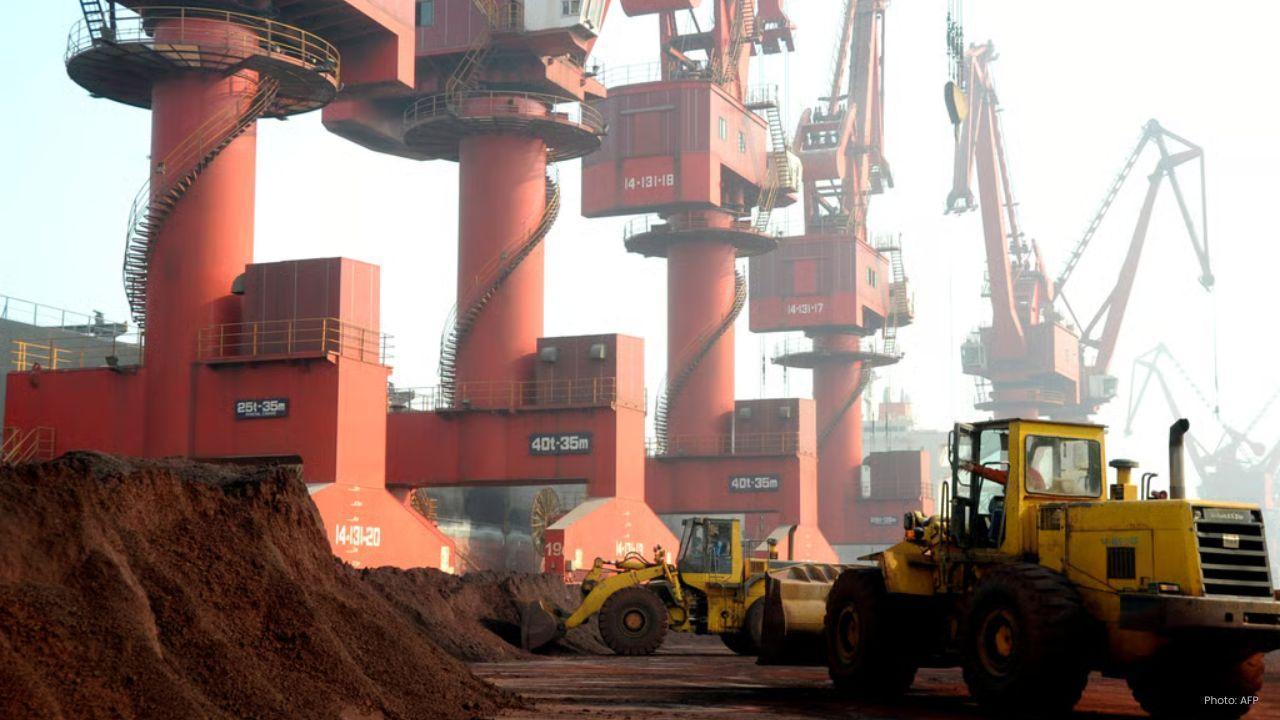
India and Australia are moving forward in talks to form a stronger partnership in rare earth minerals — the building blocks of modern technology. Both countries want to reduce the world’s reliance on China, which currently dominates the mining and processing of these minerals. The discussions aim to build on the Critical Minerals Investment Partnership launched in 2022 and explore joint ventures for mining, processing, and supply.
Why Rare Earth Minerals Matter
Rare earths are a group of 17 elements used in electric cars, smartphones, renewable energy systems, and defence equipment. Despite being fairly common in nature, they are difficult and costly to separate, especially heavy, rare earths like terbium, which are highly valued.
China’s Global Control
China is the world’s leader in rare earth minerals, producing over 60% of global output and processing about 90% of it. Recently, China has tightened control even more by placing export restrictions on seven rare earth elements — samarium, gadolinium, terbium, dysprosium, lutetium, scandium, and yttrium. Exporters now need special licences, creating uncertainty for other countries. These restrictions are seen by many as a reaction to US tariffs.
India’s Potential and Challenges
India has the world’s third-largest reserves of rare earth minerals, about 6.9 million tonnes, found mainly in the coastal sands of Andhra Pradesh, Odisha, and Kerala, and more recently in Rajasthan’s Jalore and Barmer districts. But despite these large reserves, India produces less than 1% of the world’s supply due to several issues — limited processing facilities, outdated mining technology, and strict laws under the Atomic Energy Act of 1962. This act restricts private companies from mining monazite, a mineral that contains thorium, because thorium can be turned into uranium-233, which is used in nuclear reactors.
Australia’s Role as a Partner
Australia is the fourth-largest producer of rare earths and is home to major companies like Lynas Rare Earths. The Mount Weld mine in Western Australia holds one of the largest deposits in the world. Australia has advanced technology and well-developed supply chains, making it a strong partner to help India develop its reserves. Australian companies are expected to join India’s upcoming auctions for rare earth mining rights.
Australia’s Resources Minister Madeleine King recently said Canberra is even considering setting a minimum price to support its critical minerals industry. The government has already promised A$1.2 billion (about US$782 million) to create a national strategic critical minerals reserve.
Opportunities for Cooperation
Bilateral initiatives like the Australia-India Business Exchange could provide platforms to increase trade and investment in this sector. Experts believe that joint research, clear agreements, and investment in technology could help both countries compete in the global rare earth market.
Remaining Obstacles
India faces high costs in extracting these minerals because of low concentrations in the ores and strict environmental rules. Australia, on the other hand, must balance its export plans with protecting its resources. Still, experts believe both nations can overcome these challenges through coordinated policies.
Global Politics and Trade Pressure
India’s rare earth strategy is also shaped by global politics. It is working with Australia, the US, and Japan through the Quadrilateral Security Dialogue (Quad) to secure critical mineral supplies. However, India’s trade ties with the US have recently been strained. US President Donald Trump has imposed tariffs of up to 50% on Indian goods, citing India’s purchase of Russian oil. This tension could influence how India moves forward in partnerships.
Some analysts think China might offer small trade concessions to India if its relationship with the US worsens. Others believe the India–Australia partnership is too important to delay, especially with the current uncertainty in global markets.
A Strategic Need, Not Just an Option
For India, working with Australia on rare earth minerals is not just a smart move — it is necessary. By joining forces, both nations can reduce dependence on China, strengthen their industries, and secure the materials needed for future technologies. This partnership could reshape the global rare earth market and open a new chapter in Indo-Australian cooperation.









Rabada Misses First Australia Test as South Africa Pick Two Spinners
Kagiso Rabada misses the opener as South Africa vs Australia begins, with Anrich Nortje returning an

Starc Compares Australia's Tough Year to McIlroy's Major Sweep
Mitchell Starc says Australia winning three away Test series and the World Cup would match Rory McIl

France’s Sesterce Plans $11 Billion AI Data Centre in Finland
Sesterce plans a $11 billion AI data centre in Finland, with major expansion, green energy plans and

Danaher to Launch AI-Powered Autonomous Research Lab in 2027
Danaher plans an AI research lab for 2027, combining robotics and automation to speed up drug discov

Musk Welcomes German Support for Tesla Driver Assistance Tech as EU Approval Push Continues
Elon Musk welcomes Germany's backing for Tesla FSD as the company seeks EU approval amid speed, safe
Microsoft and Nvidia CEOs to Unveil AI Laptop at San Francisco Event
Microsoft and Nvidia showcase a new AI laptop with RTX Spark chips as they push powerful local AI co