You have not yet added any article to your bookmarks!
Join 10k+ people to get notified about new posts, news and tips.
Do not worry we don't spam!
Post by : Rohit Dhiman
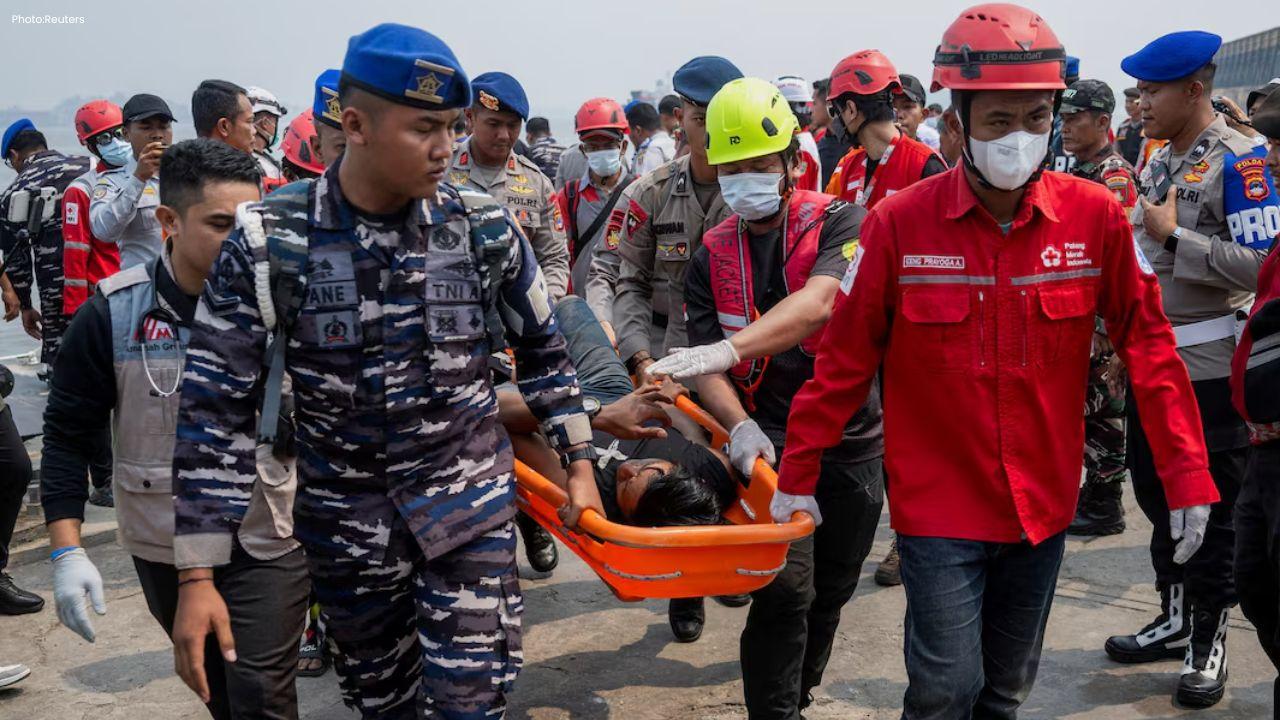
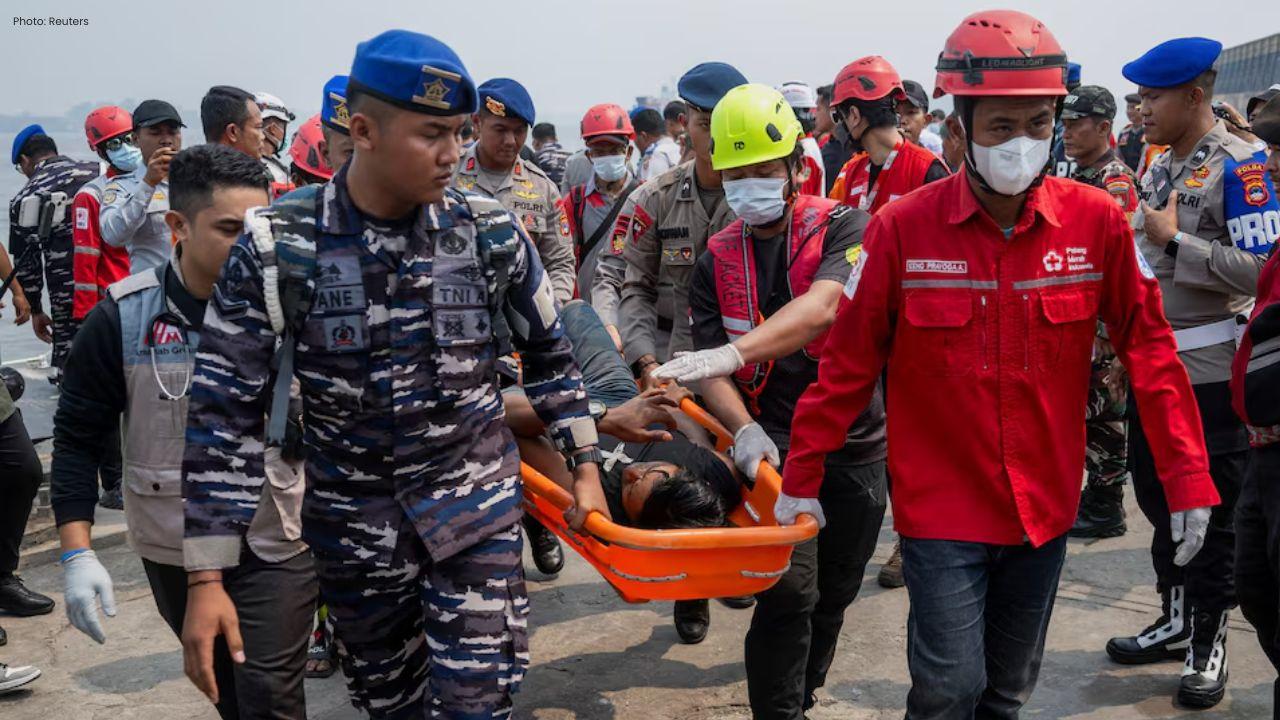
Rescue teams in Indonesia are facing extremely difficult conditions while trying to reach a passenger vessel that overturned in the eastern Java Sea. Several attempts to enter the wreck have been affected by powerful underwater currents, limited visibility, water pressure and the complicated structure of the ship. The vessel went down after encountering bad weather during a scheduled journey between two Indonesian ports. The accident left dozens of people missing and triggered a large-scale maritime search involving divers, rescue workers, ships, helicopters and other aircraft. Five days after the vessel sank, rescuers were still working to determine whether people could be trapped inside sections of the ship. Officials have continued the operation as a rescue mission because some compartments may have remained sealed and could potentially contain survivors.
The ferry was carrying 243 people when it encountered trouble during its journey. Six people were confirmed dead on the day of the accident, while 108 passengers were rescued. The remaining 129 people have not yet been accounted for, making the operation one of the most challenging maritime searches currently underway in the region. The Indonesia ferry accident has drawn the attention of national rescue authorities as teams continue searching both around the wreck and across the surrounding waters. Rescue officials have stressed that the difficult conditions do not mean the search will be abandoned. Around 60 divers from the Indonesian navy and the national rescue agency have been involved in efforts to approach the submerged vessel. They are part of a much larger operation involving around 1,100 personnel.
One of the biggest problems for the rescue teams has been the strength of the water movement around the wreck. Officials said underwater currents initially reached almost seven knots. That was far above the safety limit generally considered suitable for diving operations. The conditions later improved, with the current falling to between around 1.8 and two knots. This allowed navy divers to approach the wreck for several hours. However, reaching the vessel remains dangerous because the weather has also produced waves of up to 2.5 metres and strong winds around the search area. The combination of currents, waves and poor underwater conditions means divers have only limited opportunities to work safely. For the Indonesia ferry rescue, every diving window is therefore important. Rescue teams have to balance the need to reach the wreck quickly with the risks faced by divers operating at considerable depth.
The ship did not remain at the same location after the accident. Officials said it drifted around 1.8 nautical miles before eventually sinking. The vessel is now lying on the seabed in an area where the sea is between approximately 40 and 50 metres deep. The depth itself creates additional risks for divers. Working at such depths requires careful planning, specialist equipment and strict monitoring of underwater conditions. The wreck's position also makes the search more complicated because divers cannot simply approach it from the surface and begin a conventional inspection. Instead, rescue teams must first reach the wreck safely before determining how they can enter its interior.
The vessel, known as Virgo Transport 8, is about 119 metres long and was designed as a roll-on/roll-off ship. Such vessels are built to carry both passengers and vehicles. Their structure differs from many conventional passenger ferries, particularly because of the large areas required for vehicles. Officials said the ship's high hull on both sides could make access difficult after the vessel overturned. The interior is also believed to contain multiple levels, with vehicles generally carried in lower sections and passengers accommodated above them. Once inside the wreck, divers could face another major problem: they may have to navigate through unfamiliar, flooded areas where visibility is extremely poor. For the Virgo Transport 8 search operation, simply reaching the outside of the ship is therefore only the beginning of the challenge.
Maritime experts have warned that conditions inside the vessel could be considerably more dangerous than those outside. Divers entering a capsized ship may have to move through compartments they have never previously seen. Water inside the vessel can reduce visibility to almost nothing, making navigation extremely difficult. A diver who becomes disoriented inside a flooded compartment may struggle to locate the exit. The situation becomes even more complicated if rescuers encounter sealed compartments that still contain air. Experts have explained that a compartment containing trapped air could behave differently from surrounding areas filled with seawater. Opening a sealed door could cause water to rush into the space, creating additional pressure and potentially putting both divers and any survivors at risk. This is why rescuers cannot simply enter every section of the wreck without first assessing the structural and environmental dangers.
The company that owns the vessel has also started efforts to reposition or right the ship as part of a legally required salvage operation. The operation is taking place while the search for missing passengers continues. Righting the vessel could potentially provide rescuers with better access to parts of the ship. However, moving a large submerged vessel also presents its own risks and must be carefully coordinated with rescue activities. Officials and maritime specialists are therefore dealing with two connected challenges: finding a safe way to access the wreck and ensuring that any movement of the vessel does not create additional danger. The Java Sea ferry accident has also highlighted the difficulties involved in conducting underwater rescue operations in deep and unstable maritime conditions.
For families of those still missing, the prolonged operation has been extremely difficult. The search has continued despite the increasingly challenging conditions, with authorities maintaining the possibility that some people could still be inside protected sections of the vessel. The national rescue operation is legally required to continue for at least a week. Officials and maritime experts have stressed that the possibility of finding survivors means the operation should continue even when the chances appear limited. The search for the missing passengers remains focused on the wreck and surrounding waters, while rescue teams monitor weather and sea conditions to identify safe opportunities for divers. The Indonesian authorities have not ended the rescue effort, and teams continue to assess how best to enter the submerged vessel without putting rescuers at unnecessary risk.
Read Also: Cash-Strapped AirAsia Sells New Planes Amid Growing Financial Pressure
The disaster has developed into a complex underwater rescue mission involving naval divers, national rescue officials, maritime personnel and aviation support. The Indonesian divers involved in the operation must contend with strong currents, deep water, waves, poor visibility and an unfamiliar wreck interior. Despite these obstacles, the search continues. Authorities are expected to maintain rescue efforts while conditions allow divers and other teams to work safely. For the families waiting for answers, the operation remains focused on locating the 129 people who are still missing and determining what happened inside the vessel after it capsized.






Air Quality Back At Unhealthy Levels In Central Singapore
Singapore haze returns as central PSI crosses 100, with smoke from fires in Sumatra and Kalimantan d

Don’t Lay Off Staff To Cut Costs, Union Urges AirAsia
Nufam urges AirAsia to protect workers as rising jet fuel costs and financial pressure raise concern

Van Dijk Stays as Depay Misses Xavi’s First Netherlands Squad
Virgil van Dijk stays with the Netherlands, while Memphis Depay is left out as Xavi names his first

iPhone 18 Pro and Pro Max Go on Sale in India
iPhone 18 Pro and Pro Max sales begin in India with new camera, A20 Pro chip, AI features and strong
India, Pakistan Summon Diplomats After Naval Vessels Collide
India and Pakistan summon each other's diplomats after naval vessels collide in the Arabian Sea, wit
Indonesia Rescuers Plan to Turn Capsized Ship Upright as 129 Remain Missing
Indonesian rescuers plan to turn the capsized Virgo Transport 8 upright as strong currents hamper th