You have not yet added any article to your bookmarks!
Join 10k+ people to get notified about new posts, news and tips.
Do not worry we don't spam!
Post by : Badri Ariffin
Iran has vehemently criticized the recent economic sanctions introduced by the United States, denouncing them as “state terrorism” and highlighting their detrimental effects on the nation's civilian population.
This condemnation came on Friday, coinciding with Supreme Leader Ayatollah Mojtaba Khamenei’s directive to officials to promote “social cohesion” amidst growing fears that such economic strain may incite public unrest.
The conflict has now extended into its sixth month, with negotiations remaining stalled. The administration of US President Donald Trump has escalated its financial pressure on Iran, branding this effort as an “economic D-Day”.
The new sanctions exacerbate the already challenging economic landscape influenced by the conflict. Last month, Iran's annual inflation soared to 66%, and the ongoing standoff over the Strait of Hormuz continues to present significant challenges.
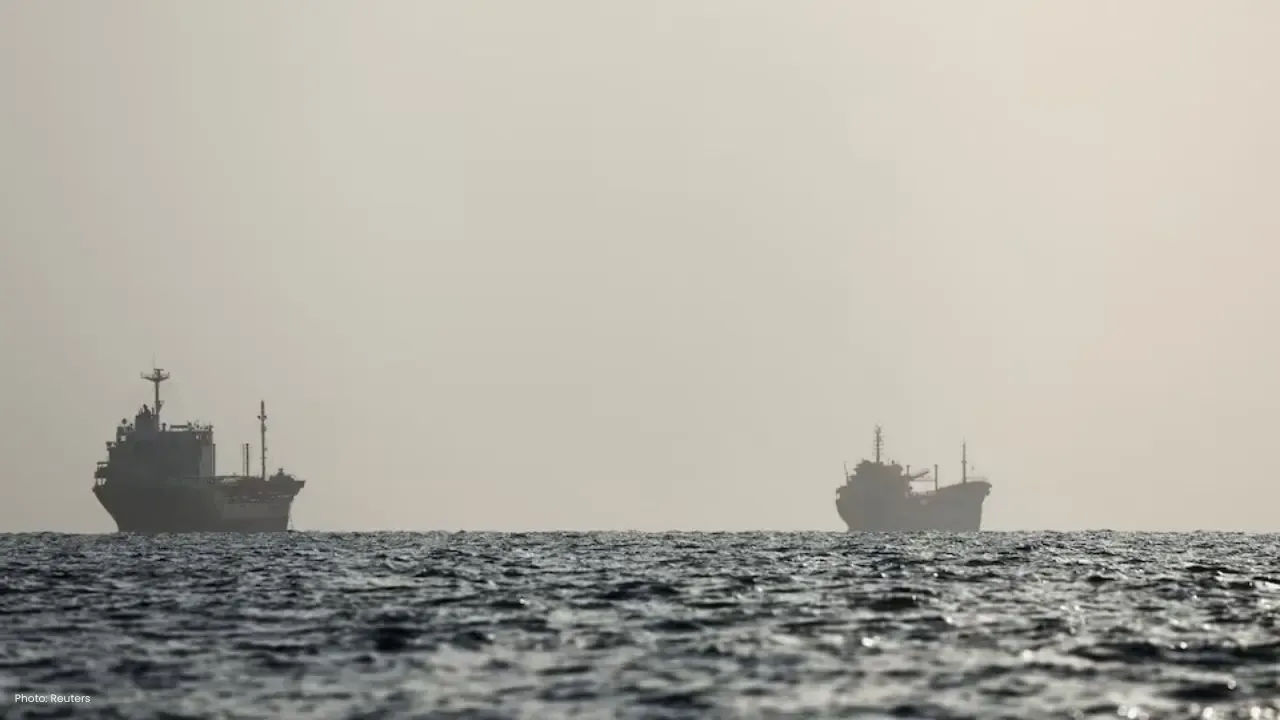
Historically, the Strait of Hormuz accounts for approximately one-fifth of the global oil supply.
Washington has cautioned nations against engaging in business activities with Iran, warning of possible secondary sanctions, although such measures have not yet been taken by the US Treasury Department.
Iran's Foreign Ministry stated that under international law, countries are obligated not to enforce US sanctions against Tehran. They denounced the new sanctions as a “crime against humanity”, asserting they endanger the well-being and livelihoods of millions.
Ayatollah Khamenei, who has not been seen publicly since the February 28 attack that claimed his father's life, issued a statement on Friday.
In his address, he forbade officials from pursuing activities that might disrupt social harmony and implored them to issue statements that bolster public morale.
This appeal arises amid anxieties that increased economic hardship may incite public protests.
Khamenei also urged the government to tackle the worsened economic circumstances brought about by the conflict, specifically spotlighting inflation, unemployment, and the management of goods and market pricing.
According to Iranian President Masoud Pezeshkian, the country’s foreign trade has plummeted by nearly 35% as a result of US sanctions and the blockade on its ports.
Pezeshkian mentioned that Iran exported around 90 million barrels of oil during the brief memorandum of understanding signed between the US and Iran in June, which allowed for limited Iranian oil sales.
As part of its ongoing initiatives targeting entities dealing with Iran, the US Treasury placed sanctions on Egypt’s Banque Misr.
These sanctions stemmed from the bank's financial interactions with Tehran. The US proposed a regulation to prevent the bank's branches in the UAE from conducting transactions in US dollars.
Egypt's central bank confirmed it was in communication with US officials, stating that the sanctions only pertain to US dollar transactions involving Banque Misr's UAE division.
Additionally, the US Treasury announced sanctions against a Hong Kong-based entity and an individual associated with Iran’s Bank Melli.
As the US continues to apply economic pressure, diplomatic ventures are also in play to end hostilities.
Qatari Prime Minister Sheikh Mohammed bin Abdulrahman Al Thani emphasized the critical need for restoring open maritime access through the Strait of Hormuz during discussions with Iranian leaders in Tehran.
Iranian Foreign Minister Abbas Araqchi characterized the dialogue with Al Thani as “creative”.
Qatar, a US ally, and Pakistan played pivotal roles in brokering the June understanding that prompted a brief ceasefire, although disagreements regarding the Strait of Hormuz subsequently led to its collapse.
Mohsen Rezaei, secretary of Iran's Supreme National Security Council, revealed on Thursday that Iran is drafting a set of conditions for the reopening of the Strait of Hormuz.
Previously stipulated conditions from Iran have included the cessation of the US blockade on its ports, compensation claims, and the lifting of sanctions.
US military leaders reported that American forces had removed sea mines from the strait, which were previously deployed by Iran’s Islamic Revolutionary Guard Corps.
President Trump has continually asserted that the strait remains open, a claim the IRGC has contested, labeling it “an obvious lie” and declaring the waterway closed to vessels lacking Iranian permission.
Due to threats from Iranian forces, numerous ships have chosen to avoid the route entirely. Preliminary shipping data revealed that only seven vessels traversed the Strait of Hormuz recently, a significant drop from 17 the day before, contrasting with a 10-day average of 15.





MotoGP Qatar GP to Proceed Despite Regional Tensions and Safety Fears
MotoGP Qatar GP is scheduled for November 6-8 despite regional tensions, as Alex Marquez questions s

Fiji Appeals to Mark Nawaqanitawase’s Pride Ahead of Rugby World Cup
Fiji hopes Mark Nawaqanitawase will choose his ancestral homeland over Australia as the 2027 Rugby W

OpenAI and Poland’s NASK Team Up to Improve AI Safety
OpenAI and Poland’s NASK will research AI safety, security risks and stronger safeguards as concerns

Asian Football Confederation Backs Infantino for FIFA Re-Election
The Asian Football Confederation has backed Gianni Infantino for FIFA re-election, despite earlier o

Tesla Shares Fall 5% as Spending Cuts Raise AI Concerns
Tesla shares drop 5% after cutting its 2026 spending forecast to $20 billion, raising questions abou

Spotify Forecasts Higher Fourth-Quarter Profit on AI Investments
Spotify forecasts fourth-quarter operating income above estimates as AI-powered playlists and person