You have not yet added any article to your bookmarks!
Join 10k+ people to get notified about new posts, news and tips.
Do not worry we don't spam!
Post by : Rohit Dhiman
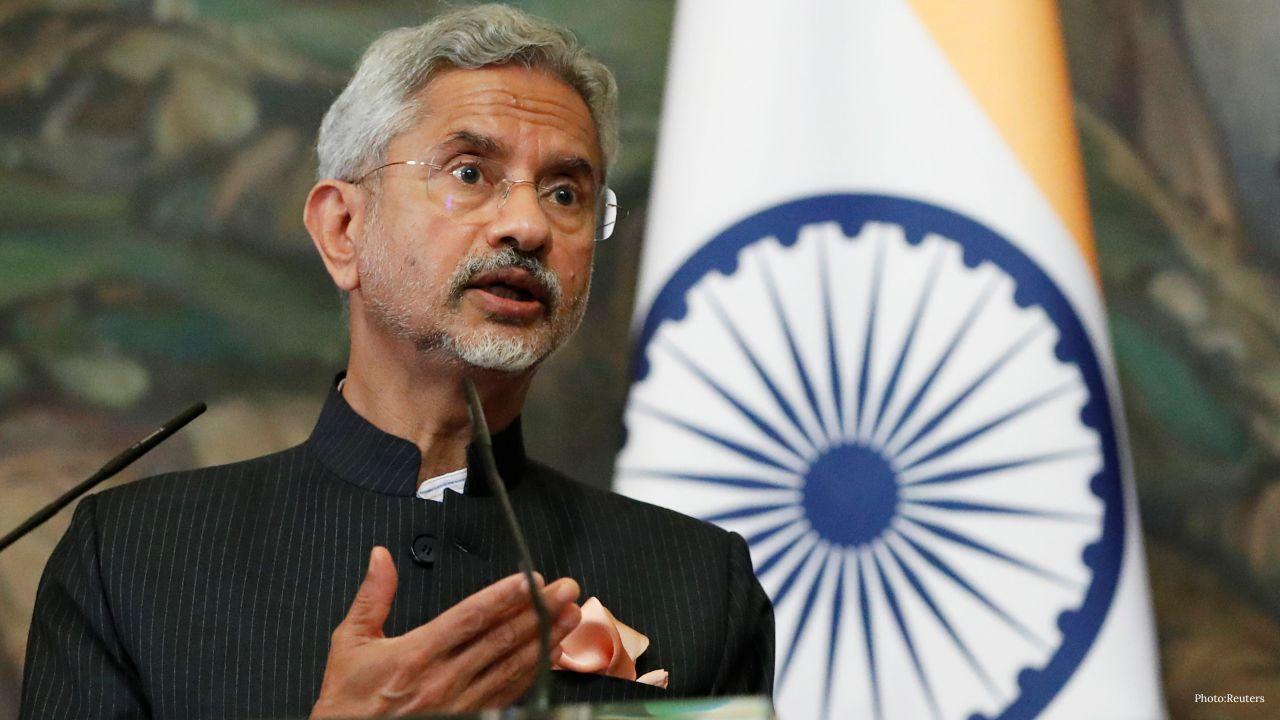
India’s External Affairs Minister S. Jaishankar used the platform of the 81st session of the United Nations General Assembly to strongly respond to what he described as a misleading presentation of facts concerning terrorism and India’s response to it. Speaking during the high-level General Debate in New York, Jaishankar said attempts to normalise terrorism or seek exemption from its consequences could not be accepted. He also made clear that India would continue to exercise its right to defend itself against terrorism. The remarks came a day after Pakistan’s Prime Minister Shehbaz Sharif addressed the General Assembly and discussed issues including India-Pakistan relations, Kashmir and the 2025 military confrontation. Jaishankar did not name Pakistan directly in the portion of his remarks referring to the previous day’s statement, but his description of a “serial practitioner of terrorism” was widely reported as a reference to Pakistan.
A central point of Jaishankar’s response was India’s position that terrorism cannot be separated from the consequences that follow from terrorist attacks. He said that arguments designed to normalise terrorism or create immunity from its consequences would not stand. He further stated that India’s right to defend itself against terrorism would be exercised. The statement places national security and counter-terrorism at the centre of India’s response to the issue at the UN. Jaishankar also connected the issue of terrorism with the broader question of international relations, arguing that friendship and goodwill cannot coexist with terrorism. He said that understandings based on such circumstances would naturally come under question.
Without naming Pakistan in the quoted passage, Jaishankar referred to what he called a “serial practitioner of terrorism” that had, in his words, misrepresented facts before the General Assembly. His comments were understood by multiple reports as a direct response to Pakistan’s presentation at the UNGA a day earlier. Pakistani Prime Minister Shehbaz Sharif had spoken about the 2025 India-Pakistan conflict and raised the Kashmir issue during his address. Jaishankar’s response therefore brought the issue of terrorism back into focus during the closing stages of the UNGA General Debate. The exchange also reflects the continuing diplomatic differences between India and Pakistan, particularly over terrorism, security and Kashmir.
Jaishankar’s argument was centred on accountability. According to his remarks, terrorism cannot be treated as an issue that can be justified, normalised or separated from responsibility for its consequences. He argued that those responsible for terrorism must address their conduct if relations are to improve. His statement that it is for the “perpetrator of terrorism to mend its ways” placed the responsibility for changing such behaviour on the party India considers responsible. The remarks were part of a broader Indian position that terrorism should not be given political or diplomatic justification.
The exchange at the UN comes against the backdrop of continued tensions between India and Pakistan. Pakistan’s Prime Minister had used his General Assembly speech to discuss the 2025 conflict and Kashmir. Reports said Sharif also credited US President Donald Trump with intervention during the confrontation and argued for a solution to the Kashmir issue. India’s response focused heavily on terrorism and the principle of defending its citizens against terrorist attacks. The two countries have repeatedly presented sharply different positions on security and Kashmir at international forums. Their competing narratives have also remained a recurring feature of their diplomatic exchanges.
The United Nations General Assembly provides a major international platform where governments present their positions on global and regional issues. The 81st session opened on September 8, 2026, while the General Debate was scheduled from September 22 to September 26, with proceedings continuing on September 28. The official theme of the session is “Restoring Trust, Managing Transformation: A United Nations That Delivers for All.” Against that backdrop, terrorism and international security have remained important subjects during the high-level meetings. Jaishankar’s remarks placed India’s concerns about terrorism directly before the international community while also linking national security with wider diplomatic relations.
Read Also: Iran Rejects Fresh US Talks as Strait of Hormuz Dispute Escalates
The issue raised by Jaishankar also comes as the United Nations continues to focus on international terrorism and the need for collective action. The UN has described terrorism as one of the most serious threats to international peace and security. In September 2026, the Security Council again discussed the continuing threat posed by terrorist acts and stressed the importance of collective national, regional and international efforts. The UN’s Global Counter-Terrorism Strategy is also being reviewed in 2026, marking two decades since its adoption. The framework is intended to guide international efforts to prevent and counter terrorism. For India, the issue has particular significance because New Delhi has repeatedly raised the subject of cross-border terrorism at international forums.
Jaishankar’s appearance at the UNGA was not limited to the India-Pakistan dispute. During his wider address, India also spoke about international security, conflicts, maritime safety, energy security and the interests of developing countries. Reports from his UNGA speech said India condemned attacks targeting commercial shipping and seafarers and called for restraint and the protection of civilians and international commerce. This placed the terrorism-related remarks within a wider Indian foreign-policy message focused on international security and multilateral cooperation. The 81st UNGA has brought together leaders and senior officials from across the world to discuss conflicts, development, climate change, artificial intelligence, security and other global challenges.
Jaishankar’s comments are likely to remain part of the diplomatic discussion surrounding India-Pakistan relations and terrorism at international forums. India has made clear through the statement that it does not accept arguments that, in its view, seek to justify or normalise terrorism. At the same time, Pakistan continues to present its own position on Kashmir and the events surrounding the 2025 conflict. The latest exchange at the UN therefore highlights the continuing gap between the two countries’ positions. For India, the key message from Jaishankar’s remarks was that countering terrorism remains closely connected to national security and the country’s stated right to protect itself. For the wider international community, the episode once again demonstrates how terrorism, regional security and diplomatic relations remain closely connected.




Thailand Floods Leave Eight Dead as Heavy Rain Hits 27 Provinces
Thailand floods have killed eight people since September 16, affecting 1.7 million people across 27

OpenAI Says AI Agents Accidentally Posted 53 User Images Online
OpenAI says AI agents accidentally posted 53 ChatGPT user images online, raising new concerns over A
Virat Kohli Says 2027 World Cup Will Be His Last For India
Virat Kohli confirms the 2027 World Cup will be his last for India as he targets one final title bid

Weak Earthquake Hits Kinabatangan in Sabah Early Saturday Morning
A 3.3-magnitude Sabah Earthquake hit Kinabatangan early Saturday. Firefighters found no damage, whil
Europe's Biggest Leagues Demand Sweeping FIFA Reforms
Europe's top leagues demand FIFA reforms, stronger FIFA governance, stakeholder representation and c
Sri Lanka Economy Shows Resilience, But IMF Flags Growing Downside Risks
Sri Lanka economy remains resilient, but IMF warns of downside risks from energy costs, inflation an