
You have not yet added any article to your bookmarks!
Join 10k+ people to get notified about new posts, news and tips.
Do not worry we don't spam!
Post by : Rohit Dhiman
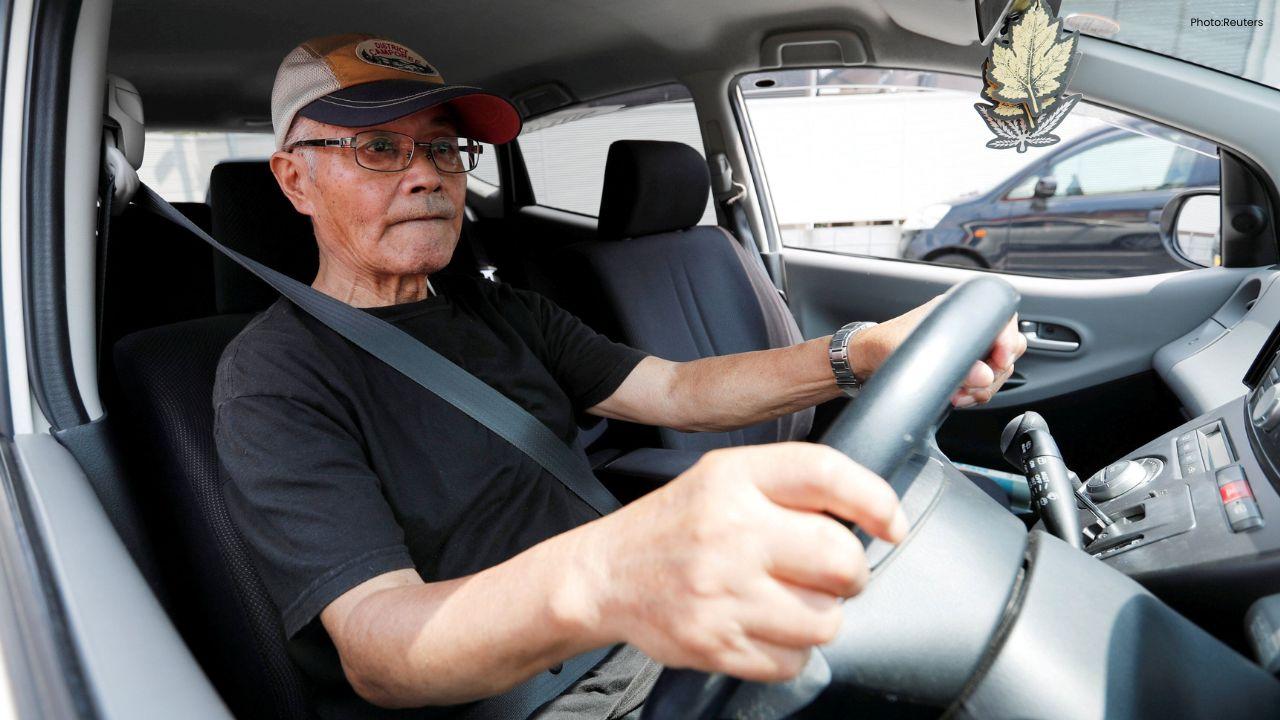
Japan is preparing to introduce stricter practical assessments for a section of its ageing driving population as authorities seek to reduce serious crashes linked to mistakes behind the wheel. The proposed changes are aimed particularly at people whose previous driving records indicate a higher level of risk. Officials say some serious incidents have involved motorists confusing the accelerator with the brake, creating situations in which vehicles suddenly move forward instead of stopping. The issue has become increasingly important as the country's population continues to age. While the overall number of fatal road crashes has generally declined, authorities have observed a worrying pattern among people in the oldest age groups. Under the planned system, certain motorists will have to demonstrate an additional driving manoeuvre before renewing their licences.
Japan's National Police Agency has announced measures aimed at improving road safety among older motorists. The proposed changes will primarily affect people aged more than 75 who have a history of traffic violations. The authorities are expected to introduce the revised practical requirements from next year. At present, older people already face additional requirements when renewing their driving licences. A mandatory skills assessment was introduced in 2022 for certain motorists aged 75 and above. However, officials now believe the existing assessment does not fully address the risks associated with drivers who have previously committed traffic violations. The latest move follows an expert review of accident data and driving-test results.
The decision comes amid concern that some older motorists remain significantly more likely to be involved in crashes even after successfully completing the existing assessment. According to figures cited by Japanese authorities, motorists aged over 75 who have previous traffic violations continue to cause more than twice as many accidents as people in the same age group without such violations. This has raised questions about whether the current testing system adequately identifies drivers who may have difficulty responding quickly in complicated situations. Authorities are particularly concerned about incidents in which a driver intends to brake but instead presses the accelerator. Such mistakes can cause vehicles to accelerate suddenly, potentially striking pedestrians, other cars, buildings or roadside objects.
The revised assessment is expected to add a manoeuvre known as a "direction change" to the practical test. The exercise is designed to assess whether a motorist can correctly coordinate the accelerator and brake while changing the direction of a vehicle. Existing practical assessments already include several elements, including stopping completely at designated locations. The additional exercise is intended to provide examiners with another opportunity to observe how a driver controls the vehicle during a movement that requires changes in speed and direction. Officials believe this could help identify problems that may not become obvious during more straightforward sections of the examination.
The debate surrounding elderly drivers has intensified as Japan experiences one of the world's most rapidly ageing populations. Older citizens often depend on private vehicles for everyday activities, particularly in areas where public transport services are limited. For many people outside major cities, driving may be essential for reaching hospitals, supermarkets, community centres and family members. As a result, authorities face a difficult balancing act. They need to improve road safety without unnecessarily restricting older people who remain capable of driving safely. The government therefore appears to be focusing on driving ability and previous behaviour rather than simply removing licences based on age alone.
The proposed changes will target motorists aged over 75 who have a history of traffic violations. This means the stricter practical assessment will not automatically apply to every older person. Instead, the focus will be on a group that authorities consider to have a comparatively higher risk based on previous driving behaviour. The approach could allow experienced and responsible older motorists to continue driving while placing additional requirements on people whose records indicate a greater safety concern.
The existing practical examination contains several driving tasks designed to evaluate basic vehicle control. Under the proposed changes, affected motorists will also have to complete a direction-change exercise. The additional assessment will pay particular attention to the driver's ability to use the accelerator and brake correctly while manoeuvring. The purpose is not simply to test whether a person can operate a vehicle under normal conditions. It is also intended to identify whether they can coordinate pedal use appropriately during movements where an error could cause a sudden acceleration. The Japan driving test changes are therefore being presented as a targeted safety measure rather than a blanket restriction on older motorists.
The concern is supported by national accident data. Authorities said people aged over 75 were responsible for around 18 per cent of fatal crashes in Japan last year. The figure is particularly notable because overall road deaths and serious traffic incidents have generally followed a declining trend. The increasing share associated with older motorists reflects the country's demographic transformation. As the number of older citizens increases, their presence on the roads is also becoming a larger part of the national transportation picture. This means the challenge is likely to remain relevant for Japanese policymakers for years to come.
One of the main concerns highlighted by officials is incorrect pedal operation. In some serious incidents, a motorist has intended to stop but pressed the accelerator instead of the brake. The consequences can be severe because the vehicle may move forward suddenly before the driver realises what has happened. Such incidents can be especially dangerous in crowded urban areas, parking facilities, intersections and locations where pedestrians are nearby. The proposed direction-change exercise is intended to provide a more practical way of checking whether a driver can properly manage these controls.
Read Also: Fatal Attack on Saudi Tanker Claims Two Lives
The issue has been brought into sharp focus by several deadly crashes involving older motorists. In May, an 85-year-old man driving a shuttle bus in Nagoya reportedly struck two people in their 30s, killing both victims. The incident renewed discussion about the risks associated with ageing motorists and the effectiveness of existing licence-renewal procedures. Another major case occurred in 2019, when an 87-year-old driver reportedly mistook the accelerator for the brake. The crash killed a three-year-old girl and her mother and left nine other people injured. Such cases have become highly sensitive in Japan because they illustrate how a seemingly simple driving error can result in multiple deaths and serious injuries.









Tesla Shares Fall 5% as Spending Cuts Raise AI Concerns
Tesla shares drop 5% after cutting its 2026 spending forecast to $20 billion, raising questions abou

Spotify Forecasts Higher Fourth-Quarter Profit on AI Investments
Spotify forecasts fourth-quarter operating income above estimates as AI-powered playlists and person

Steve Smith Fit to Bat as Rain Delays South Africa Test
Steve Smith is available to bat despite a neck issue as rain delays the second South Africa Test, wi

Besi Quarterly Orders Beat Forecasts on Strong AI Data Centre Demand
BE Semiconductor Industries reports stronger quarterly orders as AI data centre investment boosts de

Bukayo Saka Injury: Arteta Worried After Arsenal Star Exits Early
Arsenal boss Mikel Arteta fears Bukayo Saka’s quadriceps injury after the winger left the Bayern Mun

Tom Cruise to Receive AFI Life Achievement Award in April 2027
Tom Cruise will receive the AFI Life Achievement Award at a Hollywood ceremony in April 2027, recogn

