
You have not yet added any article to your bookmarks!
Join 10k+ people to get notified about new posts, news and tips.
Do not worry we don't spam!
Post by : Shakul
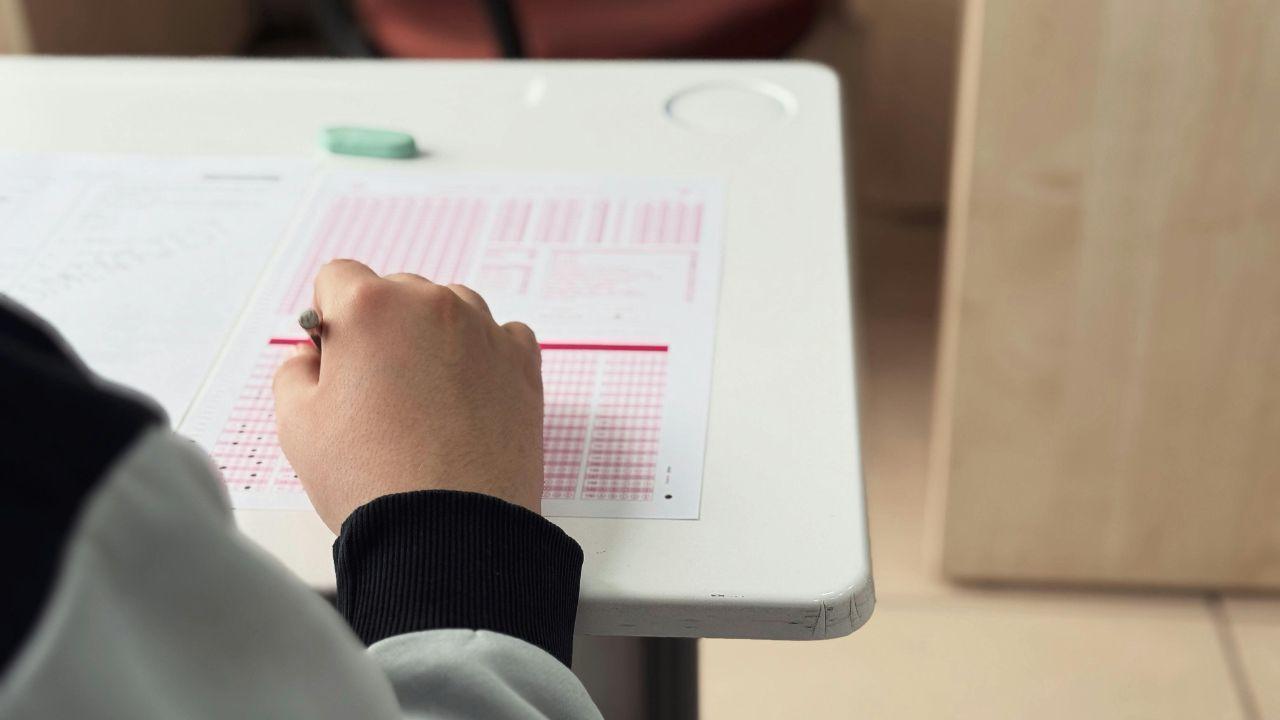
Thousands of students across Nepal’s Karnali Province are set to appear for the Secondary Education Examination (SEE) without completing their syllabus, exposing deep flaws in the region’s education system.
Students like Jamuna Rokka, a Grade 10 student at Janata Secondary School in Subhakalika Rural Municipality, Kalikot, say they were unable to cover key subjects before exams. According to her, only partial portions of English, science, and mathematics were taught before classes were disrupted by holidays and other interruptions.
The situation reflects a broader systemic issue. Many schools in Karnali lack permanent secondary-level teachers, forcing underqualified or primary-level instructors to teach higher classes. In some schools, there are no permanent teachers at all for Grades 9 and 10.
Frequent academic disruptions have worsened the crisis. The school year was interrupted by seasonal breaks, festivals like Dashain and Tihar, winter holidays, and the impact of recent Gen Z protests. These repeated breaks prevented timely completion of the curriculum.
As a result, many students migrated to urban centres like Surkhet and Manma for private tuition classes. However, this has placed a heavy financial burden on rural families, with some spending up to 20,000 Nepali rupees per month on education-related expenses.
Data from the Directorate of Education Development in Karnali shows that, on average, only about 60 percent of the syllabus is completed in schools. The province also faces a severe teacher shortage, particularly in core subjects like English, mathematics, and science.
Officials report that over 1,700 secondary-level teaching positions remain vacant across the province. Even when vacancies are announced, remote districts struggle to attract qualified teachers due to harsh geography and limited facilities.
The impact is visible in academic outcomes. Last year, the SEE pass rate in Karnali dropped to just over 58 percent, with dozens of schools recording zero pass results. Only a small number of students achieved top grades.
Geographical and socio-economic factors further complicate the situation. In high-altitude districts, seasonal migration for Yarsagumba harvesting often pulls students out of school for months. Additionally, harsh winters and mismatched academic calendars disrupt regular learning cycles.
Education experts warn that the declining quality of education in Karnali reflects a failure of policy implementation under Nepal’s decentralised system. While federalism aimed to improve local governance, gaps in teacher recruitment and accountability have left many schools struggling.
As more than 38,000 students prepare to sit for the SEE across Karnali, concerns are growing that the exams are testing not just academic knowledge, but students’ ability to cope with systemic neglect.










PM Modi Pays Tribute to Mahatma Gandhi, Urges People to Support Khadi
PM Modi pays tribute to Mahatma Gandhi on Gandhi Jayanti and urges citizens to support Khadi and the

Amazon Seeks to Offload $8 Billion in Nvidia Chips to Investors
Amazon plans to move $8 billion in Nvidia chips to investors, using a new financing model to strengt

Samsung Raises Galaxy S26 Prices as Memory Chip Costs Rise
Samsung raises Galaxy S26 prices in South Korea as rising memory chip costs put pressure on smartpho

Lewis Hamilton Calls Singapore Grand Prix One of F1's Toughest Races
Lewis Hamilton discusses the demanding Singapore Grand Prix and brings Plus44 and Almave to Singapor

Denmark's Pandora Opens World's Largest Jewellery Factory in Vietnam
Pandora opens its largest jewellery factory in Vietnam, expanding global production, strengthening s

Gautam Gambhir Questions Batting-Friendly Pitches After India's Record ODI Chase
Gautam Gambhir questions batting-friendly ODI pitches after India’s record chase, calling for a bett

