
You have not yet added any article to your bookmarks!
Join 10k+ people to get notified about new posts, news and tips.
Do not worry we don't spam!
Post by : Shweta
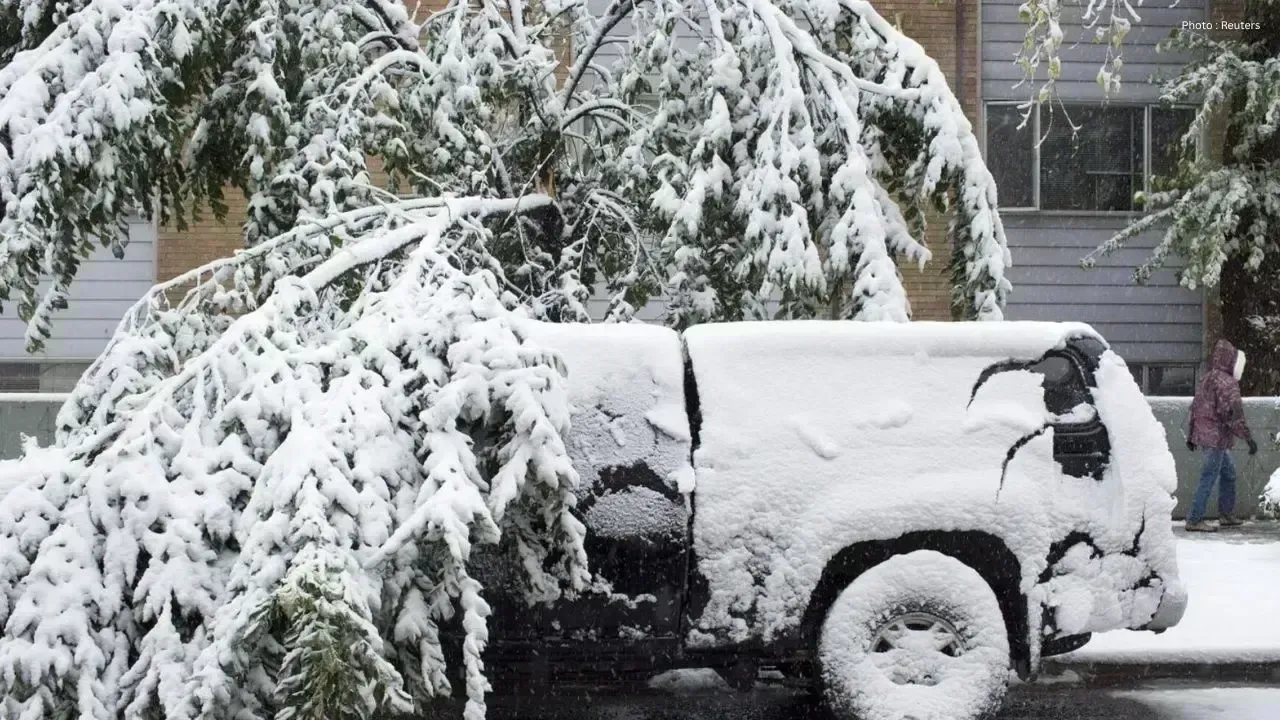
Alberta is bracing for a late spring snowstorm set to impact various regions this week, bringing fresh snow just when many were hoping for warmer temperatures. Environment and Climate Change Canada forecasts that the system will commence late Monday and persist through Wednesday, with certain areas likely to see considerable snowfall.
Weather experts indicate that communities north of Edmonton will experience the most significant effects, with snowfall warnings presently issued for towns like Peace River, Slave Lake, Athabasca, Lac La Biche, St. Paul, and Cold Lake. Some of these areas might receive approximately 15 centimeters of snow, while regions near the British Columbia border could see totals nearing 20 centimeters. The most substantial snowfall is expected during the overnight hours into Tuesday morning before tapering off later in the day.
Temperatures across the province are predicted to hover around the freezing point, meaning some snow could melt as it falls, particularly in urban locales. Nevertheless, this storm could create treacherous conditions and disrupt travel in numerous regions.
For central Alberta farmers, the timing of this snowy weather brings a blend of emotions. While spring snow can hinder fieldwork and sowing, many farmers recognize that the additional moisture is a blessing following a series of dry years. Enhanced soil moisture levels are viewed positively, indicating a potentially fruitful growing season ahead.
Ken Farion, a farmer with decades of experience near Vegreville, remarked that conditions are markedly better this year in contrast to last year. He noted that consistent, lighter snowfalls throughout the winter have reinforced soil moisture and curtailed soil erosion instigated by high winds.
Farmers also emphasize that this extra moisture is crucial not only for crops like wheat, canola, and oats but also for livestock. Water sources such as dugouts and ponds, previously dry, are predicted to refill with the latest precipitation, enhancing the grazing environment for livestock.
Despite the short-term disruptions, optimism persists among producers. They are hopeful that fields will dry out in time for planting, typically by early May, believe that the snow will ultimately contribute to healthier crop yields.
This situation underlines the precarious balance farmers must maintain between receiving too much and too little moisture. While heavy snow or rain can postpone operations, a lack of precipitation can jeopardize yields. For now, many in Alberta’s agricultural community are embracing these improved conditions as a move toward a more stable and productive growing season.










Michael Bracewell Chooses Casual Contract, Targets BBL Opportunity
Michael Bracewell moves to a casual contract as he eyes a BBL opportunity while remaining available

Tuchel Says Alex Scott Can Challenge Declan Rice for England Midfield Spot
Thomas Tuchel says Alex Scott can challenge Declan Rice for an England midfield place after his impr

Air Quality Turns Unhealthy in Central and Western Singapore Amid Haze
Singapore haze pushes PSI above 100 in central and western areas as smoke from regional hotspots rai

PM Modi Pays Tribute to Mahatma Gandhi, Urges People to Support Khadi
PM Modi pays tribute to Mahatma Gandhi on Gandhi Jayanti and urges citizens to support Khadi and the

Amazon Seeks to Offload $8 Billion in Nvidia Chips to Investors
Amazon plans to move $8 billion in Nvidia chips to investors, using a new financing model to strengt

Samsung Raises Galaxy S26 Prices as Memory Chip Costs Rise
Samsung raises Galaxy S26 prices in South Korea as rising memory chip costs put pressure on smartpho

