You have not yet added any article to your bookmarks!
Join 10k+ people to get notified about new posts, news and tips.
Do not worry we don't spam!
Post by : Anis Farhan
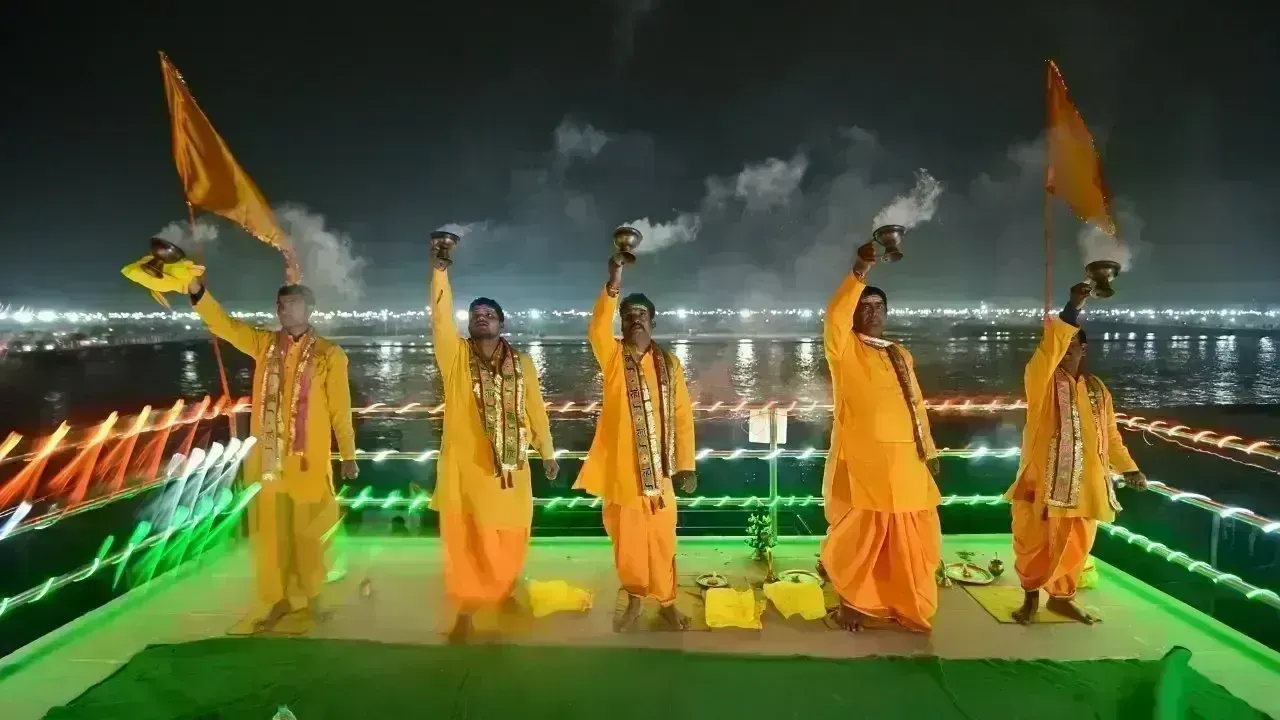
Magh Mela is not just a religious event; it is a vibrant societal experience that unfolds each winter on the sacred banks where the Ganga, Yamuna, and the legendary Saraswati meet. For generations, faith practitioners, entrepreneurs, and seekers have gathered here during the month of Magh to rejuvenate their spirituality and connect with their essence.
The 2026 gathering promises to strengthen this ancient practice, re-establishing Prayagraj as a global center of spirituality. From the sound of morning chants along the river to the glow of lanterns after dusk, the mela marries age-old traditions with efficient modern oversight. Just as cities in the Gulf region integrate heritage with cutting-edge management, Magh Mela maintains its spiritual core while ensuring organization. Pilgrims arrive with simple belongings but foster great hopes for peace, merit, and communal bonds.
Each Magh Mela features a carefully defined timetable of bathing days known as snans, integral to the Hindu lunar cycle. The official schedule will be released by local officials and religious leaders, but the traditional format remains intact.
Key days include Makar Sankranti, Mauni Amavasya, Basant Panchami, Maghi Purnima, and Maha Shivratri. In 2026, these significant events will occur between January and February, with attendance comparable to some of the largest global religious events, including those within the Middle East.
Each snan has unique spiritual significance. Makar Sankranti represents the sun’s transition, Basant Panchami symbolizes renewal, and Maha Shivratri is dedicated to Lord Shiva. Mauni Amavasya serves as the focal point of the mela, marked by reflection and collective restraint before devotees immerse themselves in the waters. These customs are similar to the mindful spiritual retreats seen in the Middle East.
To effectively manage the influx of millions, planning must extend beyond faith. Leading up to Magh Mela 2026, authorities have analyzed crowd-control methods from global cities, including Dubai, Riyadh, and Doha, which handle large-scale events with finesse.
Inspired by these benchmarks, the Prayagraj administration is implementing temporary police divisions, field medical units, lost-and-found programs, and continuous control operations. The aim is to facilitate uninterrupted spiritual observance while safeguarding safety and accessibility.
Technology will play a pivotal role in organizing the 2026 event. Features like mobile apps, QR-coded camp check-ins, online help desks, and intelligent surveillance systems will aid in crowd direction. Echoing Dubai's smart system, Magh Mela will incorporate technological solutions while rooted in tradition.
The vast expanse of Magh Mela is divided into akharas, monastic communities that set up expansive camps, functioning as centers for dialogues and spiritual discipline. Streets named after revered saints evolve into avenues of philosophical debate and devotion.
The 2026 gathering will feature prominent akharas like Juna, Niranjani, Awahan, and Naya Udasin, whose influence spans beyond India to the global Hindu diaspora, including populations in the Gulf.
Daily routines in these camps reflect a disciplined cadence of yajna, katha, communal dining, and initiation protocols. The disciplined environment draws in young seekers, much like how Gulf technology sectors attract global innovators. Many devotees commit to prolonged stays, residing in simple huts that create a temporary township based on patience and commitment.
Initial estimates suggest that around 15 crore pilgrims may attend Magh Mela 2026 throughout its span. A substantial number are anticipated to be Indians residing overseas, hailing from Dubai, Abu Dhabi, Sharjah, Bahrain, Kuwait, Oman, and Saudi Arabia.
As financial analysts predict returns, spiritual scholars discuss the merits gained by those undertaking kalpwas, a month-long disciplined commitment observed by the most devoted pilgrims.
Kalpwas involves sleeping on the bare ground, limiting food intake to once daily, abstaining from indulgences, and following strict ritual cleanliness. This austere lifestyle reflects the discipline emphasized by many spiritual networks in the Gulf. Mauni Amavasya in 2026 could potentially be a record-breaking day for bathing participation.
Inspired by Dubai’s aviation prowess, Prayagraj will depend significantly on train, bus, and improved road transport for Magh Mela 2026.
A multitude of special trains is projected to connect major cities like Delhi, Mumbai, Kolkata, Guwahati, Chennai, Bengaluru, Hyderabad, and Ahmedabad to Prayagraj. Dedicated helplines will provide real-time guidance for pilgrims, prioritizing clarity in communication.
To alleviate congestion, vast parking centers, color-coded pathways, and ring-road systems similar to those seen in Gulf infrastructure projects will be implemented. Collaboration with airlines on Gulf routes aims to offer affordable travel options for NRIs.
Given the enormity of Magh Mela, the demands on law enforcement, medical personnel, and volunteers are substantial. Preparations for 2026 include disaster-response strategies for natural calamities, crowd management, and emergency health services.
Annually, numerous families find themselves temporarily separated. New digital kiosks, automated announcement vehicles, and centralized data systems will facilitate the reunion of lost individuals, reducing anxiety during peak crowd periods.
In keeping with rising health consciousness, similar to Gulf wellness initiatives, Magh Mela 2026 will provide robust public health infrastructure, including temporary medical facilities, clean water access, vaccination centers, and mental health support services.
Millions will depend on free community meals. Specialized teams will monitor food safety standards to avoid contamination, assuring adherence to hygiene requirements across extensive community kitchens.
Spiritual tourism has evolved into a year-round activity across the Middle East. For many overseas Indians, Magh Mela 2026 signifies a profound emotional homecoming, akin to major global cultural festivals.
Art exhibitions from Dubai and Abu Dhabi will focus on riverine heritage, while Gulf-based content creators may livestream rituals and discussions, broadening global engagement.
Similar to large pilgrimage cities worldwide that practice orderly discipline, Magh Mela 2026 will incorporate lessons from global management strategies, combining structure with spiritual devotion.
Colder winter predictions may enhance river water levels but could also pose issues like fog and reduced visibility. Authorities are designing contingency strategies to tackle weather-related challenges.
Arrangements for shelters, blankets, heating options, and medical assistance will be deployed, reflecting the best practices adopted by regions dealing with harsh seasonal climates.
In addition to its spiritual facets, the mela supports a thriving marketplace featuring books, religious artifacts, and everyday necessities. Financial institutions and digital service providers will also establish booths to assist pilgrims.
Beyond ritualistic practices, Magh Mela 2026 will include sessions focusing on ethics, technology, and society. Discussions revolving around artificial intelligence and responsible data usage will be approached through a spiritual lens, keeping the discourse relatable.
The mela serves as a trial of collective discipline. Hard work, community spirit, self-motivation, and patience characterize everyday experiences, promoting bonds among strangers.
A dedicated media operations unit will oversee both national and international coverage, emphasizing authentic storytelling and human-centric narratives over mechanical reporting.
As markets solidify prior to the next escalation, Magh Mela imparts lessons of balance, restraint, and long-term outlook—qualities increasingly necessary in today’s fast-paced environments.
Magh Mela 2026 will illustrate that spiritual gatherings can match the magnitude and sophistication of the world's major events. For the residents of Dubai and the broader Gulf community, this serves as a poignant reminder that discipline, shared values, and introspection are enduring pillars in an increasingly rapid world.
This document is intended solely for informational purposes and should not be construed as an official advisory. Dates, attendance forecasts, and logistical plans are subject to change based on declarations from administrative and religious bodies. Readers are advised to consult official resources for travel or participation confirmations.





Meta Bans TikTok Ads on Facebook and Instagram in Seven Countries
Meta has banned TikTok ads in seven countries, escalating competition over social media users, adver

ASML and Zeiss Target Next-Generation Chip Technology in 10 Years
ASML and Carl Zeiss are developing Hyper NA technology to print smaller chip circuits, with the next

Rabada Misses First Australia Test as South Africa Pick Two Spinners
Kagiso Rabada misses the opener as South Africa vs Australia begins, with Anrich Nortje returning an

Starc Compares Australia's Tough Year to McIlroy's Major Sweep
Mitchell Starc says Australia winning three away Test series and the World Cup would match Rory McIl

France’s Sesterce Plans $11 Billion AI Data Centre in Finland
Sesterce plans a $11 billion AI data centre in Finland, with major expansion, green energy plans and

Danaher to Launch AI-Powered Autonomous Research Lab in 2027
Danaher plans an AI research lab for 2027, combining robotics and automation to speed up drug discov