You have not yet added any article to your bookmarks!
Join 10k+ people to get notified about new posts, news and tips.
Do not worry we don't spam!
Post by : Meena Ariff
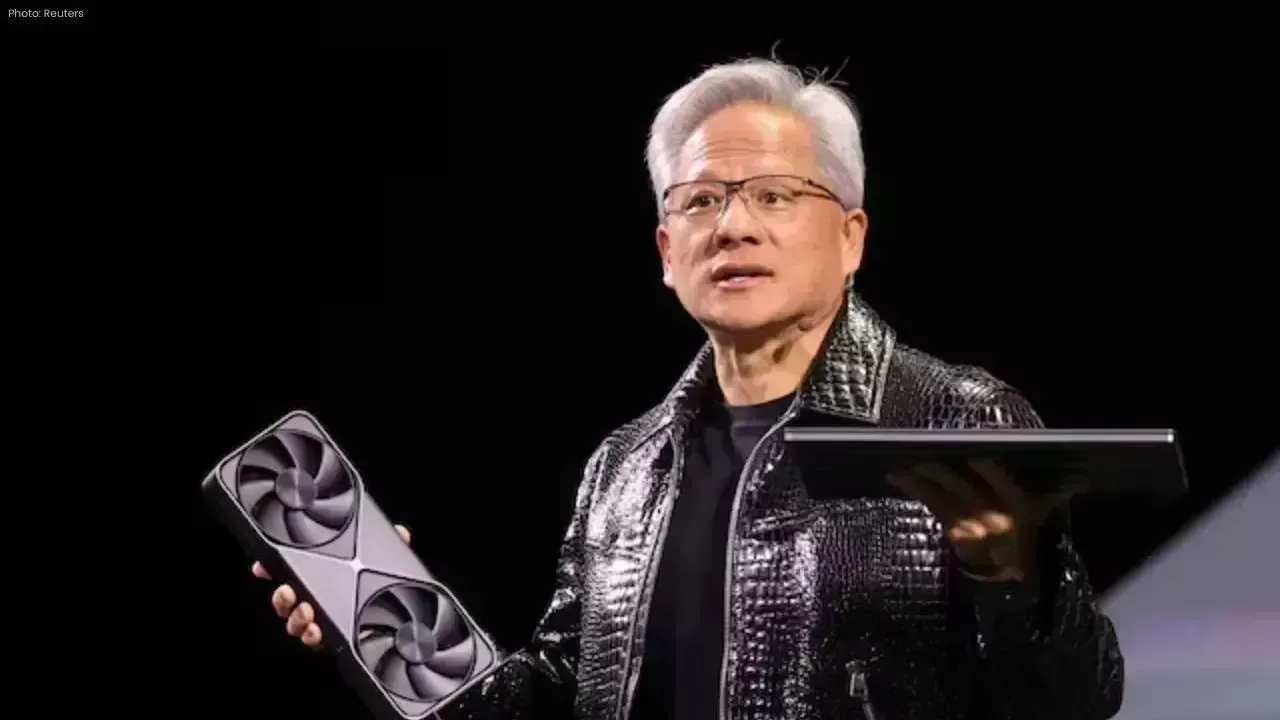
At the Consumer Electronics Show (CES) in Las Vegas, Jensen Huang, CEO of Nvidia, announced that the next-gen artificial intelligence chips, Vera Rubin, have officially entered full production. This marks a pivotal moment in advancing AI computing capabilities. Huang emphasized that the new chips can deliver performance improvements up to five times greater than the previous generation, particularly benefiting applications like chatbots and other expansive AI systems.
The Vera Rubin platform showcases Nvidia's latest in high-performance computing architecture. It features multiple advanced chips organized into powerful server systems crafted to manage intricate AI tasks. These servers are designed to link into extensive clusters that can host thousands of chips, significantly enhancing speed, efficiency, and the capability to produce AI outputs such as text, images, and various data-driven responses.
Huang noted that this remarkable increase in performance stems from a novel proprietary data format combined with an upgraded chip structure. This development enables Nvidia to achieve substantial efficiency improvements, even as the growth in the transistor count remains comparatively modest. The company aims for this innovation to establish a new standard within the industry if it sees broad adoption.
Alongside enhanced processing capabilities, Nvidia is also rolling out new memory and networking technologies intended to boost AI responsiveness. A key focus is on minimizing delays in extended conversations with chatbots, making user interactions quicker and more dependable. Additionally, the company revealed new networking switches that will improve connectivity in large-scale data centers, promoting quicker and more efficient links among numerous machines.
Major cloud service providers, including Microsoft, Amazon, Google, and Oracle, are expected to implement the Vera Rubin systems. Additionally, CoreWeave, an infrastructure company specializing in AI solutions, is poised to be among the initial users of this new platform.
Beyond hardware, Nvidia underscored advancements in software for autonomous vehicles, announcing the broader availability of open-source software that aids self-driving cars in decision-making while preserving detailed documentation of the decision process. This approach aims to enhance transparency and trust, aiding automakers in refining AI behavior.
Despite growing competition from established chip manufacturers and custom AI solutions from leading tech companies, Nvidia remains optimistic that its latest innovations will solidify its leadership in the quickly changing global AI landscape.










Heavy Clashes in Aleppo Between Syrian Forces and Kurdish Fighters
Fighting erupted in Aleppo for a second day, displacing thousands and leaving at least four dead as

Bangladesh Cricket to Work with ICC on T20 World Cup Security
Bangladesh Cricket Board will cooperate with ICC to resolve security concerns and ensure team partic

Flash Floods in Indonesia’s North Sulawesi Kill 16, Hundreds Displaced
Deadly flash floods triggered by heavy monsoon rains in North Sulawesi, Indonesia, killed 16 people,

Prasarana Rail Reliability Soars as Service Breakdowns Fall in 2025
Prasarana records a major drop in rail service disruptions in 2025, while rising ridership signals r

Denmark Cautions NATO's Stability Threatened by US Moves on Greenland
Denmark's Prime Minister warns NATO could collapse if the US attempts military action in Greenland a

Agastya Nanda’s Ikkis Sees Box Office Decline on Monday
Ikkis earned Rs 1.13 crore on its first Monday despite strong opening, facing tough competition from