
You have not yet added any article to your bookmarks!
Join 10k+ people to get notified about new posts, news and tips.
Do not worry we don't spam!
Post by : Anis Farhan
Mahindra & Mahindra has been a cornerstone of the Indian automobile market for decades, known for building strong, durable vehicles suited for both city and countryside. Among its many offerings, the Mahindra Bolero stands tall as one of India’s most iconic utility vehicles. Rugged, reliable, and simple, it’s been the go-to SUV for rural India for over two decades.
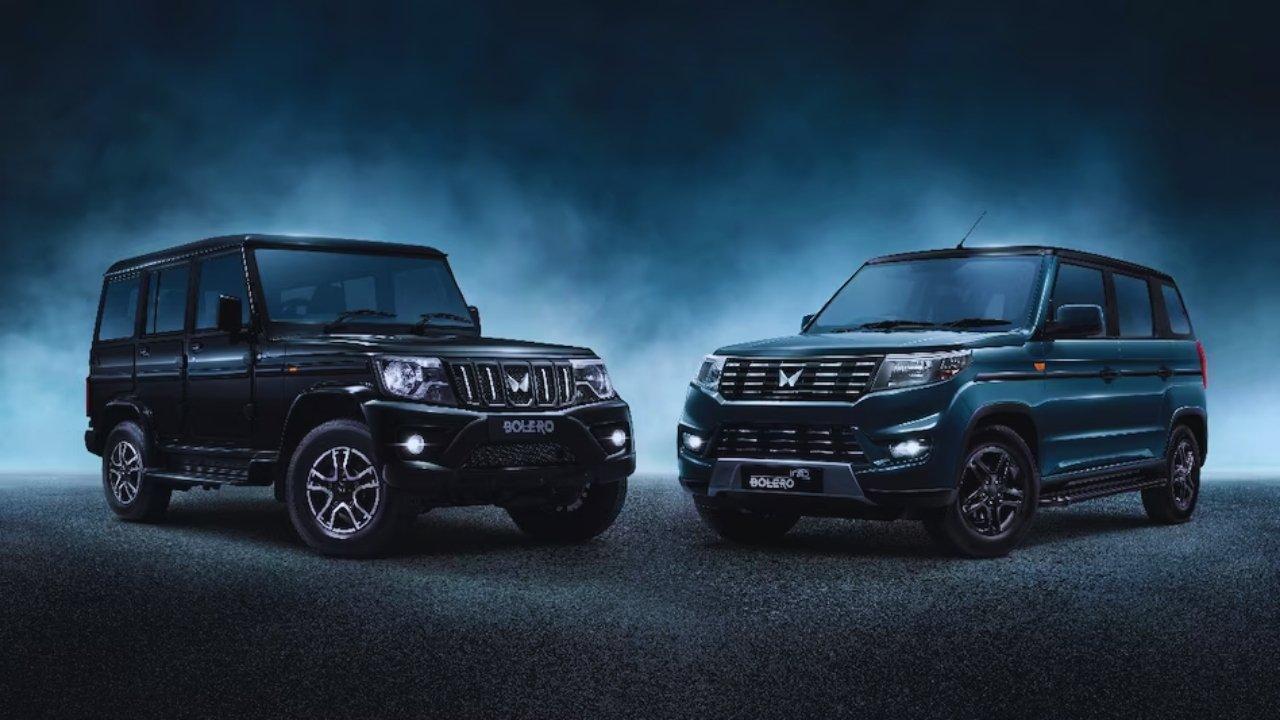
However, as the SUV market evolved, Mahindra introduced the Bolero Neo, a more urban-friendly variant designed to bridge traditional durability with modern sophistication. This detailed analysis compares both models across crucial aspects like design, engine, features, comfort, safety, and pricing—helping buyers decide which Bolero best suits their needs.
The Bolero retains its signature old-school charm. It’s boxy, upright, and unmistakably utilitarian—designed for endurance rather than flair. The latest iteration adds subtle updates, such as a refreshed grille, tweaked bumpers, and modern headlamps, but the overall structure stays true to its original character. This makes it instantly recognizable and trusted by its long-time fan base.
The Bolero Neo, on the other hand, reflects Mahindra’s understanding of changing consumer tastes. Its exterior styling features a more refined front fascia, muscular wheel arches, and a slightly more aerodynamic body. Built on the same platform as the TUV300, the Bolero Neo offers a youthful edge with premium touches like body-colored bumpers, LED DRLs, and new alloy designs.
While the Bolero appeals to those who prefer simplicity and strength, the Neo speaks to modern buyers who want a mix of functionality and style.
Under the hood, both SUVs share Mahindra’s dependable diesel lineage but differ in tuning and output.
The Mahindra Bolero uses a 1.5-litre mHawk75 diesel engine producing 75 bhp and 210 Nm of torque. It’s paired with a 5-speed manual gearbox, tuned for low-end torque and reliable mileage. The performance isn’t designed for speed but for consistency—making it ideal for tough roads, heavy loads, and rural conditions.
The Bolero Neo, by contrast, is powered by the same-sized engine but tuned to deliver 100 bhp and 260 Nm of torque (the mHawk100 unit). This added power makes a visible difference in acceleration, refinement, and highway stability. It’s smoother, quieter, and far more responsive, particularly useful for city and semi-urban driving.
In essence, while the Bolero focuses on dependability and economy, the Neo balances efficiency with modern performance expectations.
Step inside the Bolero, and you’re greeted by a cabin that reflects simplicity and utility. The dashboard features basic controls, durable plastics, and manual functions. Air conditioning, power windows, and a basic infotainment system come standard, but luxury isn’t the priority—it’s practicality. The seats are firm, offering adequate comfort for long hauls, though the layout still feels dated compared to newer SUVs.
The Bolero Neo elevates the experience considerably. Its interior is better insulated, with premium fabric upholstery, chrome accents, and a modern dashboard layout. A 9-inch touchscreen infotainment unit with smartphone connectivity, steering-mounted controls, height-adjustable driver’s seat, and automatic climate control are some of the features that give it a contemporary edge. The cabin feels more refined, making long drives more pleasant and less fatiguing.
So while the Bolero stays rooted in its “no-nonsense” philosophy, the Neo caters to those who desire both comfort and convenience.
Mahindra vehicles are known for their robust build, and both the Bolero and Bolero Neo uphold that reputation.
The Bolero comes with essential safety features such as dual front airbags, ABS with EBD, rear parking sensors, and a driver seatbelt reminder. While it meets current safety norms, it lacks modern driver-assistance technologies. Still, its solid chassis and simple mechanicals make it a reliable companion for rough terrains.
The Bolero Neo expands the safety envelope. In addition to the essentials, it includes side and curtain airbags, electronic stability control (ESP), corner braking control, and rear disc brakes. These features make it far more secure on highways and urban roads. It’s evident that Mahindra designed the Neo to meet higher safety expectations without compromising its rugged essence.
Overall, if safety tech is a top priority, the Bolero Neo is the clear winner.
Driving the Bolero feels raw and mechanical—an experience many traditionalists appreciate. Its high ground clearance and sturdy suspension easily absorb potholes and broken roads, but body roll is evident at higher speeds. The steering feels heavy, particularly at low speeds, which can be challenging for city commutes but works well off-road.
The Bolero Neo delivers a noticeably more composed driving experience. It offers better handling thanks to its more advanced suspension setup and balanced weight distribution. The Neo’s steering feels lighter, making it easier to maneuver in traffic. While it’s not an off-roader in the strictest sense, it can handle mild trails confidently.
This difference in ride quality reinforces how the Bolero suits rugged, rural routes, whereas the Neo excels in mixed urban conditions.
Fuel economy remains one of the most crucial factors for Indian buyers, and both SUVs deliver respectable figures. The Bolero, with its modest power output, averages around 16 kmpl, depending on driving conditions. The Bolero Neo, despite its stronger engine, manages to deliver 17–17.5 kmpl due to refined tuning and improved aerodynamics.
Both vehicles maintain Mahindra’s focus on efficiency, ensuring that operating costs remain affordable over long ownership.
The Mahindra Bolero is one of the most affordable full-sized SUVs in India. Its prices start around ₹7.99 lakh (ex-showroom) and go up to ₹9.5 lakh for higher trims. The Neo, with its added sophistication and features, starts at approximately ₹8.49 lakh and can stretch beyond ₹12 lakh for the top-spec variants.
While the price difference is notable, it’s justified by the Neo’s extra equipment, comfort, and overall refinement. For budget-conscious buyers seeking durability, the Bolero offers unbeatable value. For those desiring a more modern SUV feel, the Bolero Neo provides better long-term satisfaction.
Mahindra Bolero – Pros:
Proven reliability in harsh driving conditions.
Low maintenance and running cost.
Simplicity and rugged mechanicals.
Mahindra Bolero – Cons:
Outdated interior and design.
Limited safety and convenience features.
Basic driving comfort in urban traffic.
Mahindra Bolero Neo – Pros:
Modern styling and better comfort.
Enhanced safety features and technology.
Improved ride quality and refined engine.
Mahindra Bolero Neo – Cons:
Slightly more expensive.
Not as mechanically simple as the classic Bolero.
May not appeal to traditional Bolero loyalists.
The Mahindra Bolero continues to be the backbone of rural India—reliable, rugged, and affordable. It’s perfect for buyers who need a workhorse that can handle rough roads and heavy loads without fuss.
The Bolero Neo, however, represents evolution. It’s built for a new generation of buyers—those who appreciate the Bolero’s heritage but expect modern features, better handling, and safety. It offers more comfort, style, and urban usability while retaining Mahindra’s core toughness.
In simple terms:
Choose the Bolero if you want durability, simplicity, and value for money.
Choose the Bolero Neo if you want comfort, safety, and a touch of modernity.
Both SUVs, in their unique ways, reflect Mahindra’s deep understanding of India’s diverse automotive landscape. One preserves tradition, while the other embraces transformation.
The information in this article is based on the latest publicly available specifications and approximate pricing as of October 2025. Variants, prices, and features may differ across regions and model updates. Readers are advised to check with authorized Mahindra dealerships for the most accurate and updated information.










PM Modi Pays Tribute to Mahatma Gandhi, Urges People to Support Khadi
PM Modi pays tribute to Mahatma Gandhi on Gandhi Jayanti and urges citizens to support Khadi and the

Amazon Seeks to Offload $8 Billion in Nvidia Chips to Investors
Amazon plans to move $8 billion in Nvidia chips to investors, using a new financing model to strengt

Samsung Raises Galaxy S26 Prices as Memory Chip Costs Rise
Samsung raises Galaxy S26 prices in South Korea as rising memory chip costs put pressure on smartpho

Lewis Hamilton Calls Singapore Grand Prix One of F1's Toughest Races
Lewis Hamilton discusses the demanding Singapore Grand Prix and brings Plus44 and Almave to Singapor

Denmark's Pandora Opens World's Largest Jewellery Factory in Vietnam
Pandora opens its largest jewellery factory in Vietnam, expanding global production, strengthening s

Gautam Gambhir Questions Batting-Friendly Pitches After India's Record ODI Chase
Gautam Gambhir questions batting-friendly ODI pitches after India’s record chase, calling for a bett

