You have not yet added any article to your bookmarks!
Join 10k+ people to get notified about new posts, news and tips.
Do not worry we don't spam!
Post by : Saif Rahman
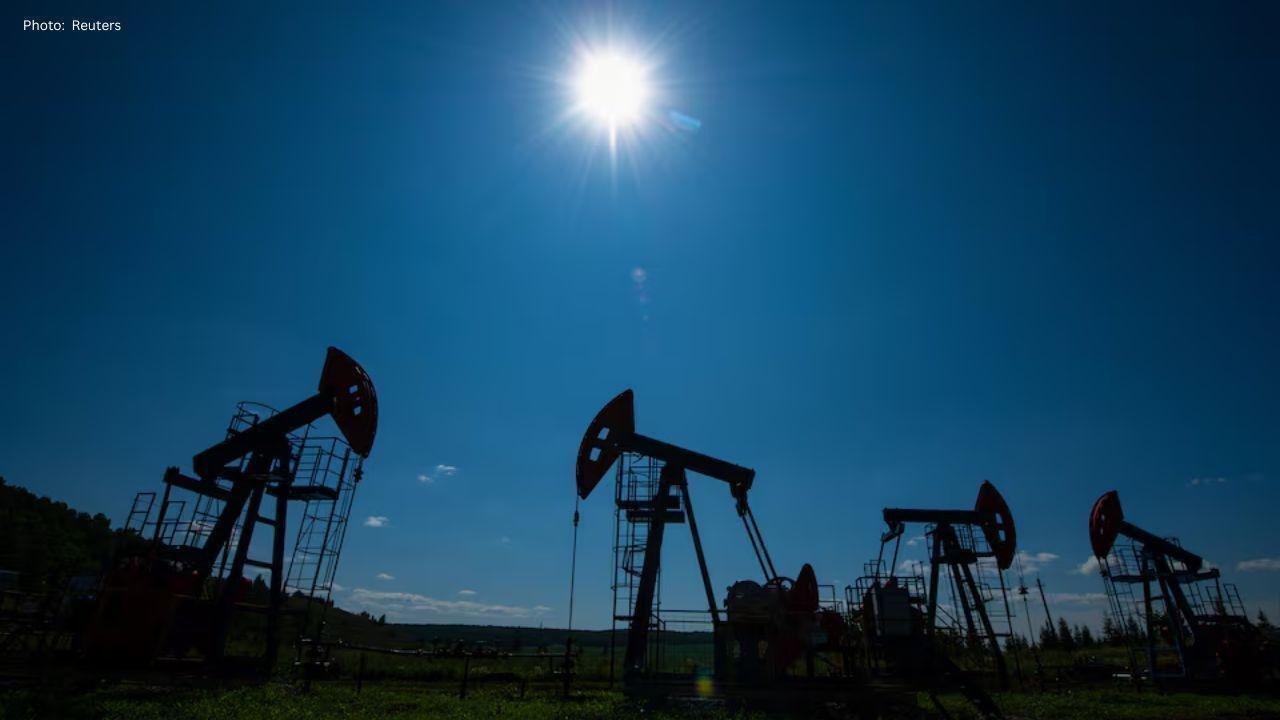
On Friday, oil prices experienced an uptick as traders expressed growing apprehension over potential supply disruptions linked to Venezuela. However, this temporary rally does not mitigate the overall weakness in global oil markets, indicating that prices are still expected to dip for the week. The volatility reflects a blend of uncertainty, cautious outlooks, and reshaping expectations surrounding global economics and politics.
Brent crude saw an increase of 0.70%, reaching $61.71 per barrel, while U.S. West Texas Intermediate rose by 0.75% to $58.03. These upticks followed a day where both indices had declined by approximately 1.5%. Fluctuations throughout the week have led these contracts to drop over 3% since the start of the week.
A significant driver behind Friday’s increase was the announcement that the United States plans to confiscate additional vessels transporting Venezuelan oil. This decision follows the interception of a tanker earlier in the week, intensifying pressure on President Nicolas Maduro’s administration. Immediate concerns arose regarding potential disruptions to Venezuelan exports, which threaten to tighten global oil supply.
Market strategist Hiroyuki Kikukawa noted that prior selling of oil was fueled by hopes of advancing peace negotiations between Russia and Ukraine, which were expected to alleviate supply anxiety. However, the seizure of a Venezuelan tanker prompted a swift comeback in buying activity. Kikukawa warned that if genuine peace negotiations proceed, U.S. crude values could decrease further, potentially testing the $55 mark.
Despite a slight rise on Friday, the overall sentiment in the oil market remains negative. Analysts at ANZ Research pointed out that recent declines indicate a prevalent “risk-off” attitude, whereby investors gravitate towards safer assets. Furthermore, the prospective demand for oil has more recently shown signs of moderation.
The economic landscape in the U.S. continues to contribute to market pressures. Following this week’s interest rate cut by the Federal Reserve, ambiguous statements from Chair Jerome Powell have left markets uncertain about future policy directions. This ambiguity weighs heavily on energy markets as investors grapple with expectations regarding future economic performance.
Additionally, supply projections remain concerning. The International Energy Agency (IEA) reported that global oil supply is anticipated to surpass demand by 3.84 million barrels per day. Though this figure is marginally lower than last month’s prediction, it still reflects a noteworthy surplus. By contrast, the Organization of the Petroleum Exporting Countries (OPEC) has forecasted a tighter supply-demand balance by 2026. The divergence in these predictions adds further complexity for market participants.
Meanwhile, the U.S. Energy Information Administration reported that the decrease in crude inventories last week was less than anticipated, coupled with notable increases in fuel inventories. This development indicates sustained supply while demand remains tepid.
Political frictions continue to exert influence over the market. Leaders from the United States, Britain, France, and Germany held discussions this week regarding Washington’s peace initiatives in Ukraine, labeling it a “critical moment.” Nevertheless, new complications arose when Ukrainian drones targeted an oil installation in the Caspian Sea, halting operations at a Lukoil site. This incident adds further strain to the already volatile energy landscape.
Collectively, these factors underscore the fragility of the global oil market. Prices are susceptible to rapid fluctuations driven by political maneuvers, economic indicators, or unforeseen circumstances. While tensions in Venezuela have given prices a temporary boost, broader factors—ranging from peace negotiations to supply assessments—are driving the market toward a weekly downturn.
As traders remain alert for new cues from international leaders and policymakers, the trajectory of the oil market continues to be unpredictable. In this environment of swift political changes and fluctuating demand, achieving stability in oil prices appears increasingly elusive.










Josh Kerr and Jakob Ingebrigtsen Set for 1,500m Rivalry Rematch
Josh Kerr and Jakob Ingebrigtsen will renew their 1,500m rivalry at the Ultimate Championship in Bud

PSG Coach Luis Enrique Urges Players to Step Outside Comfort Zone
PSG coach Luis Enrique says players must leave their comfort zone and keep improving as the club tar

China’s Tiangong Sets New 400m Record at Robot Olympics
China’s Tiangong robot sets a new 400m record at the Robot Olympics, beating a South African robot i

George Russell Wins Dutch GP Sprint, Boosts Mercedes Morale
George Russell wins the Dutch GP Sprint from pole as Mercedes teammate Kimi Antonelli extends his F1
Australia 50/3 After Bangladesh Bowled Out for 64 in Second Test
Australia reached 50/3 after Bangladesh were bowled out for 64 in the second Test, with Mitchell Sta

Jordan Burroughs Returns to Wrestling with 2028 Olympic Dream
Jordan Burroughs returns to wrestling with Real American Freestyle as the Olympic champion eyes a po