You have not yet added any article to your bookmarks!
Join 10k+ people to get notified about new posts, news and tips.
Do not worry we don't spam!
Post by : Anis Farhan
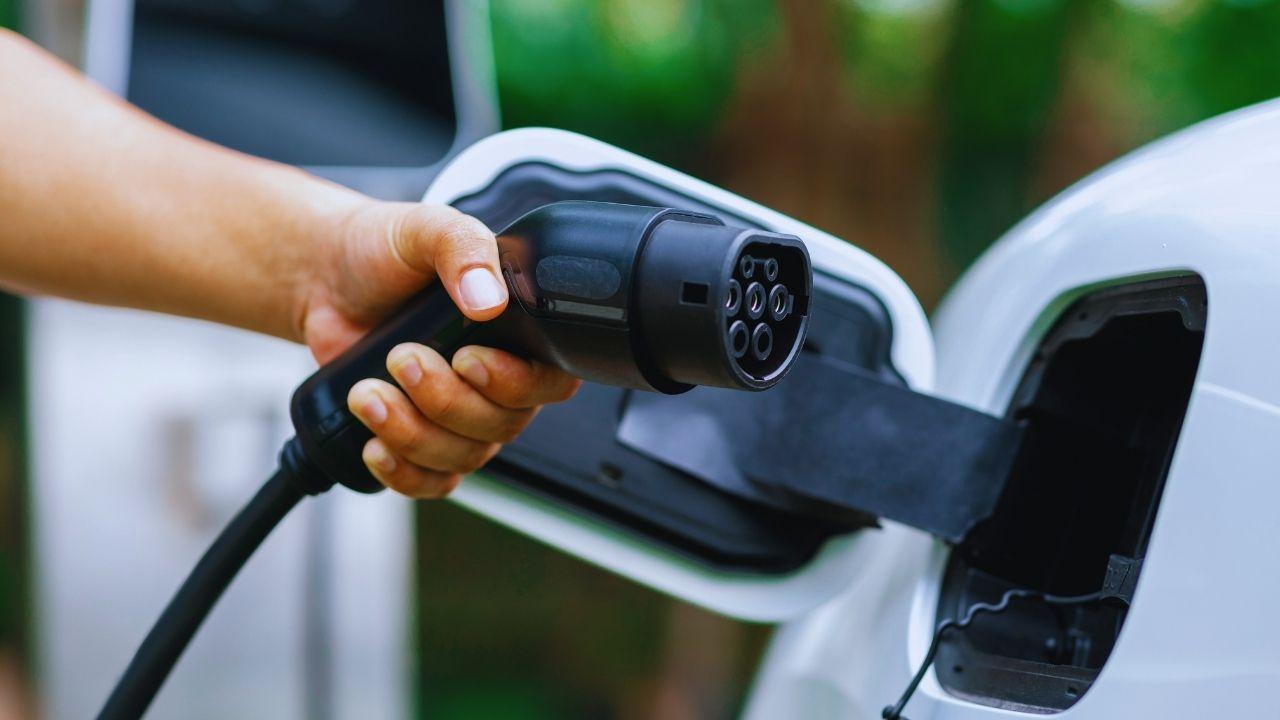
When people think about electric vehicles, they usually imagine batteries, charging stations, and sleek modern designs. Very few think about what lies hidden inside the motor that actually makes the wheels spin. At the heart of almost every high-performance electric vehicle motor sits one small but critical component: the rare earth magnet.
Without these magnets, EV motors would be larger, weaker, and far less efficient. Rare earth magnets make motors more compact while delivering more power with less energy. This is what allows EVs to travel longer distances, accelerate faster, and run more efficiently than earlier electric designs.
In short, no rare earth magnets means no electric vehicle revolution.
Rare earth magnets are permanent magnets made from alloys of rare earth elements like neodymium and praseodymium. Despite their name, these elements are not rare in quantity, but they are rare in location.
They are difficult to extract, costly to process, and environmentally sensitive to refine. Only a handful of countries control large-scale production, which makes magnets a strategic national asset rather than just an industrial input.
Unlike regular magnets, rare earth magnets retain strong magnetic force even at high temperatures. This makes them perfect for electric motors, wind turbines, defence equipment, smartphones, medical devices, and space technology.
Electric vehicle motors rely on rare earth magnets for:
High power output from smaller motors
Better efficiency per unit of electricity used
Faster acceleration and smoother driving
Reduced heat loss
Longer lifespan of motor components
Without these magnets, EV manufacturers would have to compromise on performance or dramatically increase motor size. Neither is acceptable if EVs are to replace petrol and diesel vehicles fully.
India, like most countries, relies on imports for rare earth magnets. This dependency creates supply risks.
If exporting nations restrict supply or global tensions rise, manufacturers face shortages almost overnight. Prices spiral upward, production slows, and innovation suffers.
Over last few years, many nations realised that relying on external sources for such strategic material was risky. This is why domestic production has now become a priority.
India is responding to this challenge with a policy shift aimed at boosting:
Local mining
Domestic refining
Magnet manufacturing
Research and development
Industrial partnerships
This is not just about producing more magnets. It is about protecting India’s future mobility system.
The government is encouraging local production through a combination of:
Financial incentives
Industrial subsidies
Technology support
Long-term procurement assurances
Infrastructure assistance
The aim is to create an entire ecosystem where raw material availability, refinement, magnet manufacturing, and industrial usage occur within the country.
Unlike previous policies that focused on assembly, this push targets core components. This marks a shift from importing high-value components to manufacturing them domestically.
Earlier efforts focused on:
Charging infrastructure
Consumer subsidies
Battery incentives
Manufacturing-linked benefits
This new policy addresses a deeper problem: the invisible bottleneck of material dependency.
It signals a transition from surface-level incentives to core industrial independence.
When magnet supply stabilises and domestic production increases, EV buyers may benefit in multiple ways.
Rare earth magnets form a significant part of EV motor cost. Domestic supply reduces import duty, shipping charges, and currency risk.
This can translate into lower prices over time.
Manufacturers won't have to pause production due to supply disruptions. Buyers face fewer waiting periods and delivery delays.
As component costs fall, automakers can introduce lower-cost variants. Entry-level electric vehicles may become more competitive with petrol alternatives.
Locally produced magnets allow easier testing and improvement. Motors improve as engineers work directly with manufacturers rather than overseas suppliers.
Electric buses and metro rail systems also use rare earth magnets.
A strong domestic supply can accelerate:
Electric bus deployment
Metro expansion
Electric rail upgrades
Battery-powered shared transportation
Cities struggling with pollution may finally see mass adoption rather than pilot projects.
This scheme does not just create manufacturing units. It creates an industrial ecosystem.
Industries will need:
Technicians
Engineers
Researchers
Machine operators
Logistics specialists
Raw material handlers
Entire regions could develop as magnet manufacturing hubs over time.
When industries grow upstream, employment ripples outward, creating both skilled and semi-skilled jobs.
Mining rarely comes without consequences.
Rare earth extraction involves chemicals that must be handled carefully. Any unchecked mining damages soil, water, and air quality.
The government’s new policy includes stricter environmental oversight and encourages green processing technologies.
Responsible sourcing will not just protect nature but also ensure long-term sustainability.
While magnets are not used in lithium batteries, the broader EV ecosystem may benefit indirectly.
As domestic production expands, suppliers improve supply chains. Improved logistics make whole EV manufacturing cheaper and faster.
With the magnet issue addressed, attention can return to battery cost reductions.
If the policy is executed correctly, India could move from being an importer to an exporter.
Possible outcomes include:
Magnet exports to Southeast Asia
Technology partnerships
Manufacturing contracts
International joint ventures
Rare earth magnets are not just an internal need—they are a global currency.
New magnet factories are likely to come up in non-metro areas where land is affordable and infrastructure easier to expand.
This creates:
Industrial corridors
Ancillary businesses
Housing demand
Retail development
Improved infrastructure
Small towns benefit the most when industrial wages enter the economy.
No policy is perfect.
The biggest challenges include:
Environmental compliance
Profitability in early years
Infrastructure development
Skilled workforce shortage
Technology adaptation
Regulatory stability
However, sustained political commitment can overcome these obstacles.
Rare earth magnets are also used in:
Renewable energy systems
Defence equipment
Satellites
Medical imaging
Consumer electronics
This scheme strengthens not just EV manufacturing, but India’s technological independence.
As countries move towards energy independence, supply chains matter more than final products.
Being able to produce your own components is equivalent to owning your future.
This move does not just strengthen the EV industry—it changes India’s role in global manufacturing.
From buyer to builder.
From importer to innovator.
Change won’t happen overnight.
But stages may look like:
Rising public charging infrastructure
Increased EV market competition
Falling prices over 2–3 years
Greater model variety
Improved regional manufacturing
Higher domestic innovation
This is a slow revolution, not a sudden leap.
This policy may not make headlines every day, but it will shape India’s mobility for decades.
Rare earth magnets are small, but their impact is massive.
By securing this invisible link in the EV chain, India is securing cleaner air, stronger manufacturing, better jobs, and technological independence.
Electric vehicles are not the future.
They are becoming the present.
And rare earth magnets are their silent force.
This article is intended for general informational purposes only. It does not constitute technical, financial, legal, or industrial policy advice. Readers are encouraged to seek professional guidance or official policy documents before making decisions based on manufacturing, investment, or public policy developments.






Nvidia Pledges $250 Million for UK AI Safety Research
Nvidia will provide $250 million in computing resources over five years to support AI safety researc

Jacob Bethell Returns as England Name Squads for Australia Tour
England name ODI and T20 squads for the Australia tour, with Jacob Bethell returning from injury and

Beauden Barrett Opens Up About Mental Struggles During All Blacks Exile
Beauden Barrett discusses his confidence struggles after missing six tests, his return against Austr

IMF Says AI Investment Supports Global Growth Despite Energy Shock
IMF says AI investment is supporting global growth near 3%, with Asian economies benefiting from ris

Will O'Rourke Ruled Out of New Zealand's India Series
New Zealand fast bowler Will O'Rourke will miss the India series with hamstring and calf injuries as
AI Companies Expected to Drive Most US Earnings Growth in Q3
AI companies are expected to drive US third-quarter earnings growth as investors assess tech profits