
You have not yet added any article to your bookmarks!
Join 10k+ people to get notified about new posts, news and tips.
Do not worry we don't spam!
Post by : Anis Farhan
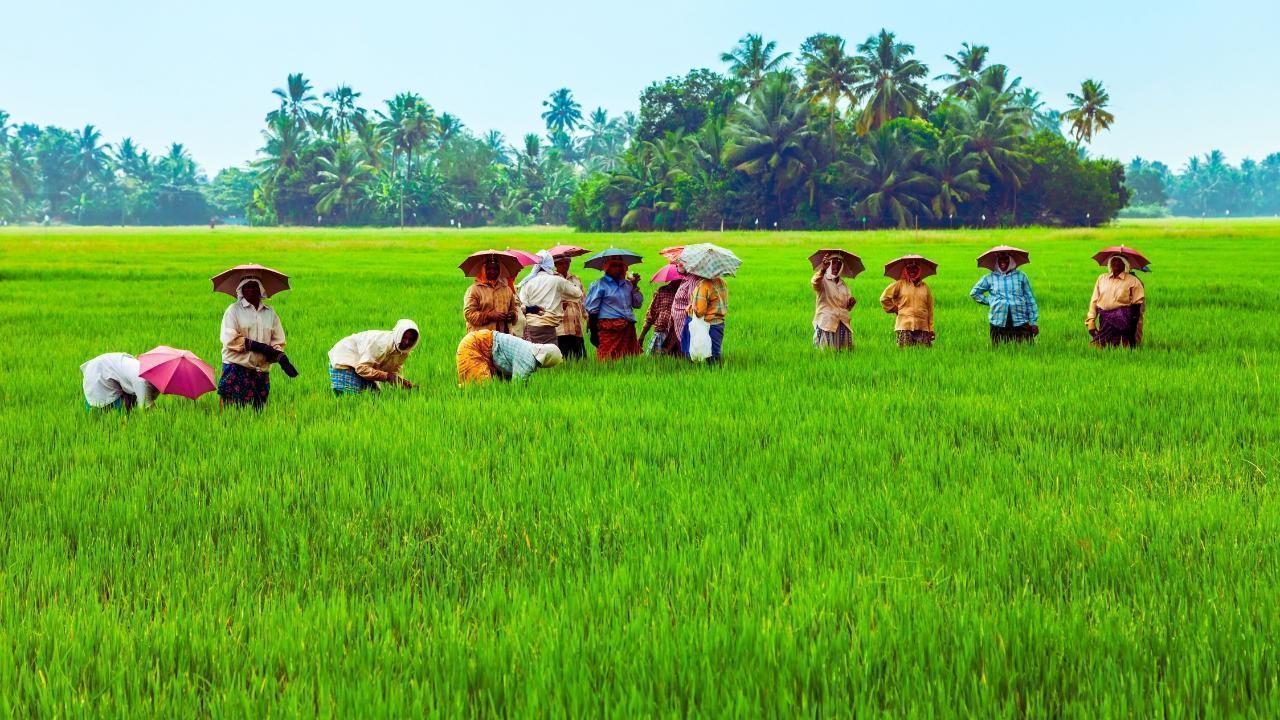
In Southeast Asia, rice is more than food. It’s culture, currency, and survival. But as climate patterns become more erratic and extreme, this essential grain is under threat. In countries like Thailand, Vietnam, Indonesia, and the Philippines—where rice is both a major export and a daily dietary staple—the impacts of climate change are reshaping farming practices and food security at an alarming pace.
This crisis isn't unfolding slowly. It’s happening now. From prolonged droughts in the Mekong Delta to sudden floods in Luzon, rice farmers across the region are caught in a dangerous cycle of uncertainty. For millions who depend on this staple crop, the stakes couldn’t be higher.
Rice cultivation is uniquely sensitive to environmental changes. The crop requires a careful balance of water, temperature, and soil conditions. Even slight deviations can dramatically impact yield. Unfortunately, climate change is disrupting every one of these variables.
In Vietnam’s Mekong Delta, once considered the “rice bowl” of Southeast Asia, saltwater intrusion is devastating farmlands due to rising sea levels. This phenomenon makes the soil too salty for rice paddies to thrive, forcing farmers to switch to less profitable crops—or abandon their fields altogether.
Meanwhile, in the Philippines, typhoons are arriving earlier and more frequently, damaging standing crops and delaying planting seasons. In Thailand, unpredictable rainfall has led to a “yo-yo effect,” with periods of intense drought followed by flash floods. The result is crop failure, economic instability, and rising food prices.
The Southeast Asian monsoon—once predictable and reliable—is becoming erratic. And with every shift, rice farmers pay the price. Climate modeling suggests that by 2050, rice yields in the region could fall by 10–15% if current warming trends continue.
In Indonesia, where rice accounts for over half of daily calorie intake, extended dry spells have already begun to shrink harvest volumes. According to local agricultural agencies, 2024 saw a 9% drop in national rice output—the worst in nearly a decade.
Even irrigation systems aren’t enough to offset the damage. Lower river flows, shrinking reservoirs, and overuse of groundwater are weakening the water security infrastructure that rice cultivation depends on.
The climate threat to rice isn’t just environmental—it’s deeply social. In rural communities across Southeast Asia, rice farming is often the primary livelihood. When yields drop, families go into debt, youth migrate to urban slums in search of work, and poverty deepens.
Rice also plays a critical role in national economies. Thailand and Vietnam are two of the world’s largest rice exporters. Any disruption to their supply chains has ripple effects far beyond their borders, affecting markets across Africa, the Middle East, and Asia.
In 2022, when India imposed export restrictions on non-basmati rice due to domestic shortages, global prices surged. If Southeast Asian producers begin to do the same in response to climate stress, the result could be a new era of food nationalism and global scarcity.
Governments and research institutions are trying to respond. In Vietnam, scientists are developing climate-resilient rice varieties that can withstand salt, drought, and pests. In Thailand, farmers are being trained in alternate wetting and drying (AWD) techniques that reduce water usage and greenhouse gas emissions.
Indonesia has launched digital agriculture platforms to connect farmers with weather forecasts, soil data, and planting recommendations. These tools have shown early success in improving yields and reducing losses.
However, challenges remain. Many smallholder farmers lack access to the latest technology or the capital to invest in it. Cultural traditions and generational knowledge, while valuable, can sometimes slow the adoption of modern practices. Bridging this gap is critical to ensuring long-term resilience.
Regional governments are waking up to the crisis. Vietnam has made rice climate resilience a national security issue. Thailand is considering crop insurance schemes to cushion farmers against extreme events. The Philippines is integrating climate data into its Department of Agriculture’s policy framework.
But more needs to be done. Regional cooperation is still lacking. A coordinated ASEAN strategy on rice sustainability could allow for knowledge sharing, emergency reserves, and research funding. International donors and climate finance institutions must also step up to support grassroots innovation.
Moreover, farmers themselves need to be at the heart of this transition—not just as recipients of aid, but as co-creators of solutions. Initiatives like community seed banks, organic fertilization methods, and cooperative irrigation projects are proving that change can come from the ground up.
Rice is deeply embedded in Southeast Asia’s identity. It appears in proverbs, rituals, and every mealtime. To lose it—or even to reduce its role—is not just an economic blow, but a cultural wound.
And yet, some diversification may be inevitable. As risks rise, some governments are encouraging farmers to grow less water-intensive crops like millet, sorghum, or even fruits and vegetables. Urban vertical farming and hydroponics are gaining traction in Singapore and Kuala Lumpur, offering alternatives for high-density environments.
Still, the goal is not to replace rice, but to future-proof it. This means investing in science, respecting tradition, and embracing innovation—all while facing the hard truth that the planet’s climate trajectory demands rapid adaptation.
The battle to protect rice in Southeast Asia is not just about farming. It’s about food justice, climate resilience, and the preservation of a way of life. As temperatures rise and weather grows wilder, every grain will count—not just on the plate, but in shaping the region’s future.
For policymakers, businesses, scientists, and farmers, the message is clear: the time to act is now. Because if rice falls, so does Southeast Asia’s most vital foundation.
This article is for informational purposes only and reflects environmental developments as of 2025. Readers are encouraged to refer to official agricultural data and climate forecasts for specific policy updates.










PM Modi Pays Tribute to Mahatma Gandhi, Urges People to Support Khadi
PM Modi pays tribute to Mahatma Gandhi on Gandhi Jayanti and urges citizens to support Khadi and the

Amazon Seeks to Offload $8 Billion in Nvidia Chips to Investors
Amazon plans to move $8 billion in Nvidia chips to investors, using a new financing model to strengt

Samsung Raises Galaxy S26 Prices as Memory Chip Costs Rise
Samsung raises Galaxy S26 prices in South Korea as rising memory chip costs put pressure on smartpho

Lewis Hamilton Calls Singapore Grand Prix One of F1's Toughest Races
Lewis Hamilton discusses the demanding Singapore Grand Prix and brings Plus44 and Almave to Singapor

Denmark's Pandora Opens World's Largest Jewellery Factory in Vietnam
Pandora opens its largest jewellery factory in Vietnam, expanding global production, strengthening s

Gautam Gambhir Questions Batting-Friendly Pitches After India's Record ODI Chase
Gautam Gambhir questions batting-friendly ODI pitches after India’s record chase, calling for a bett

