You have not yet added any article to your bookmarks!
Join 10k+ people to get notified about new posts, news and tips.
Do not worry we don't spam!
Post by : Saif Rahman
The rich lands between the Tigris and Euphrates rivers have sustained civilizations for millennia. Today, however, these same areas are grappling with severe wheat shortages, as Iraq confronts one of the most critical water crises in recent history. Earlier aspirations for wheat self-sufficiency are dwindling, impacted by drought, climate changes, and dwindling river sources that hurt agricultural yields.
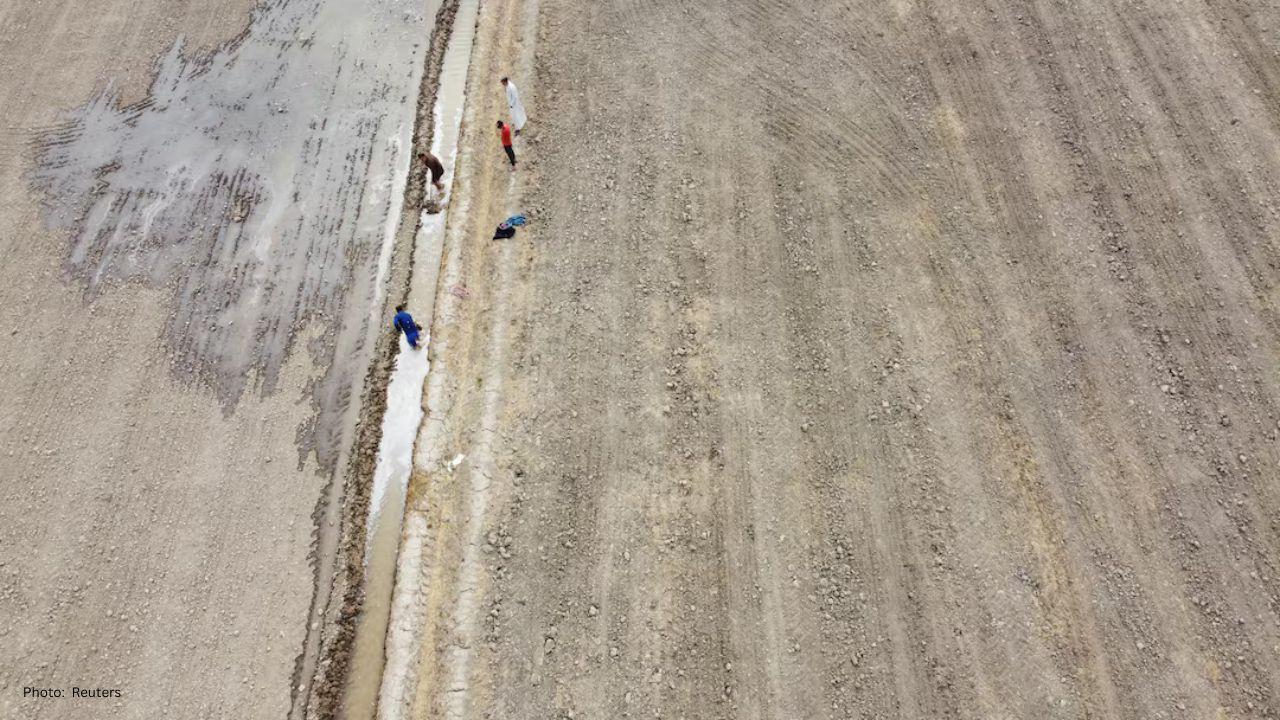
Near Najaf, wheat farmer Ma’an al-Fatlawi surveys cracked earth and dry irrigation canals. For years, his crops relied heavily on the Euphrates, but this season has seen scant water flow. Even attempts to drill wells have fallen short, as the underground water is overly salty for cultivation. Facing these dire circumstances, he has drastically scaled back his wheat planting and terminated most of his workforce.
Previously, Iraq had made significant strides in agriculture. Once known as one of the region’s top wheat importers, the country enjoyed three consecutive years of surplus production. Government initiatives including high-yield seeds, modern cultivation techniques, and generous subsidies bolstered local farming. At one point, Iraq's grain reserves overflowed its storage facilities.
Now, this progress hangs in peril. The current year is marked as the driest in decades, with water levels in both the Tigris and Euphrates plummeting to historic lows. The UN Food and Agriculture Organization warns of a potential 30% to 50% drop in wheat yield this season. The nation’s water reserves have dwindled dramatically, collapsing from about 60 billion cubic meters in 2020 to under 4 billion.
Climate change plays a pivotal role in this calamity. Iraq ranks among the most climate-sensitive nations, experiencing accelerated temperature rises, decreased rainfall, and more frequent heatwaves. External factors exacerbate the situation, too; approximately 70% of Iraq's water originates from neighboring nations. Dams constructed by Turkey and Iran have severely curtailed the water accessible for Iraqi farmers.
The repercussions extend beyond agriculture. With dwindling water supplies, Baghdad is now implementing rationing measures. The government has restricted river-irrigated wheat planting to only 50% of last year’s levels and has prohibited rice farming across the country due to its excessive water needs. Farmers are now mandated to adopt modern irrigation systems like drip and sprinkler methods, which are less wasteful compared to traditional flood irrigation. While desert farming utilizing groundwater is on the rise, it requires expensive equipment and meticulous oversight.
Experts caution that over-reliance on wells could introduce new challenges. To produce one ton of wheat necessitates over a thousand cubic meters of water. If well extraction is not carefully managed, it risks depleting underground reserves. In southern Iraq, groundwater levels are already declining significantly. For many rural households, the financial burden of upgraded irrigation technology is overwhelming.
As local production shrinks, wheat imports are likely to soar again. The FAO estimates Iraq may be compelled to import roughly 2.4 million tons of wheat in the upcoming season. Although global wheat prices are presently low, this dependence on imports leaves Iraq vulnerable to sudden price fluctuations and financial strain. Analysts warn that a scarcity of water and food could spark social unrest and security challenges.
The human toll of this crisis is already evident, with approximately 170,000 individuals displaced from rural regions due to diminishing water resources. For farming families, this issue transcends food availability; it’s a matter of survival and maintaining dignity.
This crisis illuminates how vulnerable water resources can dismantle years of progress in food security. Without timely regional initiatives for water sharing, robust climate adaptation strategies, and sustained support for farmers, Iraq's historical identity as a breadbasket is at grave risk.








Study Warns Using AI for Medical Advice Is ‘Dangerous’ as Users Get Inaccurate Health Guidance
A major new study reveals that artificial intelligence (AI) chatbots and tools may give misleading o

Top Sci-Fi Movies Streaming on Netflix This February: Must-Watch Picks for Genre Fans
A curated news-style guide to the best science fiction films currently available on Netflix in Febru

BCCI Central Contracts Shake-Up: Kohli, Rohit Moved to Grade B as Board Reshapes 2025–26 List
Virat Kohli and Rohit Sharma have been placed in Grade B in the BCCI’s 2025–26 central contract list

Dalal Street Spotlight: Top 10 Stocks Investors Are Watching as Markets Open on a High
Indian stock markets begin the week with strong momentum, and several blue-chip and mid-cap stocks a

Market Movers Today: Key Stocks Set To Watch In Indian Markets
Indian equity markets are poised for active trading as several major companies, including Bharti Air

Milan Welcomes the World: Inside the Grand Opening Ceremony of the 2026 Winter Olympics
The 2026 Winter Olympics opening ceremony in Milan marked a defining moment for global sport, blendi