You have not yet added any article to your bookmarks!
Join 10k+ people to get notified about new posts, news and tips.
Do not worry we don't spam!
Post by : Meena Ariff
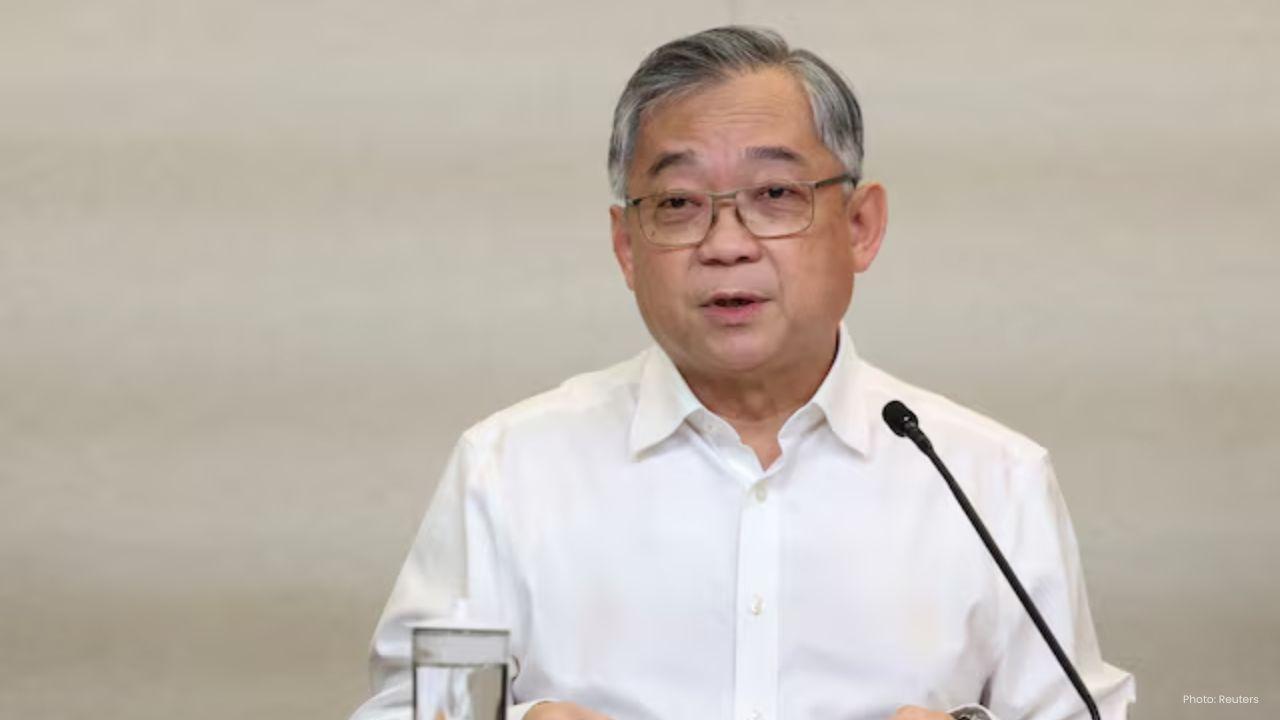
Singapore is planning a new long-term economic strategy to face growing global challenges and prepare the country for future growth. Deputy Prime Minister Gan Kim Yong announced on Monday that five special committees have been formed to lead the effort. These committees will look at major areas such as global competitiveness, technology, startups, jobs, and the impact of economic changes on businesses and workers.
This new review, called the Economic Strategy Review (ESR), is part of the government’s ongoing work to keep Singapore’s economy strong and adaptable. The review will include discussions with businesses, workers, and other groups. The final report with recommendations is expected by mid-2026, although some early ideas may be shared next year.
Why Is This Review Important?
Deputy Prime Minister Gan, who also serves as Minister for Trade and Industry, explained that the world economy is going through big changes. Rising tariffs, tensions between powerful countries, and rapid developments in technology are affecting how countries do business.
In particular, a surprise move earlier this year by U.S. President Donald Trump to introduce 10% tariffs on Singapore’s exports has caused concerns. These tariffs are part of a wider global shift toward protectionism, where countries try to protect their industries by making imported goods more expensive.
Singapore has long depended on open trade to grow its economy, so these changes are serious. “Tariffs are not just extra costs. They shake up the rules-based system we’ve depended on for decades,” Mr. Gan said.
The Five Committees and Their Focus
The five new committees are made up of government ministers, many of whom are newly appointed after the recent elections. Each committee will also include 8 to 11 people from the private sector, unions, and other expert groups.
Here’s a breakdown of what each committee will focus on:
Global Competitiveness
Technology and Innovation
Entrepreneurship and Startups
Human Capital and Skills
Managing Economic Restructuring
These five focus areas reflect Singapore’s goal of being ready for the future, where challenges may be different from anything the country has faced before.
Young and Experienced Leaders Working Together
Six out of the ten political leaders in the committees are newly elected Members of Parliament (MPs). Mr. Gan said this mix of young and experienced office-holders was chosen on purpose.
“You need both fresh ideas and deep experience,” Mr. Gan said. “Young leaders bring new ways of thinking, and senior ministers bring wisdom from past experiences. Together, they can come up with stronger solutions.”
He added that more senior ministers, like Josephine Teo (Digital Development and Information), Tan See Leng (Manpower), and Chee Hong Tat (National Development), are also involved in the Singapore Economic Resilience Taskforce (SERT), which started earlier this year.
How the Review Connects to Ongoing Work
SERT was created in April 2025 after President Trump’s tariff announcement. It has been working on short-term and long-term plans to deal with the economic disruptions caused by global changes.
The task force originally had three work areas:
The last area has now been expanded into this new Economic Strategy Review, which includes five dedicated committees.
Mr. Gan explained that the government realized the problems Singapore faces are complex and can’t be solved with simple plans. “That’s why we need to take a broader, deeper look,” he said.
Talks with the United States Ongoing
On the issue of U.S. tariffs, Mr. Gan said Singapore is still in discussions with the American government. The aim is to find a solution that allows Singapore goods to continue entering the U.S. market with fewer restrictions.
“We’re working out a practical arrangement,” he said, adding that it could involve concessionary tariffs. But he did not give details, as talks are still ongoing.
Building on the Past, Looking to the Future
This is not the first time Singapore has reviewed its economy. In 2016, the Committee on the Future Economy was set up, and in 2020, the Emerging Stronger Taskforce was formed to help after the COVID-19 crisis.
However, Mr. Gan said the current global situation is very different. “The world has changed. The new tariff structure and geopolitical tensions create fresh challenges,” he said.
Still, Singapore won’t throw out old strategies. Instead, the government plans to build on past efforts while adjusting to the realities of today’s world.
Committee co-chair Jeffrey Siow agreed: “We’re not starting from zero. We have good foundations. But we must adapt those ideas to fit the new world we are entering.”
What’s Next?
The five committees will now begin gathering feedback from businesses, workers, and other groups. They will hold meetings, surveys, and public discussions.
Early updates are expected in early 2026, and the full report with recommendations will come by mid-2026. These recommendations will help guide Singapore’s economic plans for the next decade.
In the meantime, the government promises that it will continue to support workers and businesses affected by current global issues.





MotoGP Qatar GP to Proceed Despite Regional Tensions and Safety Fears
MotoGP Qatar GP is scheduled for November 6-8 despite regional tensions, as Alex Marquez questions s

Fiji Appeals to Mark Nawaqanitawase’s Pride Ahead of Rugby World Cup
Fiji hopes Mark Nawaqanitawase will choose his ancestral homeland over Australia as the 2027 Rugby W

OpenAI and Poland’s NASK Team Up to Improve AI Safety
OpenAI and Poland’s NASK will research AI safety, security risks and stronger safeguards as concerns

Asian Football Confederation Backs Infantino for FIFA Re-Election
The Asian Football Confederation has backed Gianni Infantino for FIFA re-election, despite earlier o

Tesla Shares Fall 5% as Spending Cuts Raise AI Concerns
Tesla shares drop 5% after cutting its 2026 spending forecast to $20 billion, raising questions abou

Spotify Forecasts Higher Fourth-Quarter Profit on AI Investments
Spotify forecasts fourth-quarter operating income above estimates as AI-powered playlists and person