You have not yet added any article to your bookmarks!
Join 10k+ people to get notified about new posts, news and tips.
Do not worry we don't spam!
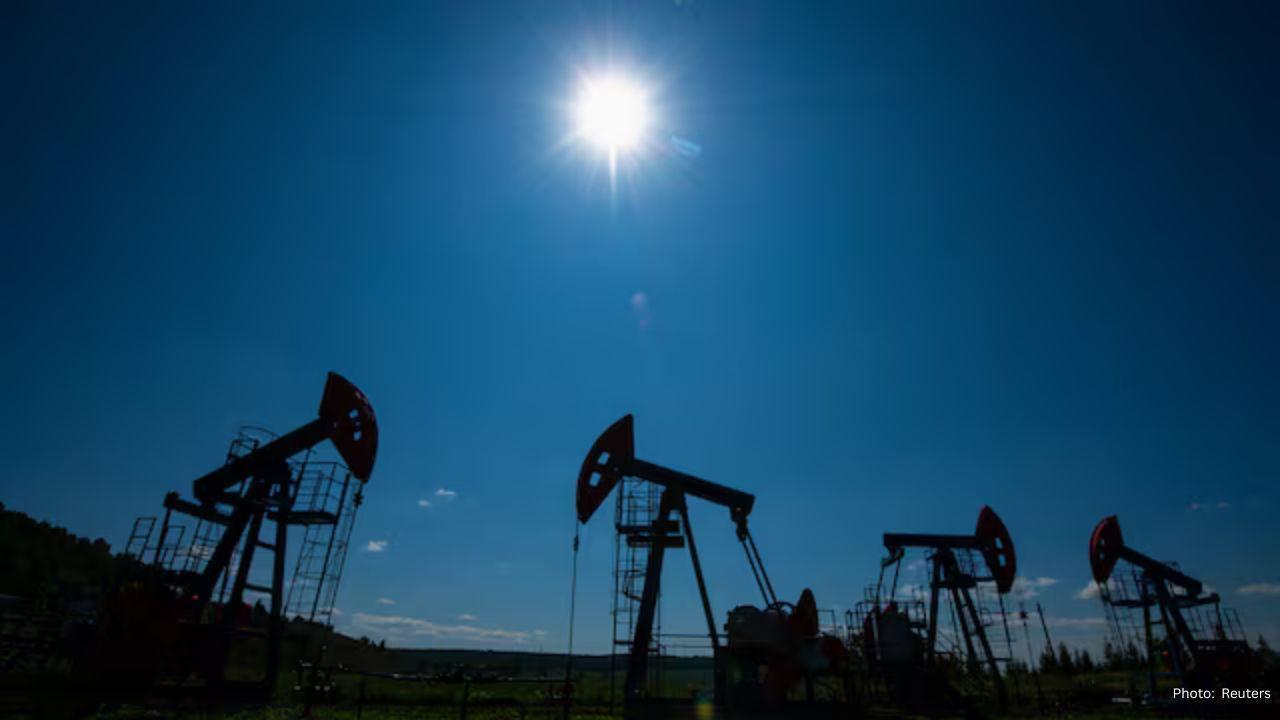
Post by : Saif Rahman
Oil prices experienced minimal movement on Wednesday after a slight decline of about 1% previously. Investors are closely monitoring two significant developments: the ongoing peace negotiations between Russia and Ukraine, and the imminent announcement regarding U.S. interest rates.
Brent crude futures increased by 19 cents, or 0.3%, settling at $62.13 per barrel, while U.S. West Texas Intermediate (WTI) crude also saw a rise of 19 cents, or 0.3%, reaching $58.44 per barrel.
Market analysts suggest that oil prices are struggling to establish a clear trajectory. Suvro Sarkar, the lead energy analyst at DBS Bank, remarked that declining U.S. inventories provided a slight uplift to prices. The latest report from the American Petroleum Institute (API) indicates a reduction of 4.78 million barrels in U.S. crude stocks last week, although inventories of gasoline and distillates increased.
Attention is focused on the Ukraine-Russia peace discussions. Ukrainian President Volodymyr Zelenskiy announced that Ukraine and its European partners will soon share comprehensive documents regarding a peace proposal with the U.S. A successful peace agreement could pave the way for the lifting of international sanctions on Russian entities, potentially boosting oil exports from Russia.
In parallel, the market awaits the decision from the U.S. Federal Reserve regarding interest rates. The Fed is widely anticipated to lower its key rate by 25 basis points to bolster economic growth. Reduced interest rates may enhance oil demand as lower borrowing costs encourage consumer and business spending.
Despite these potential supportive trends, worries about oversupply continue to restraint price increases. Analysts at ING highlighted that while Russian seaborne exports remain stable, they are increasingly finding it challenging to secure buyers. Should demand fail to meet expectations, Russian oil production could decline.
Moreover, U.S. oil production is on the rise. The Energy Information Administration projects that U.S. output could hit an unprecedented average of 13.61 million barrels per day this year, surpassing prior estimates. This influx of supply adds added pressure on global oil pricing.
In conclusion, oil markets are currently treading a cautious line. Developments in peace talks, alterations in U.S. interest rates, and supply dynamics from major production nations like Russia and the United States are set to influence prices in the near future. Investors are staying vigilant as these elements interact, creating an oil market that is sensitive and prone to volatility.










Josh Kerr and Jakob Ingebrigtsen Set for 1,500m Rivalry Rematch
Josh Kerr and Jakob Ingebrigtsen will renew their 1,500m rivalry at the Ultimate Championship in Bud

PSG Coach Luis Enrique Urges Players to Step Outside Comfort Zone
PSG coach Luis Enrique says players must leave their comfort zone and keep improving as the club tar

China’s Tiangong Sets New 400m Record at Robot Olympics
China’s Tiangong robot sets a new 400m record at the Robot Olympics, beating a South African robot i

George Russell Wins Dutch GP Sprint, Boosts Mercedes Morale
George Russell wins the Dutch GP Sprint from pole as Mercedes teammate Kimi Antonelli extends his F1
Australia 50/3 After Bangladesh Bowled Out for 64 in Second Test
Australia reached 50/3 after Bangladesh were bowled out for 64 in the second Test, with Mitchell Sta

Jordan Burroughs Returns to Wrestling with 2028 Olympic Dream
Jordan Burroughs returns to wrestling with Real American Freestyle as the Olympic champion eyes a po