You have not yet added any article to your bookmarks!
Join 10k+ people to get notified about new posts, news and tips.
Do not worry we don't spam!
Post by : Anis Farhan
Photo: AFP
The Thailand–Cambodia border has once again become a flashpoint after a sudden attack in early December 2025 reignited violence that had been simmering beneath the surface for months. The incident shattered the temporary calm that followed the signing of the Kuala Lumpur Peace Accord, leaving civilians terrified and regional observers deeply concerned.
The fresh hostilities unfolded rapidly — artillery fire, retaliatory airstrikes, troop mobilisations, mass evacuations and rising civilian casualties. What began as a sudden exchange of fire quickly escalated into the most serious confrontation between the two neighbours since the early 2010s.
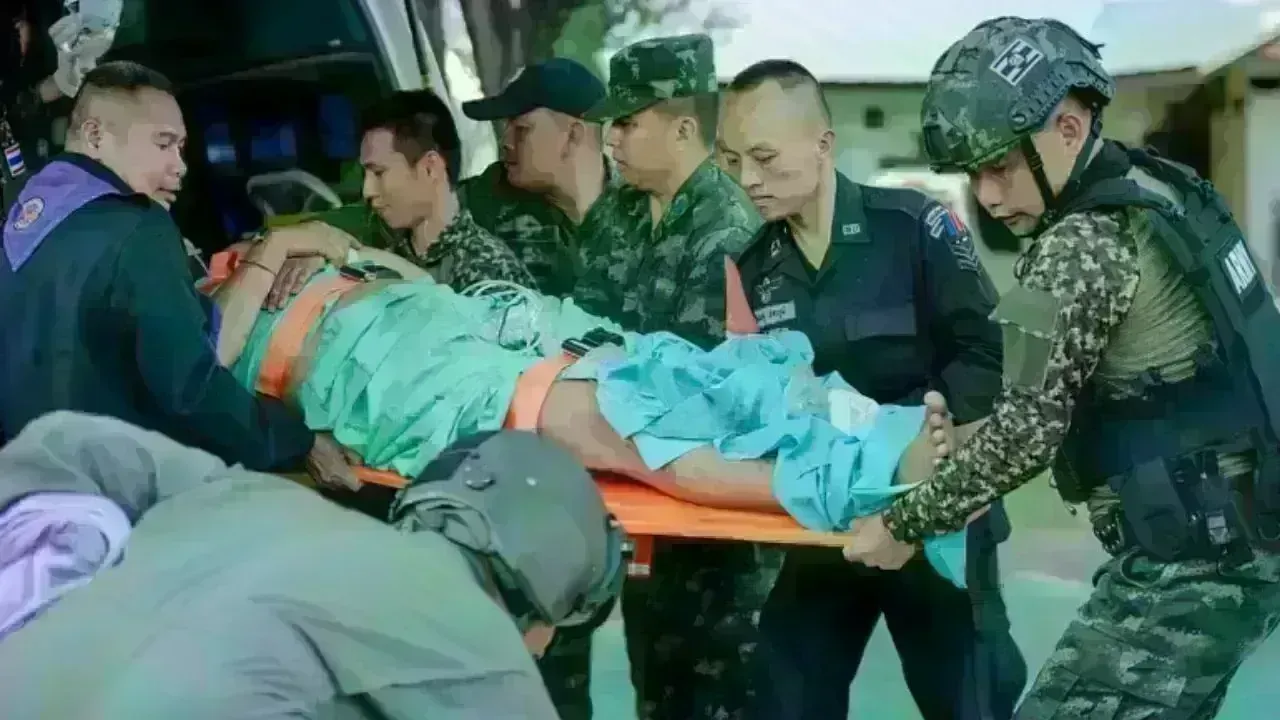
The initial spark reportedly occurred during the early hours when Thai soldiers stationed along a disputed stretch of the border came under unexpected fire. Several Thai soldiers were injured, and one soldier was reportedly killed during the first exchange. Thai military officials described the attack as deliberate and sudden.
In response, Thailand launched multiple airstrikes on what it identified as Cambodian military positions. The decision marked a significant escalation, signalling that Thailand viewed the attack as a serious breach of the peace accord and a threat to national security.
Cambodian authorities disputed the accusation of initiating fire, instead claiming that Thai aircraft struck border villages and military posts without provocation, causing injuries to both civilians and soldiers.
The Kuala Lumpur Peace Accord, signed barely two months earlier, was seen as the most promising diplomatic breakthrough in years. It involved commitments to de-escalation, troop pullbacks, mine-clearing cooperation and transparent monitoring.
However, friction never fully disappeared. Reports of Thai soldiers being injured by landmines in November raised suspicion and triggered partial suspension of the accord. Both sides accused each other of violating the terms, eroding the trust that was essential for sustaining peace.
The recent attacks officially confirmed what analysts feared: the accord had not been strong enough to withstand historical grievances and evolving military pressures.
After the initial gunfire exchange, Thai forces retaliated with air power, a move that signals the seriousness of the confrontation. It marked one of the rare occasions Thailand has used airstrikes in border engagements, illustrating the intensity of the situation.
Cambodia claimed the strikes injured civilians, including women and elderly residents living near the disputed territory. Both sides reported military casualties, though full numbers remain unclear due to limited access to conflict zones.
Communities along the border quickly evacuated as artillery sounds echoed across nearby towns and villages. Thai authorities relocated hundreds of thousands of civilians into safety zones farther inland.
Schools, transportation routes and local businesses across border provinces were suspended. Cambodian communities near the frontier equally reported displacement, adding to the humanitarian concerns.
Families fled with minimal belongings, uncertain about when — or if — they would return.
Satellite observations and ground reports suggested increased troop presence:
Armoured units mobilised
Artillery batteries repositioned
Border patrol units reinforced
Defensive structures strengthened
This buildup raised fears that the clash might not be an isolated event but the beginning of a broader military confrontation.
The Cambodia–Thailand border has long been contested, with disagreements stemming from colonial-era maps drawn when Cambodia was under French administration. Several key areas remain undemarcated, including regions surrounding ancient temples, agricultural lands and strategic high-ground territories.
Both nations claim historical rights over the same areas, making even minor military movements sensitive flashpoints.
The presence of ancient temples — some UNESCO heritage sites — further complicates tensions. Control over these sites carries symbolic national significance, amplifying political stakes.
Whenever violence erupts, nationalist sentiments surge domestically, reducing flexibility for peaceful compromise.
The new peace accord was not the first attempt to stabilise the border. Multiple ceasefires since the 1990s have collapsed due to:
mistrust between military units
poorly defined monitoring systems
political pressure in both capitals
local troop commanders acting independently
landmines still scattered across disputed areas
The December clash is another reminder that without final border demarcation, any agreement remains vulnerable to collapse.
Thousands of families from both sides now face:
temporary shelters
supply shortages
interrupted education
loss of agricultural income
psychological stress
Farmers cannot access fields, traders cannot cross borders and children cannot attend school. Daily life is disrupted for communities that have lived in the shadow of conflict for decades.
If violence continues, the number of displaced people could multiply. Humanitarian agencies are preparing for possible:
emergency food distribution
medical assistance
temporary housing
cross-border aid negotiations
The region is already vulnerable from earlier displacements, and a new refugee crisis could overwhelm local infrastructure.
The collapse of the peace accord has alarmed neighbouring countries and regional bodies. The conflict threatens to:
destabilise trade routes
undermine tourism
create uncertainty for investors
raise security concerns for border communities
Diplomatic channels are reportedly trying to re-establish communication between the two sides, though tensions remain high.
Thailand and Cambodia depend heavily on tourism. Even conflicts occurring far from key tourist destinations can harm visitor confidence, leading to cancellations and economic losses.
Affected provinces in both countries have already reported declines in travel bookings as the conflict gains global media attention.
The border facilitates trade routes that support thousands of small businesses. Disruption could affect:
agricultural exports
import flows
transport logistics
labour mobility
If the crisis persists, the long-term economic cost could be substantial.
Regional mediators may attempt to push both sides toward:
immediate troop withdrawal from flashpoints
joint investigation of border incidents
reactivation of ceasefire monitoring mechanisms
transparent communication to prevent misunderstandings
However, sustained peace requires political will on both sides, something past conflicts show is not guaranteed.
If retaliatory operations continue, dangers include:
expanded air operations
artillery duels
involvement of additional units
accidental strikes on civilian regions
A regional conflict, although unlikely, cannot be ruled out if tensions continue unchecked.
Ultimately, real peace depends on:
finalising border demarcation
clearing landmines
establishing neutral monitoring forces
reducing military presence in sensitive areas
Until these issues are resolved, flare-ups may continue.
The situation underscores how fragile peace agreements can be when historical grievances, mistrust and ambiguous borders persist.
Civilian suffering remains the largest and often the least reported cost of such conflicts. Entire generations living near the border grow up accustomed to uncertainty and displacement.
This flare-up serves as a warning for other countries with unresolved colonial-era borders. Without long-term diplomatic investment, dormant disputes can reignite abruptly.
Southeast Asia has made enormous strides in trade, connectivity and development. A prolonged conflict between Thailand and Cambodia would threaten not just bilateral stability but regional growth.
Both sides must prioritise:
immediate ceasefire
civilian safety
reconstruction support
transparent border investigations
reactivation of joint peace committees
Without these steps, the cycle of violence risks becoming entrenched once more.
Disclaimer:
This article summarises recent publicly reported events and developments. Ongoing military situations evolve rapidly; details may change as more verified information becomes available.





Beauden Barrett Opens Up About Mental Struggles During All Blacks Exile
Beauden Barrett discusses his confidence struggles after missing six tests, his return against Austr

IMF Says AI Investment Supports Global Growth Despite Energy Shock
IMF says AI investment is supporting global growth near 3%, with Asian economies benefiting from ris

Will O'Rourke Ruled Out of New Zealand's India Series
New Zealand fast bowler Will O'Rourke will miss the India series with hamstring and calf injuries as

AI Companies Expected to Drive Most US Earnings Growth in Q3
AI companies are expected to drive US third-quarter earnings growth as investors assess tech profits

Money Market Funds See Record Inflows as Global Bond Selloff Intensifies
Global money market funds attract $153.81 billion as bond yields rise, inflation fears persist and i

Meta Bans TikTok Ads on Facebook and Instagram in Seven Countries
Meta has banned TikTok ads in seven countries, escalating competition over social media users, adver