
You have not yet added any article to your bookmarks!
Join 10k+ people to get notified about new posts, news and tips.
Do not worry we don't spam!
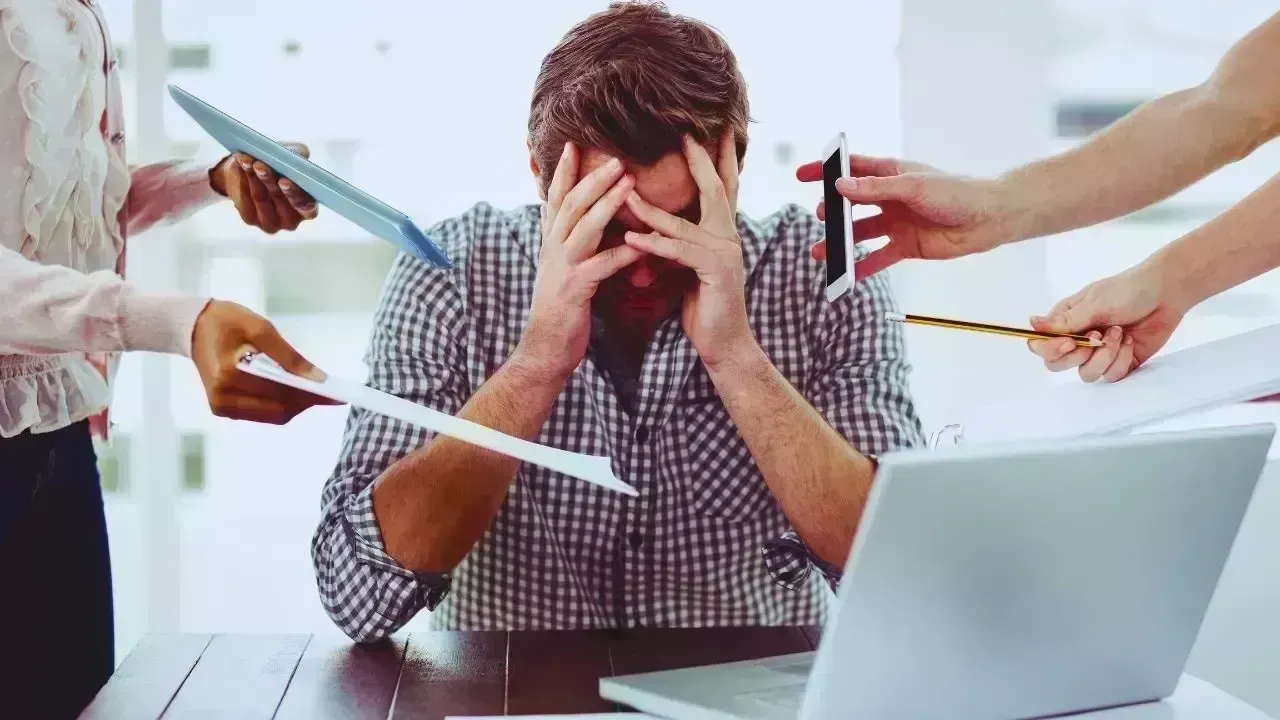
Post by : Anis Farhan
For decades, genetics took the blame whenever illness appeared. If heart disease ran in the family, it was “inevitable.” If diabetes showed up early, it was “inherited.” If anxiety became chronic, it was “just how the brain is built.”
Today, doctors are rewriting that story.
Across hospitals and clinics, medical professionals are seeing the same pattern emerge in every country: people are getting sick for the same reasons, regardless of family background. Young adults now suffer illnesses once seen only in old age. Middle-aged workers show symptoms expected in retirement years. Teenagers struggle with fatigue once limited to overworked professionals.
The explanation is no longer written in DNA.
It is written in daily habits.
Stress that never stops.
Sleep that never recovers.
Food that feeds appetite but starves health.
Doctors now say these three forces—working together—are causing more damage than genetic weakness ever did.
Your body is not breaking because it was born fragile.
It is breaking because modern life is relentless.
Medical research increasingly shows that genes may increase risk—but they rarely cause illness alone.
A person with a family history of heart disease may never develop it.
Another with no history at all may suffer an early heart attack.
What decides the outcome?
Environment.
Habits.
Stress.
Sleep.
Diet.
Genes provide vulnerability.
Lifestyle decides fate.
The human body reshapes itself constantly:
Heart rate adjusts
Hormones fluctuate
Digestion shifts
Immunity adapts
Brain chemistry changes
When harmful patterns continue long enough, the body stops adjusting.
It collapses.
And people mistakenly blame DNA.
When people talk about stress, they imagine worry.
But stress is not a feeling.
It is a chemical reaction.
The body releases hormones designed for emergencies. That is useful when running from danger. But modern stress never turns off. It lingers in traffic jams, deadlines, family conflicts, money worries and social pressure.
The body stays in survival mode permanently.
That is never healthy.
Ongoing stress damages:
The heart
Blood vessels
Digestion
Sleep cycles
Immune response
Memory
Mood control
Hormonal systems
Stress thickens blood.
Stress raises pressure.
Stress inflames organs.
Stress weakens defence.
The body interprets prolonged stress as a long-term threat.
And it begins decaying from the inside.
Chronic stress accelerates biological ageing.
Cells shorten life cycles.
Repair slows down.
Energy drains faster.
Skin dulls.
Hair weakens.
Bones thin.
The brain misfires.
It’s not age doing the damage.
It’s emotional warfare within the body.
Sleep is not just closing eyes.
It is when:
Cellular damage is repaired
Hormones are balanced
Memory is processed
Immunity rebuilds
Muscles recover
The brain cleans itself
No supplement replaces sleep.
No hack substitutes sleep.
No shortcut beats sleep.
When people consistently sleep less than needed:
Blood pressure rises
Blood sugar destabilizes
Attention declines
Mood becomes unstable
Weight increases
Immunity weakens
Heart rhythm disturbs
Sleep deficiency behaves like invisible poisoning.
You feel functional.
But damage accumulates.
Sleep debt does not melt away.
It piles up.
The body does not forgive repeated deprivation.
One six-hour night is survivable.
Six weeks of it is danger.
Doctors globally now associate short sleep with:
Increased heart attack risk
Higher stroke likelihood
Irregular heartbeat
Atherosclerosis
Sudden cardiac collapse
Sleep protects arteries the way sunscreen protects skin.
Skip it long enough.
Damage appears.
Fast food is calorie-rich and nutrient-poor.
It fills the stomach.
It starves the body.
Artificially processed food floods the bloodstream with:
Sugar
Salt
Unhealthy fats
Chemical additives
What’s missing:
Fiber
Minerals
Vitamins
Natural proteins
Healthy fats
The body becomes bloated but malnourished.
Poor food:
Inflames joints
Thickens arteries
Raises insulin resistance
Disrupts hormones
Feeds gut disorders
Alters brain chemistry
Every meal builds future health or future disease.
Fast food builds disease silently.
Fast food hijacks natural hunger systems.
The brain becomes trained to crave:
Sugar
Fat
Salt
Quick satisfaction
Real food tastes dull by comparison.
Addiction is not emotional.
It is neurological.
Fast food reprograms behavior.
Stress pushes people to junk food.
Junk food disrupts sleep.
Poor sleep makes stress worse.
This creates a loop.
A trap.
A downward coil of damage.
You become tired.
Then you eat poorly.
Then you sleep badly.
Then you feel anxious.
Then you eat again.
This is not weakness.
It is biology.
Heart attacks in 30s.
Diabetes in 20s.
Burnout in teens.
These are not genetic epidemics.
They are lifestyle epidemics.
Medicine manages symptoms—blood pressure, sugar, pain.
But doctors increasingly admit:
Pills stabilize.
They do not restore.
Lifestyle determines whether disease reverses.
Common warning signs:
Constant tiredness
Short temper
Sugar cravings
Poor digestion
Foggy brain
Headaches
Poor memory
Anxiety
Body aches
Weak immunity
You may ignore these.
Your body never does.
Everyone knows someone who lived badly and lived long.
That does not make the habit safe.
It makes the survival random.
Health is not a lottery.
It’s a system.
Risk multiplies when untreated.
Reduce:
Constant notifications
Overcommitment
Emotional drain
Digital overload
Relationship conflicts
Stress management includes:
Silence
Walking
Breathing
Saying no
Emotional honesty
A calm mind rebuilds organs invisibly.
Protect sleep like health insurance.
Sleep earlier.
Sleep darker.
Sleep quietly.
Sleep regularly.
Your body fixes itself when you let it.
Choose food that:
Expires naturally
Looks real
Grows in earth
Feeds muscles and nerves
Digests slowly
Tastes clean
Food doesn’t need marketing.
It needs nutrients.
Knowing helps.
Doing heals.
Most people understand what’s wrong.
Few change long enough.
Consistency cures.
Not intention.
“I’ll start next month.”
Illness begins today.
Recovery must too.
First, it adapts.
Then, it warns.
Finally, it breaks.
The gap between warning and collapse is your chance.
Fear says:
“You’re doomed.”
Knowledge says:
“You’re in control.”
Lifestyle shapes tomorrow’s blood tests.
Not destiny.
Health is never accidental.
Neither is disease.
Both are built:
Meal by meal.
Hour by hour.
Night by night.
Emotion by emotion.
Stress, sleep debt and fast food do not show symptoms immediately.
But they weaken silently.
Long-term.
Deeply.
Relentlessly.
Doctors are not blaming genetics anymore.
They’re blaming habits.
And that’s good news.
Because habits can change.
Genes cannot.
Disclaimer:
This article is for general information only and does not substitute medical advice. Individuals experiencing persistent symptoms should consult qualified healthcare professionals for diagnosis and treatment.




Jacob Bethell Returns as England Name Squads for Australia Tour
England name ODI and T20 squads for the Australia tour, with Jacob Bethell returning from injury and

Beauden Barrett Opens Up About Mental Struggles During All Blacks Exile
Beauden Barrett discusses his confidence struggles after missing six tests, his return against Austr

IMF Says AI Investment Supports Global Growth Despite Energy Shock
IMF says AI investment is supporting global growth near 3%, with Asian economies benefiting from ris

Will O'Rourke Ruled Out of New Zealand's India Series
New Zealand fast bowler Will O'Rourke will miss the India series with hamstring and calf injuries as

AI Companies Expected to Drive Most US Earnings Growth in Q3
AI companies are expected to drive US third-quarter earnings growth as investors assess tech profits

Money Market Funds See Record Inflows as Global Bond Selloff Intensifies
Global money market funds attract $153.81 billion as bond yields rise, inflation fears persist and i

