
You have not yet added any article to your bookmarks!
Join 10k+ people to get notified about new posts, news and tips.
Do not worry we don't spam!
Post by : Rameen Ariff
The United States has entered its longest federal shutdown on record, now at 36 days, after lawmakers failed to resolve disputes over healthcare funding and other budget priorities. The impasse is increasingly affecting federal operations, employees and wider economic activity.
Approximately 600,000 federal employees are working without pay and about 650,000 are furloughed. The Education Department's Office of Federal Student Aid has placed 85% of staff on furlough, raising concerns about delays to FAFSA processing during a critical application period. Other government functions, including tax refunds and regulatory approvals, are also being postponed.
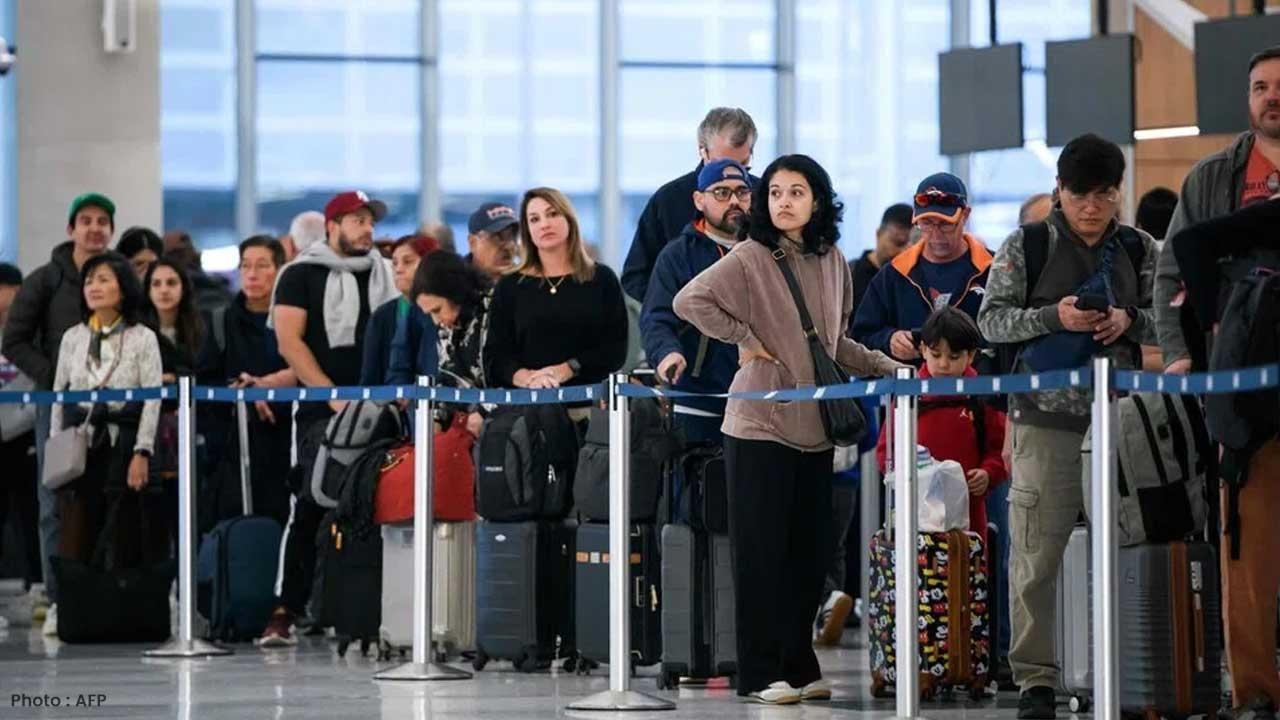
Air travel disruptions have grown as the Federal Aviation Administration contends with staff shortages. Reports of air traffic controllers taking unscheduled leave while unpaid have contributed to widespread delays and cancellations at major airports, coming shortly before the busy Thanksgiving travel window.
Public health monitoring has been hit too. The Centers for Disease Control and Prevention has stopped its FluView dashboard and paused the Morbidity and Mortality Weekly Report, creating gaps in weekly tracking of influenza, COVID-19 and RSV that epidemiologists rely on.
Economists caution the shutdown could have persistent economic effects. The Congressional Budget Office projects that if the shutdown lasts eight weeks total, U.S. GDP growth in the fourth quarter could fall by as much as two percentage points, with billions in lost output.
Food assistance is also affected: only half of November's Supplemental Nutrition Assistance Program benefits will be issued to roughly 42 million Americans because contingency funds are limited, and officials warn recalculations may take weeks or months.
Political gridlock remains despite recent Democratic wins in New Jersey, Virginia and New York City. House Democratic Leader Hakeem Jeffries reiterated his party's demand for a full reopening of the government, while House Speaker Mike Johnson said Republicans have repeatedly proposed funding measures and accused Democrats of blocking solutions.
Analysts say the stalemate may require intense voter pressure, a procedural maneuver in Congress or rare bipartisan compromise to end. President Donald Trump has urged Senate Republicans to consider the so‑called "nuclear option" to overcome the filibuster and pass funding, though Senate leaders report insufficient backing for that move.
As the shutdown continues, millions of Americans face growing uncertainty over essential services, personal finances and public safety, with effects likely to reverberate into the coming months.










PM Modi Pays Tribute to Mahatma Gandhi, Urges People to Support Khadi
PM Modi pays tribute to Mahatma Gandhi on Gandhi Jayanti and urges citizens to support Khadi and the

Amazon Seeks to Offload $8 Billion in Nvidia Chips to Investors
Amazon plans to move $8 billion in Nvidia chips to investors, using a new financing model to strengt

Samsung Raises Galaxy S26 Prices as Memory Chip Costs Rise
Samsung raises Galaxy S26 prices in South Korea as rising memory chip costs put pressure on smartpho

Lewis Hamilton Calls Singapore Grand Prix One of F1's Toughest Races
Lewis Hamilton discusses the demanding Singapore Grand Prix and brings Plus44 and Almave to Singapor

Denmark's Pandora Opens World's Largest Jewellery Factory in Vietnam
Pandora opens its largest jewellery factory in Vietnam, expanding global production, strengthening s

Gautam Gambhir Questions Batting-Friendly Pitches After India's Record ODI Chase
Gautam Gambhir questions batting-friendly ODI pitches after India’s record chase, calling for a bett

