You have not yet added any article to your bookmarks!
Join 10k+ people to get notified about new posts, news and tips.
Do not worry we don't spam!
Post by : Anis Farhan
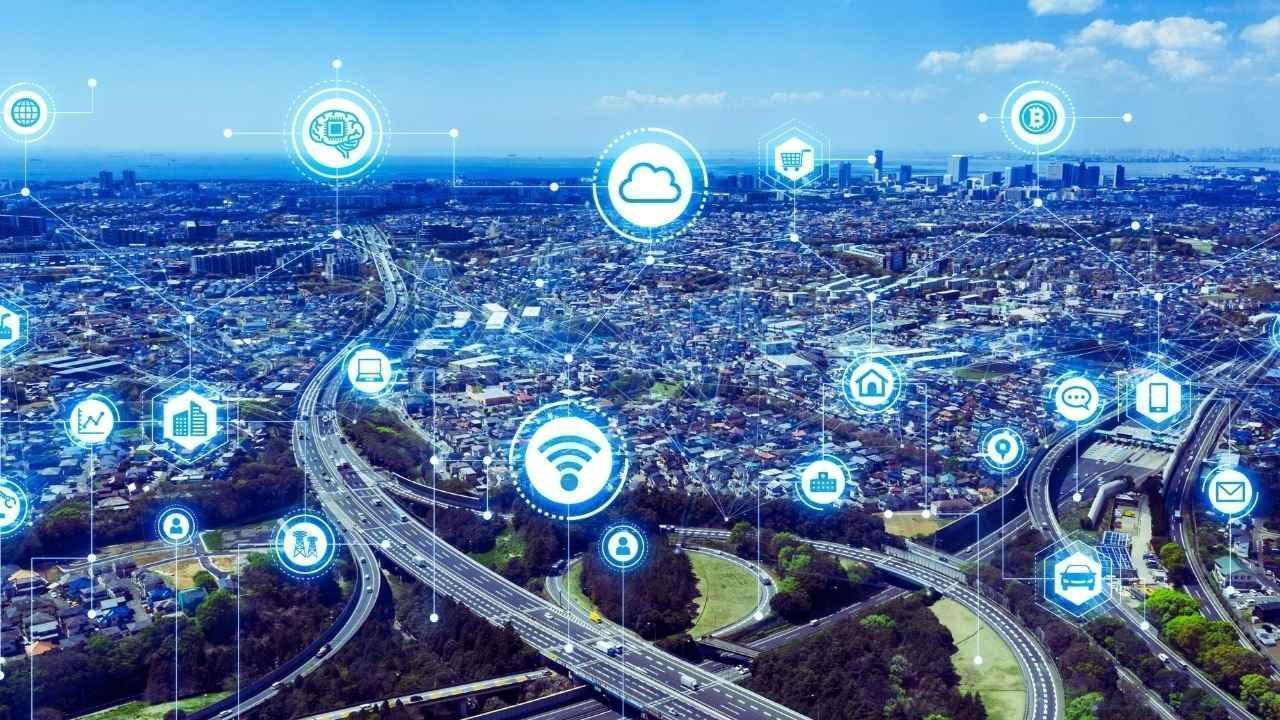
Urban India thrives on movement — from busy markets to the rush hour commute, various activities keep city life vibrant. As growth surges, the intricate mesh of vehicles, including delivery bikes, traffic jams, and public transport, reflects the city's pulse. Yet, increasing urbanization, rising population density, and surging vehicle ownership have put substantial pressure on this dynamic.
Today's Indian cities face significant challenges with traffic congestion, signal delays, and frustration becoming daily hurdles of urban life.
However, a transition is occurring.
Technology is no longer a luxury; it's a necessary evolution for urban mobility. Innovations like artificial intelligence, IoT monitoring, adaptive traffic signals, and predictive algorithms are shifting India towards AI-driven, smart traffic management. These systems learn and adapt to optimize traffic flow and enhance efficiency in real time.
The future of smart cities is here, fundamentally altering urban transportation and defining how citizens navigate their surroundings.
With the rapid growth of metro areas and secondary cities, vehicle ownership is escalating. However, infrastructure hasn't kept pace, causing critical traffic challenges.
Time spent in traffic translates to reduced economic productivity and fatigue among commuters, raising concerns about mental health.
Standstill vehicles contribute to pollution and urban heat, making smart traffic solutions essential for environmental management.
Advanced traffic systems monitor speed and guide response during emergencies, moving from reaction-based measures to planned, preventative strategies.
Cities are gearing up for electric mobility, drone services, and multi-modal transport systems, with AI as the technological foundation.
Modern traffic signals that adapt:
Adjust signal timings based on current traffic
Provide priority to emergency services
Balance traffic between main and side roads
Coordinate across multiple intersections
This leads to smoother traffic flow and reduced noise pollution.
These advanced cameras do much more than capture footage:
Monitor speeding vehicles
Identify lane violations
Record breaches of traffic signals
Observe unusual traffic behavior
Automate fines for violations
Track pedestrian movement
Through technology, urban discipline is enforced where traditional methods may fail.
AI algorithms analyze patterns to foresee:
Traffic spikes
Weekend congestion
Event-based surges
Weather-related disruptions
Construction-induced delays
This proactive approach allows for strategic city planning.
Emergency vehicles benefit from prioritized traffic lanes, where traffic signals automatically clear the path, crucially saving lives.
Buses, metros, and taxis leverage real-time data for:
Updated arrival times
Streamlined transfers
Effective crowd control
Optimized routing
This makes public transit more efficient and user-friendly.
These sensors provide data on:
Traffic density
Pedestrian activity
Speed variations
These systems interpret feed from cameras to provide actionable insights, identifying rule-breaking and traffic congestion.
Utilized for long-term traffic data analysis and pattern recognition.
Apps and delivery services contribute real-time mobility insights, weaving a network of city intelligence.
These hubs oversee traffic management, coordinate emergency situations, and maintain signal communication.
Digital mapping of parking spaces
Mobile app features for slot reservations
Automated payment options
Camera-based vehicle monitoring
This minimizes the time spent searching for parking, reducing fuel consumption and frustration.
Geofencing tools help discourage illegal parking, enhancing pedestrian safety.
Signals at crosswalks adapt to overall traffic and pedestrian volume.
Ensure safe travel for cyclists, limiting vehicular encroachment.
Speed control measures help ensure children's safety around educational campuses.
AI systems can re-route traffic amid storms or heavy rains, signaling alerts when necessary.
Using predictive algorithms, authorities can efficiently manage large gatherings.
During pollution alerts, traffic systems adjust to minimize peak emissions.
Extended traffic delays could transform into seamless journeys.
Consistent travel times significantly improve work-life balance.
Less idling contributes to the health of the urban population.
Smart traffic rules lead to a decrease in reckless behavior and accidents.
Mobility infrastructure that prioritizes safety fosters walking and cycling.
Implementing these advanced systems requires significant financial backing.
Ensuring privacy in surveillance systems is essential.
Combining legacy systems with new technology presents challenges.
New systems must be accessible and user-friendly for all community members.
Effective tech solutions depend on community engagement and respect for regulations.
Cities are designing smart lanes and communication networks.
Charging stations and energy management strategies are in place.
Aerial traffic monitoring ensures prompt management.
Efficient management of logistics and long-haul routes.
A single platform displaying:
Traffic conditions
Parking availability
Metro schedules
Bus transit updates
Air quality metrics
Weather alerts
One centralized system for cohesive urban movement.
The trajectory of India’s upcoming cities leads towards being smarter, quicker, cleaner, and more human-centric. As AI and intelligent traffic systems become more prevalent, urban living is set to transition from chaotic commutes to seamless experiences. The sounds of honking will diminish, queues will shrink, and the joy of city living will be rekindled.
Smart mobility transcends engineering — it enriches quality of life, saves time, alleviates stress, purifies the air, fortifies road safety, and champions thoughtful urban development.
The future is gaining momentum. The path ahead is intelligent.
This article presents an overview of technological and mobility advancements. Urban initiatives, policies, and timelines can differ significantly between regions. Citizens and planners should consult official resources for accurate implementation updates.





Spain's Diego Poncelet Sets Skateboarding World Speed Record
Spain's Diego Poncelet reaches 151.83 km/h in a record-breaking downhill skateboard run in Canada, s

Hyundai Recalls 94,622 US Vehicles Over Potential Fire Risk
Hyundai recalls 94,622 US vehicles over overheating seat motors. Check affected Genesis models, fire

Nvidia Pledges $250 Million for UK AI Safety Research
Nvidia will provide $250 million in computing resources over five years to support AI safety researc

Jacob Bethell Returns as England Name Squads for Australia Tour
England name ODI and T20 squads for the Australia tour, with Jacob Bethell returning from injury and

Beauden Barrett Opens Up About Mental Struggles During All Blacks Exile
Beauden Barrett discusses his confidence struggles after missing six tests, his return against Austr

IMF Says AI Investment Supports Global Growth Despite Energy Shock
IMF says AI investment is supporting global growth near 3%, with Asian economies benefiting from ris