
You have not yet added any article to your bookmarks!
Join 10k+ people to get notified about new posts, news and tips.
Do not worry we don't spam!
Post by : Shweta
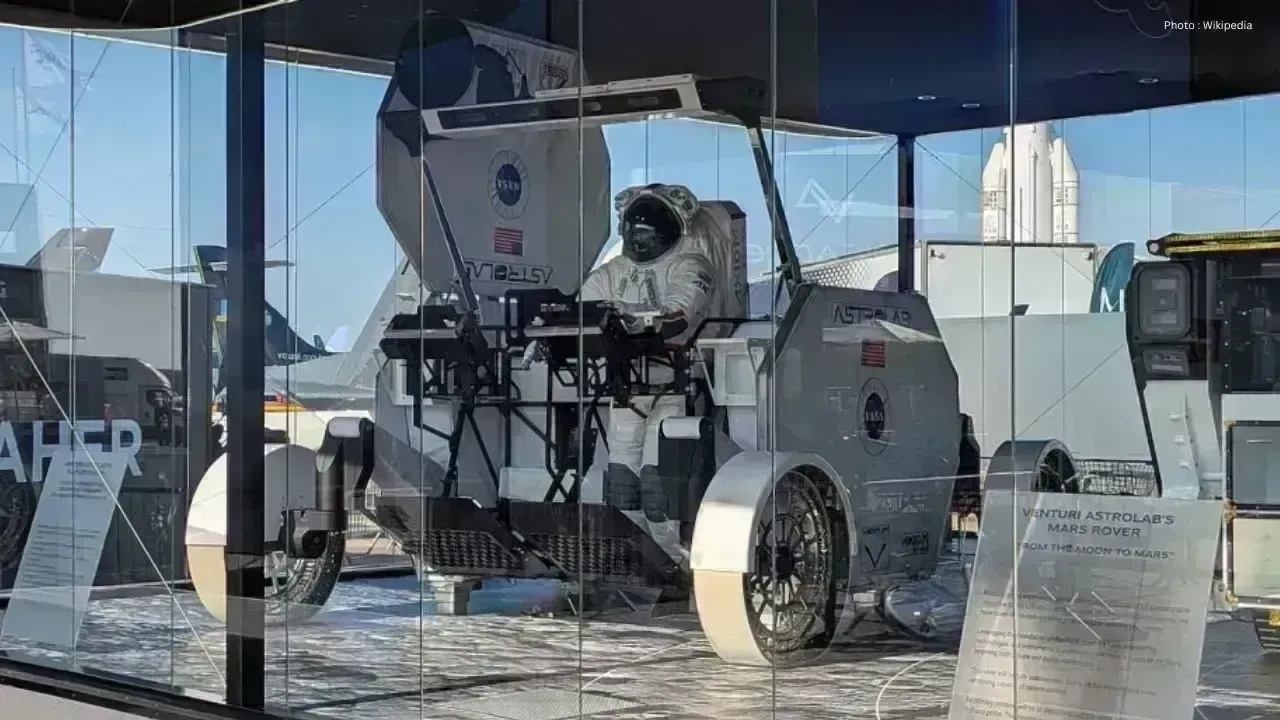
Astrolab, a US-based space innovation firm, has unveiled plans for its FLIP rover to transport four NASA scientific instruments to the Moon in a future lunar mission. This initiative represents a significant milestone in global collaborations aimed at enhancing scientific exploration and establishing a sustainable human presence on the lunar surface.
The FLIP rover is engineered to provide flexible transport and scientific capabilities on the Moon, aligning with NASA’s wider goals under the Artemis program. Astrolab indicates that the rover will facilitate the movement of scientific gear, gather crucial data, and support upcoming astronaut and robotic missions on the Moon.
NASA’s instruments aboard the rover will focus on lunar soil analysis, surface conditions, radiation measurement, and environmental factors crucial for future human exploration. Researchers assert that these experiments could yield vital insights for enduring lunar exploration and plans for establishing permanent infrastructure on the lunar surface.
According to Astrolab representatives, the FLIP rover is being built with advanced mobility mechanisms that can tackle challenging lunar terrains, such as rocky landscapes and severe environmental conditions. Engineers are ensuring the rover can function effectively in extreme temperatures and low-gravity environments while hauling scientific payloads over substantial distances.
This mission underscores the growing synergy between NASA and private aerospace firms as the United States broadens its commercial alliance initiatives in space exploration. Over recent years, NASA has increasingly deviated towards private companies for transportation systems, lunar equipment development, and cargo logistics.
Experts emphasize the significance of robotic missions like the FLIP rover in readying for future crewed lunar endeavors. These rovers are capable of analyzing landing sites, detecting resource availability, testing equipment, and capturing scientific information preemptively before human arrival. Such technology is deemed essential for future bases on the Moon and potential expeditions to Mars.
The Artemis program pursues the objective of sending astronauts back to the Moon, ultimately establishing sustainable exploration systems. NASA officials expect that commercial collaborations will help cut costs and quicken the technological advancements necessary for deep-space projects.
Astrolab also noted that its rover technology could eventually underpin commercial ventures on the Moon, encompassing cargo transportation, infrastructure facilitation, and scientific investigations for international partners. The company stands among several private entities eager to establish themselves as key players in the burgeoning lunar economy.
Industry analysts affirm that this announcement emphasizes a transition in lunar exploration from being exclusively government-operated toward embracing partnerships with private sectors and global collaboration. With numerous missions slated for the upcoming years, robotic solutions like the FLIP rover are anticipated to have a pivotal influence on the evolution of lunar exploration.










PM Modi Pays Tribute to Mahatma Gandhi, Urges People to Support Khadi
PM Modi pays tribute to Mahatma Gandhi on Gandhi Jayanti and urges citizens to support Khadi and the

Amazon Seeks to Offload $8 Billion in Nvidia Chips to Investors
Amazon plans to move $8 billion in Nvidia chips to investors, using a new financing model to strengt

Samsung Raises Galaxy S26 Prices as Memory Chip Costs Rise
Samsung raises Galaxy S26 prices in South Korea as rising memory chip costs put pressure on smartpho

Lewis Hamilton Calls Singapore Grand Prix One of F1's Toughest Races
Lewis Hamilton discusses the demanding Singapore Grand Prix and brings Plus44 and Almave to Singapor

Denmark's Pandora Opens World's Largest Jewellery Factory in Vietnam
Pandora opens its largest jewellery factory in Vietnam, expanding global production, strengthening s

Gautam Gambhir Questions Batting-Friendly Pitches After India's Record ODI Chase
Gautam Gambhir questions batting-friendly ODI pitches after India’s record chase, calling for a bett

