You have not yet added any article to your bookmarks!
Join 10k+ people to get notified about new posts, news and tips.
Do not worry we don't spam!
Post by : Rohit Dhiman
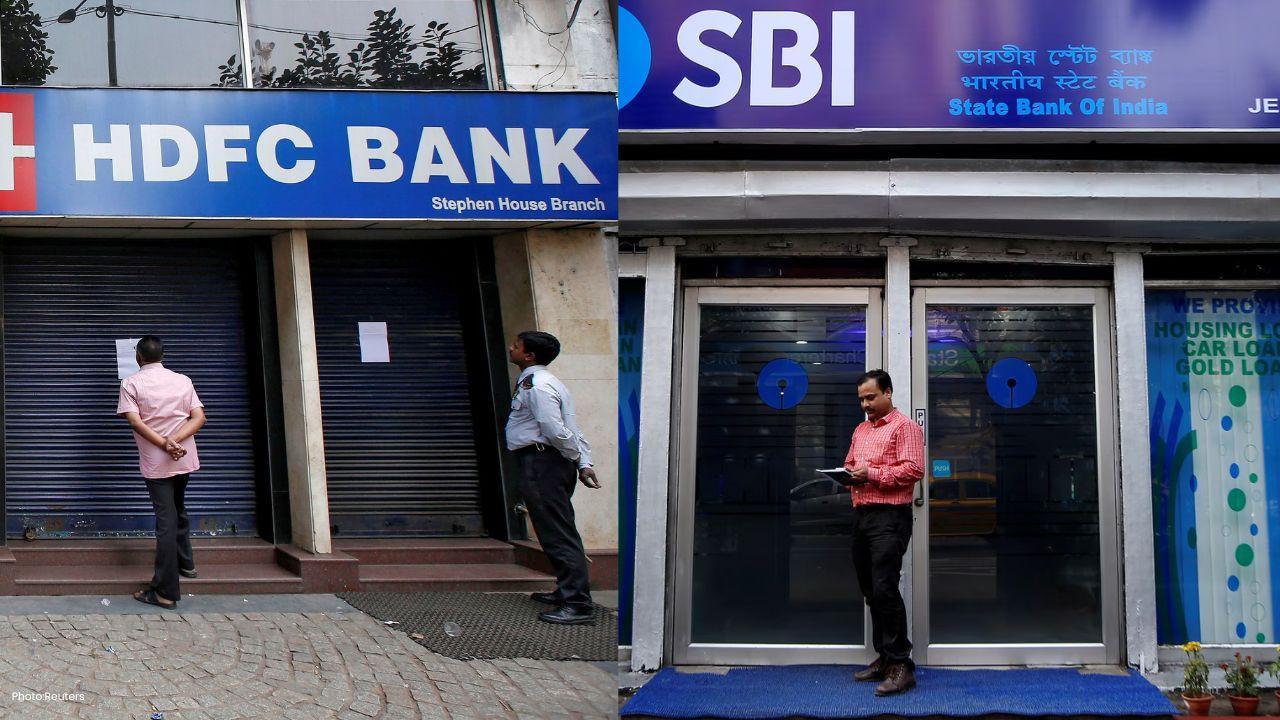
New Delhi: Banking services across India are expected to face disruption from September 28 to September 30 as the United Forum of Bank Unions (UFBU) has decided to proceed with a three-day nationwide strike. The unions are pressing for the implementation of a five-day working week in banks, one of their long-pending demands. The proposed Bank Strike follows unsuccessful discussions between bank unions, the Indian Banks' Association (IBA) and the Department of Financial Services (DFS). A conciliation meeting held on September 22 failed to produce a solution acceptable to the unions, after which UFBU maintained its decision to go ahead with the three-day protest. The development is significant for millions of banking customers because the strike falls immediately after the fourth Saturday holiday on September 26. September 27 is a Sunday, but the government has announced that public sector banks and regional rural banks will remain operational on that Sunday to help customers complete essential transactions before the strike begins.
The main unresolved demand of the unions is the implementation of a 5 Day Banking system. Under this arrangement, banks would operate from Monday to Friday, while all Saturdays would become holidays. Bank employees are currently required to work on the first, third and fifth Saturdays of a month, while the second and fourth Saturdays are holidays. The unions have been demanding that this arrangement be replaced with a five-day working week. According to reports, the banking unions have argued that an agreement relating to five-day banking was reached during the wage revision process in March 2024. However, the proposal still requires the necessary government approval before it can be implemented across the banking sector. The unions have maintained that they are prepared to adjust daily working hours if required so that the overall working hours and customer service requirements can be maintained under a five-day system.
The government and banking authorities have made efforts to prevent the strike and have appealed to employees to continue discussions instead of disrupting services. The Finance Ministry said discussions had taken place on the concerns raised by bank employees and urged workers to avoid the strike. The government has also pointed out that one of the major demands raised by the unions, relating to the Performance Linked Incentive scheme, had already been addressed by keeping the scheme in abeyance. The remaining major issue is the demand for a five-day workweek. Despite these developments, UFBU has maintained that there has been no concrete progress on the five-day banking demand. The organisation therefore decided to continue with the September 28-30 strike.
The biggest impact of the Banking Services disruption is expected to be felt at physical bank branches, particularly in public sector banks. Customers who need to visit a branch for cash-related work, document submission, account-related requests, cheque-related work or other counter services could face delays during the strike period. Several public sector banks have already issued communications and advisories asking customers to complete important transactions before the strike. State Bank of India and other major banks have also encouraged customers to make use of digital banking facilities wherever possible. Cheque clearing, physical document processing, account-related branch work and other activities requiring staff intervention may face delays during the strike.
Major public sector banks have taken steps to inform customers about the possible impact of the strike. State Bank of India has advised customers to complete important banking transactions in advance and use available digital channels during the strike period. Other public sector banks, including Punjab National Bank, Union Bank of India and Bank of India, have also communicated with employees and customers regarding the proposed disruption. Customers are therefore being advised to avoid waiting until the last moment for transactions that require a branch visit. If a person needs to deposit cash at a branch, submit documents, clear a cheque or complete another physical banking process, completing the work before the strike is likely to reduce the possibility of delays.
This is one of the biggest questions among bank customers. September 26 is the fourth Saturday, which is already a scheduled bank holiday. The three-day strike is planned for September 28, 29 and 30. At first glance, this could create the impression of a continuous five-day disruption from September 26 to September 30. However, the government has specifically announced that public sector banks and regional rural banks will function normally on Sunday, September 27, to ensure that customers get an additional opportunity to complete essential banking work before the strike. The Reserve Bank of India has approved the operation of bank branches, offices, ATM-linked branches and currency chests on that Sunday. Therefore, customers should distinguish between the regular Saturday holiday, the special Sunday opening and the three strike days.
Even when branch operations are affected, several digital banking facilities are expected to continue.
Customers can generally use:
ATMs for cash withdrawals and other supported services
UPI for digital payments
Internet banking for online transactions
Mobile banking applications
Digital fund transfers
Other automated banking channels supported by individual banks
However, customers should not assume that every service will operate without interruption. Some transactions require back-office processing or employee intervention and could therefore take longer during the strike. For this reason, customers with urgent banking requirements should complete them ahead of September 28 wherever possible.
The 5 Day Banking demand means that banks would operate only from Monday to Friday, with Saturday and Sunday treated as weekly holidays. At present, bank branches generally remain open on the first, third and fifth Saturdays and remain closed on the second and fourth Saturdays. Bank unions want all Saturdays to become holidays. The unions have argued that banking employees can compensate for the change through adjustments in daily working hours while maintaining the required total working time. The demand has remained under discussion for several years, and the issue has become a major point of disagreement between employee organisations and the authorities.
Read Also: Europe's Biggest Leagues Demand Sweeping FIFA Reforms
The government has taken measures to minimise the impact of the proposed strike. The decision to keep public sector banks and regional rural banks operational on Sunday, September 27, is intended to provide customers with an additional day to complete essential transactions. The Finance Ministry has also asked banks to make arrangements to keep essential services running and ensure that ATMs are adequately stocked during the strike period. This means customers may still have access to important banking channels even if physical branch operations are affected from September 28 to September 30.
The September strike is not the only industrial action announced by the unions. UFBU has already indicated that an indefinite strike could begin from October 26 if the five-day banking demand is not resolved. The possibility of further industrial action has increased attention on the negotiations between the government, banking managements and employee organisations. For customers, the most important issue is the potential effect on physical banking operations. Businesses that depend heavily on cheque processing, cash transactions, physical documentation and branch-based services may need to plan transactions in advance. The impact on individual customers will depend on the bank, type of transaction and whether the required service can be completed digitally.
Customers with urgent banking requirements should avoid postponing branch-based work until the strike begins. Important documents can be submitted in advance, cash requirements can be planned, and digital banking applications can be checked beforehand. Customers should also ensure that their mobile banking and internet banking access is working and that they have the necessary authentication details available. For routine payments, UPI and other digital channels can provide alternatives to branch visits. At the same time, customers should remember that digital services cannot replace every branch-based banking facility. Cheque-related work, certain documentation, account services and other physical processes may still require additional time.
The nationwide strike announced by UFBU is scheduled for September 28, 29 and 30, 2026.
The principal unresolved demand is the implementation of a five-day working week in banks, under which Saturdays would become holidays.
Branch-based services of participating banks may be affected during the strike. SBI, PNB and other public sector banks have issued advisories asking customers to complete important transactions in advance.
ATM, UPI, internet banking and mobile banking services are expected to remain available, although individual services may experience operational limitations.
Public sector banks and regional rural banks have been directed to operate normally on Sunday, September 27, 2026, to help customers complete essential banking transactions before the three-day strike.
Bank unions want banks to operate five days a week, from Monday to Friday, with all Saturdays becoming holidays.




OpenAI Says AI Agents Accidentally Posted 53 User Images Online
OpenAI says AI agents accidentally posted 53 ChatGPT user images online, raising new concerns over A

Virat Kohli Says 2027 World Cup Will Be His Last For India
Virat Kohli confirms the 2027 World Cup will be his last for India as he targets one final title bid

Weak Earthquake Hits Kinabatangan in Sabah Early Saturday Morning
A 3.3-magnitude Sabah Earthquake hit Kinabatangan early Saturday. Firefighters found no damage, whil

Europe's Biggest Leagues Demand Sweeping FIFA Reforms
Europe's top leagues demand FIFA reforms, stronger FIFA governance, stakeholder representation and c
Sri Lanka Economy Shows Resilience, But IMF Flags Growing Downside Risks
Sri Lanka economy remains resilient, but IMF warns of downside risks from energy costs, inflation an
Milne, Bracewell Return as Ravindra Misses New Zealand’s India T20 Series
New Zealand name squad for India T20 series as Rachin Ravindra misses the matches, while Adam Milne