You have not yet added any article to your bookmarks!
Join 10k+ people to get notified about new posts, news and tips.
Do not worry we don't spam!
Post by : Sameer Farouq
A new international survey has revealed that most people across the world still want countries to work together to solve global problems. At the same time, trust in big organizations like the United Nations, the World Health Organization, and the International Monetary Fund is falling.
The survey was carried out in 34 countries between August 8 and September 10. It was supported by the Rockefeller Foundation and comes at a time when many developed nations, including the United States, have been cutting funds for global projects and reducing international aid. The results highlight both a strong desire for cooperation and deep frustration with how international systems are working.
Despite rising nationalism in many parts of the world, the poll found that 75% of people still support global cooperation — but only if it is proven to solve real problems. However, only 42% felt that cooperation benefits them personally.
When asked about specific issues, people were very clear about where cooperation is most needed:
90% said cooperation is important for creating jobs and supporting employment.
92% want countries to work together on trade and economic growth.
93% believe cooperation is vital for food and water security.
91% see global health as a key area where cooperation is necessary.
These numbers show that while people may not always trust global leaders or institutions, they still value the idea of nations coming together to deal with challenges that no single country can solve alone.
Even though people want countries to cooperate, their trust in international organizations is much lower. According to the survey:
58% said they trust the United Nations.
60% trust the World Health Organization (WHO).
Only 44% trust the International Monetary Fund (IMF).
These results show a worrying trend. Institutions that once played a central role in solving global problems are now seen by many as outdated, ineffective, or disconnected from the people they are meant to serve.
To respond to this lack of trust, the Rockefeller Foundation has launched a new project called “The Shared Future.” This $50 million initiative aims to rebuild global cooperation and modernize how international systems work.
The program will focus on three main areas:
Reviving International Cooperation – finding new and better ways for countries to work together.
Restructuring Global Health – making health systems stronger and more prepared for modern challenges like pandemics.
Re-imagining Food Systems – ensuring that humanitarian food programs help people move from being aid-dependent to becoming self-sufficient through trade and development.
Wally Adeyemo, who previously served as a deputy treasury secretary in the United States, has been chosen to lead the effort to design new forms of global cooperation. He explained that people are tired of the old ways of providing aid and are looking for something more meaningful.
“People are hungering for global cooperation to be done differently,” Adeyemo said. “Communities that were once only seen as aid recipients now want to become trade partners and active players in the global economy.”
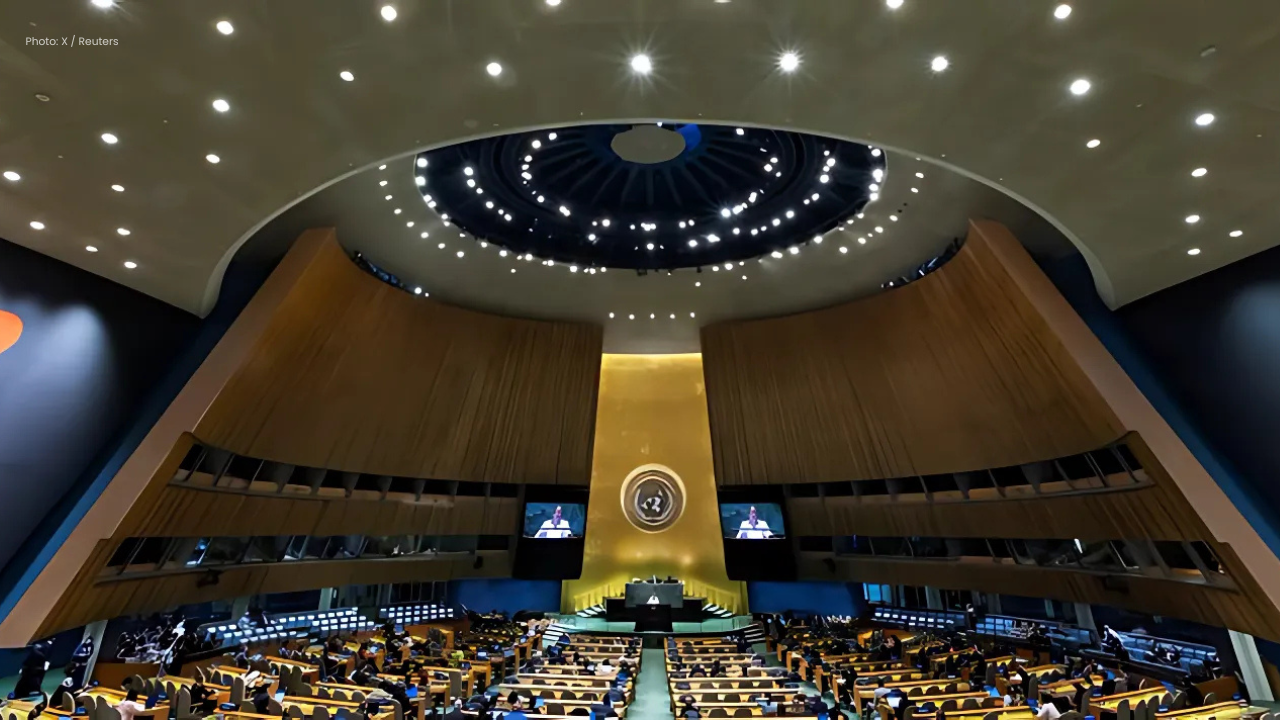
He also announced that experts will meet on the sidelines of the upcoming UN General Assembly meetings to discuss ideas and work on solutions.
Rajiv Shah, the president of the Rockefeller Foundation, said the survey results send a clear message: the world needs smarter, more creative solutions to deal with today’s problems.
He explained that institutions built in the 20th century are no longer enough to meet the challenges of the 21st century, such as climate change, global pandemics, food shortages, and economic instability.
Shah stressed that this is also a moment of opportunity:
To build on systems that are working well.
To create new partnerships between governments, businesses, and communities.
To use technology in smarter ways to help vulnerable populations.
This survey is important because it shows both hope and worry at the same time. On one hand, people clearly believe that cooperation is the only way to deal with big challenges like food, health, jobs, and trade. On the other hand, the fact that trust in the UN and other global bodies is so low shows that people are losing faith in traditional institutions.
This trust gap could create problems at a time when international cooperation is needed more than ever. For example, issues like climate change, rising food insecurity, and global health threats require all countries to work together. Without trust in the institutions meant to lead this work, it may become harder to make real progress.
The upcoming UN General Assembly will provide an opportunity to see how leaders react to these survey results. Will they take steps to rebuild trust in institutions like the UN, WHO, and IMF? Or will they continue with business as usual, risking further decline in public confidence?
The “Shared Future” initiative is one attempt to address these problems. If successful, it could set an example for how international cooperation can be made more effective, transparent, and fair in the years ahead.
For now, the world waits to see if global leaders will listen to the voices of ordinary people calling for change.








Rabada Misses First Australia Test as South Africa Pick Two Spinners
Kagiso Rabada misses the opener as South Africa vs Australia begins, with Anrich Nortje returning an

Starc Compares Australia's Tough Year to McIlroy's Major Sweep
Mitchell Starc says Australia winning three away Test series and the World Cup would match Rory McIl

France’s Sesterce Plans $11 Billion AI Data Centre in Finland
Sesterce plans a $11 billion AI data centre in Finland, with major expansion, green energy plans and

Danaher to Launch AI-Powered Autonomous Research Lab in 2027
Danaher plans an AI research lab for 2027, combining robotics and automation to speed up drug discov

Musk Welcomes German Support for Tesla Driver Assistance Tech as EU Approval Push Continues
Elon Musk welcomes Germany's backing for Tesla FSD as the company seeks EU approval amid speed, safe

Microsoft and Nvidia CEOs to Unveil AI Laptop at San Francisco Event
Microsoft and Nvidia showcase a new AI laptop with RTX Spark chips as they push powerful local AI co