
You have not yet added any article to your bookmarks!
Join 10k+ people to get notified about new posts, news and tips.
Do not worry we don't spam!
Post by : Anis Farhan
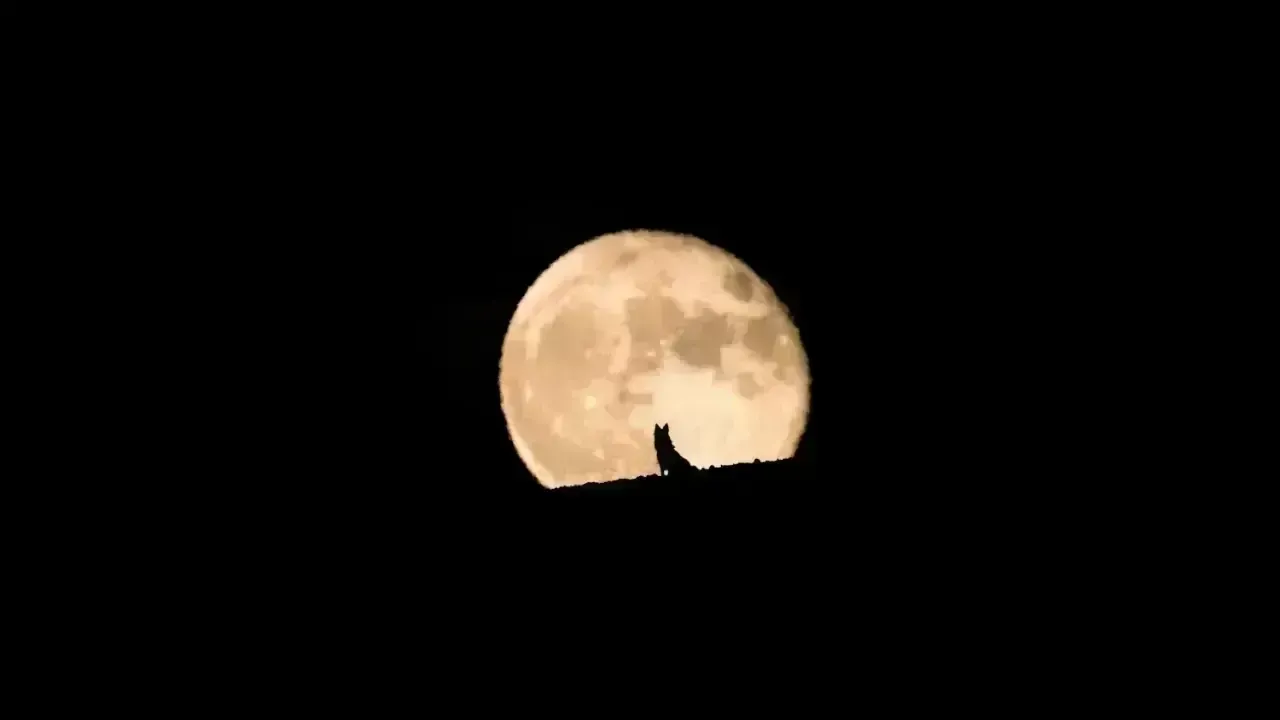
The night sky is set to deliver a striking visual treat as the first full moon of 2026 rises tonight. Known traditionally as the Wolf Moon, this January full moon also qualifies as a supermoon, making it one of the most anticipated astronomical events of the early year. For skywatchers, photographers, and casual observers alike, the event offers a chance to witness the Moon at its most dramatic—large, luminous, and commanding against the winter sky.
The Wolf Moon has long been associated with survival, seasonal change, and deep winter symbolism. This year, its appearance as a supermoon adds an extra layer of intrigue, blending ancient folklore with modern astronomical fascination.
The term “Wolf Moon” is rooted in centuries-old naming traditions linked to the lunar calendar. Indigenous communities and early settlers used full moon names to track seasons and agricultural cycles. January’s full moon earned its name from the howling of wolves, which was said to echo through villages during the harsh winter months when food was scarce.
While wolves howl year-round, the sound was more noticeable in winter due to quiet landscapes and longer nights, cementing the association between January’s moon and these animals.
Though the name is symbolic rather than scientific, it remains widely used today. Modern astronomy embraces these traditional names as a way to connect celestial events with human history and cultural storytelling.
A supermoon occurs when a full moon coincides with the Moon’s closest approach to Earth in its elliptical orbit, a point known as perigee. During this phase, the Moon appears noticeably larger and brighter than an average full moon.
In January 2026, the Wolf Moon reaches this near-Earth position, qualifying it as the first supermoon of the year.
To the naked eye, the supermoon may appear up to 7 percent larger and around 15 percent brighter than a regular full moon. While the difference can be subtle without reference points, viewing it near the horizon—against buildings, trees, or mountains—can enhance the illusion of size.
The Wolf Moon rises shortly after sunset and remains visible throughout the night. Peak illumination occurs when the Moon is directly opposite the Sun, making it fully lit from Earth’s perspective.
Clear skies and low light pollution will provide the best viewing experience, though the Moon’s brightness means it can still be enjoyed even from urban areas.
Cold winter air often results in clearer skies, making January an excellent month for lunar observation. Dressing warmly and allowing your eyes time to adjust to the darkness can enhance the experience.
Winter air typically holds less moisture and fewer airborne particles, which can reduce light scattering. This clarity allows moonlight to appear crisper and more intense.
In regions with snow cover, moonlight reflects off the ground, amplifying brightness and creating a surreal, almost glowing landscape. This effect adds to the Wolf Moon’s dramatic presence.
Many cultures viewed January’s full moon as a time of endurance and reflection. It symbolised resilience during the coldest, most challenging part of the year.
Some traditions considered it a moment for setting intentions, letting go of the previous year’s hardships, and mentally preparing for renewal in the months ahead.
Wolves themselves often symbolise loyalty, survival, intuition, and community. The Wolf Moon, therefore, carries themes of strength through unity and persistence against adversity.
During a full moon, the Sun, Earth, and Moon align, leading to stronger gravitational effects. This alignment contributes to higher-than-usual tides, known as spring tides.
With a supermoon, these tidal effects can be slightly more pronounced, though they are rarely extreme on their own.
Many animals are influenced by lunar cycles. Brighter nights can alter feeding and migration patterns, while nocturnal species may become more active under full moonlight.
Beliefs linking full moons to changes in mood or sleep patterns are widespread. While scientific evidence remains mixed, some studies suggest that increased moonlight may affect sleep quality, particularly for those sensitive to light.
Regardless of scientific consensus, the psychological impact of a bright full moon is undeniable—it draws attention upward and encourages reflection.
In astrology, January’s full moon is often associated with closure, clarity, and emotional awareness. It is seen as a moment to evaluate personal goals set at the beginning of the year.
Many believe that a supermoon intensifies emotions, making it a powerful period for introspection and recalibration.
As the first full moon of 2026, the Wolf Moon carries symbolic weight as a marker of fresh starts and long-term intentions.
Including buildings, trees, or landscapes can add scale and context, making the Moon appear larger in photos.
The Moon is brighter than it appears. Lower ISO settings and faster shutter speeds help preserve surface details.
Photos taken just after moonrise or before moonset often look more dramatic due to atmospheric distortion and colour changes.
Unlike many astronomical events that require specialised equipment, a full moon is accessible to everyone. The Wolf Moon, visible across much of the world, creates a shared moment of wonder.
From ancient calendars to modern skywatching apps, the Wolf Moon bridges centuries of human observation, reminding us that the sky we watch today is the same one our ancestors studied.
Starting 2026 with a supermoon gives this event extra significance. It sets a visually powerful tone for the year’s celestial calendar.
The stark contrast between bright moonlight and dark winter nights heightens the visual impact, making this Wolf Moon particularly memorable.
Step outside for a few quiet minutes, take a walk under the moonlight, or observe how shadows shift in its glow. Even brief moments of observation can feel grounding.
Watching the Wolf Moon with family or friends can turn a simple astronomical event into a shared memory.
As January’s Wolf Moon rises tonight, it does more than illuminate the night sky. It marks the first full lunar chapter of 2026, blending science, tradition, and quiet wonder. Whether viewed through a camera lens, from a balcony, or across a silent winter field, this supermoon invites us to pause, look up, and remember our enduring connection to the cosmos.
This article is intended for informational and educational purposes only. Astronomical visibility may vary depending on location and weather conditions. Readers are encouraged to follow local advisories and observational guidelines while viewing celestial events.










PM Modi Pays Tribute to Mahatma Gandhi, Urges People to Support Khadi
PM Modi pays tribute to Mahatma Gandhi on Gandhi Jayanti and urges citizens to support Khadi and the

Amazon Seeks to Offload $8 Billion in Nvidia Chips to Investors
Amazon plans to move $8 billion in Nvidia chips to investors, using a new financing model to strengt

Samsung Raises Galaxy S26 Prices as Memory Chip Costs Rise
Samsung raises Galaxy S26 prices in South Korea as rising memory chip costs put pressure on smartpho

Lewis Hamilton Calls Singapore Grand Prix One of F1's Toughest Races
Lewis Hamilton discusses the demanding Singapore Grand Prix and brings Plus44 and Almave to Singapor

Denmark's Pandora Opens World's Largest Jewellery Factory in Vietnam
Pandora opens its largest jewellery factory in Vietnam, expanding global production, strengthening s

Gautam Gambhir Questions Batting-Friendly Pitches After India's Record ODI Chase
Gautam Gambhir questions batting-friendly ODI pitches after India’s record chase, calling for a bett

