
You have not yet added any article to your bookmarks!
Join 10k+ people to get notified about new posts, news and tips.
Do not worry we don't spam!
Post by : Rohit Dhiman
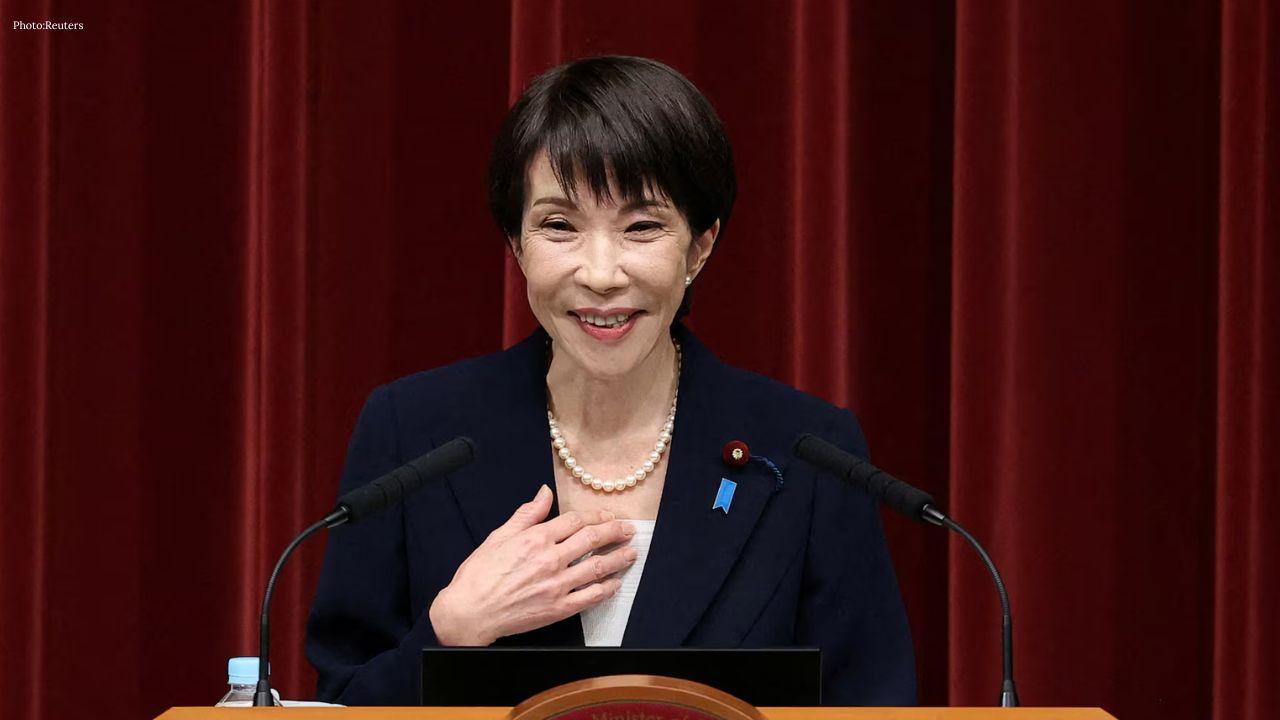
Japanese Prime Minister Sanae Takaichi has said her government has not ruled out issuing additional government bonds to finance a planned reduction in consumption tax on food products. The proposal is part of the government's effort to ease financial pressure on households as living costs continue to rise. Speaking during a parliamentary session in Tokyo on Monday, October 19, 2026, Takaichi said the government would consider different ways to fund the tax reduction while maintaining a stable approach to public finances. Her remarks indicate that borrowing remains one of the possible funding options, although the government has not committed to relying entirely on bond issuance. The proposed Japan tax cut is scheduled to begin in April 2027 and is expected to run for two years. Under the plan outlined by the government, the consumption tax rate on food items, currently set at 8 per cent, would be reduced. The proposal is intended to provide some relief to consumers who have been dealing with higher household expenses. Food is a regular and essential purchase, so a reduction in the tax rate could lower the amount consumers pay on eligible products, depending on how retailers apply the change.
The planned reduction in Japan consumption tax comes as policymakers face pressure to respond to rising living costs. Higher prices for everyday goods can reduce the purchasing power of households, particularly those with limited flexibility in their monthly budgets. Food costs are an important part of household spending. A lower tax rate on eligible food products could reduce the tax included in their purchase prices, offering consumers some relief at the checkout. The government's plan focuses on reducing the current 8 per cent levy on food items for a two-year period beginning in April 2027. The measure is designed as temporary relief rather than a permanent change to the tax system. The precise benefit for each household would depend on the products covered by the measure, the amount spent on eligible items and whether the tax reduction is fully reflected in retail prices. For example, if a product's price before tax remains unchanged and the full tax reduction is passed on to consumers, the tax component would fall. However, changes in wholesale prices, transport costs, exchange rates and retailer pricing decisions could affect the final price paid by shoppers.
During her parliamentary remarks, Takaichi said the government would seek to reduce the ratio of outstanding public debt to gross domestic product in a stable manner. She indicated that spending and expenditure would be reviewed as part of that effort. The prime minister also said the government would appropriately control the amount of bonds issued each year. At the same time, she made clear that issuing bonds had not been completely ruled out as a way to secure funds for the planned tax reduction. Government bonds are debt instruments through which a government borrows money from investors. The government receives funding upfront and commits to making payments according to the bond's terms. Issuing bonds can help a government finance spending or cover a revenue shortfall without immediately increasing other taxes. However, borrowing adds to outstanding debt unless it is offset by repayments or other fiscal adjustments. Japan's approach will therefore involve weighing the immediate objective of helping households against the longer-term need to manage public finances.
The possible use of government bonds is central to the debate because reducing a tax rate can lower the amount of revenue collected by the state. If the government receives less consumption-tax revenue after the proposed reduction, it will need to decide how to manage the resulting shortfall. Options may include adjusting expenditure, using other revenue sources or borrowing, depending on the final policy design and budget calculations. Bond issuance would allow the government to raise funds from investors. The amount needed would depend on how much revenue is lost during the two-year period, which products qualify for the lower rate and whether other fiscal measures are introduced. Borrowing is not the same as creating free funding. The government would still need to service the bonds and account for the debt in its public finances. The cost of borrowing can also change according to market interest rates and investor demand. If investors require higher yields to purchase government debt, issuing new bonds may become more expensive.
The debate over the tax cut reflects a broader challenge for the Japan economy: supporting consumers while maintaining confidence in public finances. A temporary reduction in consumption tax could leave households with more money available for other purchases. If consumers spend part of the savings elsewhere, the measure could also support demand across sections of the economy. Businesses may benefit if the tax reduction helps maintain consumer spending. Retailers and food-related companies could see changes in purchasing behaviour, although the effects would vary across industries and depend on broader economic conditions. At the same time, lower tax revenue can complicate budget planning. If the government replaces the lost income mainly through borrowing, the debt balance may rise unless other measures offset the additional financing requirement. The economic effect would therefore depend on several factors, including the size of the tax reduction, the response of consumers, the behaviour of retailers and the government's funding strategy.
Takaichi's comments about reducing the debt-to-GDP ratio highlight the importance of measuring public debt against the size of the economy. The ratio compares a country's outstanding government debt with its gross domestic product, which measures the value of goods and services produced over a period. It is one indicator used to assess the scale of government debt relative to economic activity. The ratio can change because of movements in the debt balance, economic growth, inflation and other factors. It does not necessarily fall simply because a government limits new borrowing, nor does every increase automatically indicate an immediate financial crisis. For Japan, the challenge is to support households and economic activity while demonstrating that public debt remains manageable over time. A tax cut financed through borrowing could increase the government's financing needs. However, the ultimate effect on the debt ratio would also depend on economic growth, the wider budget balance and any spending or revenue measures introduced alongside the policy.
Read Also: Davidovich Fokina Wins Shanghai Masters for Third 2026 Title
Takaichi also said Japan could strengthen market confidence in the yen by taking steps to reinforce the economy. The yen's value is influenced by several factors, including interest-rate differences between Japan and other economies, inflation expectations, investor demand, economic performance and global financial conditions. A stronger economic outlook can support confidence in a country's currency, but it does not guarantee that the currency will appreciate. Movements in foreign exchange markets often reflect a combination of domestic policy decisions and developments elsewhere in the world. The government's tax proposal may therefore be assessed not only for its impact on household spending but also for what it signals about Japan's fiscal priorities. If investors believe the policy supports economic activity while maintaining a credible funding plan, it could influence their assessment of the government's overall approach. If concerns arise about borrowing or fiscal discipline, those concerns could also affect market sentiment.
For households, the most direct potential benefit is a reduction in the tax charged on eligible food purchases. The actual savings would depend on how much a household spends on qualifying products and the final rules adopted by the government. Families that devote a larger share of their budgets to food could see a different impact from households with different spending patterns. However, the proposal's final design will matter. Consumers will need clear information about which items qualify, when the reduced rate takes effect and how the measure will be reflected in retail prices. The government will also need to communicate the duration of the policy, as the proposed cut is planned for two years from April 2027. Unless the policy is extended or replaced, households and businesses will need to prepare for what happens when the temporary period ends.





Ravi Shastri Urges India to Manage Jasprit Bumrah Ahead of 2027 World Cup
Ravi Shastri urges India to manage Jasprit Bumrah’s workload and prioritise Test cricket to keep the

Davidovich Fokina Wins Shanghai Masters for Third 2026 Title
Alejandro Davidovich Fokina beats Rafael Jodar to win the Shanghai Masters 2026, securing his third

Haze Keeps Air Quality Unhealthy Across Central, Southern Malaysia
Malaysia haze persists as Johan Setia records an API of 172, with several areas in Selangor, Negeri

Brandon Figueroa Stripped of WBA Featherweight Title After Missing Weight
Brandon Figueroa loses his WBA featherweight title after weighing 1.4 pounds over the limit before h

Singapore Haze: PM2.5 Pollution Rises in Three Regions
Singapore haze worsens as PM2.5 reaches high levels in three regions. Check air quality, health risk

G7 to Hold AI Cybersecurity Exercises to Protect Financial Systems
G7 finance leaders will conduct AI cybersecurity exercises to prepare for cyber attacks and protect