
You have not yet added any article to your bookmarks!
Join 10k+ people to get notified about new posts, news and tips.
Do not worry we don't spam!
Post by : Rohit Dhiman
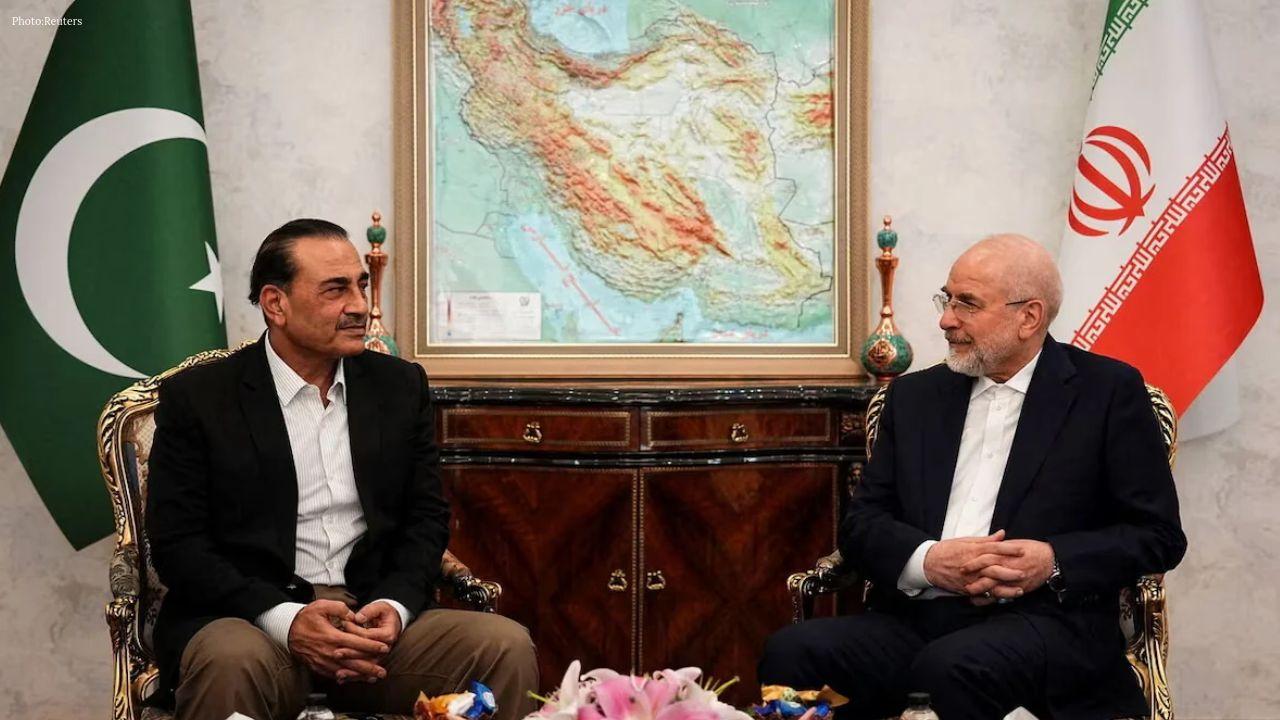
Pakistan’s military has expressed cautious optimism about ongoing diplomatic efforts to reduce tensions between Iran and the United States. The statement came after Pakistan’s army chief, Field Marshal Asim Munir, travelled to Tehran twice during October as part of Islamabad’s efforts to encourage dialogue and prevent further escalation of the conflict. Lieutenant General Ahmed Sharif Chaudhry, spokesperson for Pakistan’s armed forces and Director General of Inter-Services Public Relations (ISPR), described the military’s outlook as “cautiously optimistic” during an interview in Rawalpindi on October 30. His remarks followed a high-level diplomatic visit to Iran earlier in the week. Munir was accompanied by Saudi Defence Minister Prince Khalid bin Salman and Türkiye’s intelligence chief Ibrahim Kalin during the October 26 visit. The repeated visits by Pakistan’s army chief have drawn attention to Islamabad’s growing diplomatic role in the regional crisis. However, Pakistani officials have not publicly disclosed the specific proposals discussed during the meetings or confirmed whether Washington formally supported the latest diplomatic initiative.
Field Marshal Asim Munir has emerged as a central figure in Pakistan’s attempts to facilitate communication between Iran and the United States. His two visits to Tehran during October indicate that diplomatic engagement has continued despite the difficult regional situation. When asked whether the visits suggested progress, military spokesperson Ahmed Sharif Chaudhry pointed to the fact that Munir had travelled to Iran twice within a short period. He suggested that the repeated engagement reflected some degree of positivity but stressed that Pakistan remained careful about making firm predictions. Chaudhry avoided describing the discussions in detail. He also declined to clarify whether the United States had given its backing to the latest visit. The military spokesperson acknowledged that there were still powerful groups and individuals who opposed efforts to reduce tensions, although he did not identify them. The cautious language from Islamabad suggests that Pakistan sees diplomatic opportunities but recognises that several obstacles could still prevent a breakthrough.
The October 26 visit was notable because Pakistan was not acting alone. Saudi Defence Minister Prince Khalid bin Salman and Türkiye’s intelligence chief Ibrahim Kalin joined Asim Munir for discussions in Tehran. Their participation brought together representatives of three countries that have been increasingly involved in regional security discussions. The involvement of Saudi Arabia and Türkiye also reflects the importance of regional diplomacy at a time when the Iran-US confrontation has raised concerns about wider instability across the Middle East. Following the discussions, Mohsen Rezaei, secretary of Iran’s Supreme National Security Council, said regional security should be managed by countries in the region without foreign intervention. His statement highlighted Iran’s position that neighbouring and regional powers should take the lead in addressing security challenges.
The diplomatic engagement is taking place against the background of a defence agreement signed by Pakistan and Saudi Arabia, alongside Türkiye, on August 7. The agreement, described in the report as the Mecca Joint Defence Agreement, states that an attack against one signatory would be treated as an attack against all. The arrangement has gained additional attention as the Iran-US tensions have affected regional relationships and raised concerns about the possibility of a wider conflict. The three countries have presented their cooperation as an effort to strengthen collective deterrence and regional security. Analysts, however, see the agreement as part of broader efforts by regional powers to manage the consequences of the confrontation involving Iran and the United States. During his interview, Chaudhry was asked whether the agreement could allow Iran to become a member. He said its wording did not prevent additional countries from joining. He added that countries sharing a commitment to collective deterrence and regional peace could be considered, but any such decision would rest with the political leadership of the three principal signatories.
Another important issue discussed during the interview was whether Pakistan planned to deploy additional troops to Saudi Arabia under the defence arrangement. Chaudhry did not confirm any new troop deployment. Instead, he said such a decision would depend on the prevailing situation and the decisions of the political leadership in both countries. He reiterated Pakistan’s commitment to Saudi Arabia and the protection of Islam’s holy sites in Mecca and Medina. At the same time, the spokesperson clarified that Pakistan was not involved in the conflict in Yemen, describing it as an internal Yemeni conflict. The issue is particularly sensitive because fighting involving Saudi Arabia and Yemen’s Iran-aligned Houthi group has reportedly intensified again amid the wider Iran conflict. The renewed tensions have raised concerns that developments in one part of the region could affect neighbouring countries and create additional pressure on existing security arrangements.
Alongside questions about international diplomacy, the military spokesperson also addressed Pakistan’s internal security situation, particularly developments in Khyber Pakhtunkhwa. The federal government suspended the provincial government in Khyber Pakhtunkhwa on October 11. The province had been governed by the Pakistan Tehreek-e-Insaf (PTI), the party founded by jailed former prime minister Imran Khan. Chief Minister Sohail Afridi was also detained, according to the report. The federal government accused the provincial administration of failing to address militancy and security challenges in the province. PTI rejected the allegations, maintaining that its government had participated in counterterrorism efforts. PTI leaders described the federal government's action as an attempt to weaken the party and suppress protests. The political dispute has added another layer of tension to Pakistan’s domestic situation, with disagreements continuing over the handling of security and the role of the provincial administration.
Read Also: Melaka Election: PH and Bersatu Avoid Contesting Four Seats
Asked whether the developments in Khyber Pakhtunkhwa would lead to larger military campaigns, Chaudhry said the army's approach to counterterrorism was not based on that model. He explained that military operations were primarily conducted through intelligence-based operations, commonly referred to as IBOs. According to the spokesperson, the pace of these operations would increase, allowing security forces to act on intelligence about militant activity. His comments indicated that the military intended to continue targeted security operations rather than describe the strategy as a single large-scale campaign. The security situation in Khyber Pakhtunkhwa remains a major issue in Pakistan’s domestic debate, particularly because of the disagreement between the federal government and PTI over responsibility for tackling militancy.
The interview also comes amid continuing political tensions surrounding former prime minister Imran Khan and his party. In Pakistan’s February 2024 general election, independent candidates backed by Khan’s PTI won the largest number of directly elected seats but did not secure an overall majority. Khyber Pakhtunkhwa was the only province governed by Khan’s party, making the suspension of its provincial government a significant political development. Khan has remained in prison since 2023. His supporters have accused the military of being involved in his imprisonment and the weakening of PTI. The army has denied involvement in political affairs. These competing positions have contributed to a prolonged dispute over the relationship between civilian political leadership and the military establishment. The issue remains separate from Pakistan’s diplomatic engagement with Iran and the United States, but it forms an important part of the wider political environment in which the country's military leadership is operating.
Pakistan’s diplomatic involvement has attracted attention because the confrontation between Iran and the United States has implications beyond the two countries. Any further escalation could place additional pressure on regional security arrangements and affect relationships among Middle Eastern and neighbouring Asian countries. Pakistan maintains close ties with Saudi Arabia and has also engaged directly with Iran through high-level visits. This position gives Islamabad an opportunity to facilitate regional communication, although it does not guarantee that the two main parties will reach an agreement. The participation of Saudi and Turkish officials in the latest Tehran visit also indicates that regional countries are interested in discussing ways to manage the crisis.



Auqib Nabi Added to India Squad for First Three New Zealand ODIs
Auqib Nabi replaces injured Prasidh Krishna in India's squad for the first three New Zealand ODIs, s

OpenAI Cuts Funding Target by $10 Billion Amid Tech Stock Selloff
OpenAI reportedly reduces its funding target to $20 billion as tech stocks fall, with investors reas

McCullum Backs Harry Brook Despite England's Pakistan Tri-Series Failure
Brendon McCullum backs Harry Brook after England's Pakistan tri-series exit, praising his tactical s

South Korea October Exports Forecast to Surge at Fastest Pace Since 1974
South Korea exports are forecast to surge in October as AI demand, rising memory chip prices and sem

Meta Launches Muse AI Agent in Singapore for Shopping and Travel
Meta Muse AI agent launches in Singapore to help users shop, plan travel and manage emails through c
SpaceX Signs $40 Billion Apollo Deal to Finance AI Chips
SpaceX has entered a $40 billion deal with Apollo for AI chip and data centre hardware financing, su