
You have not yet added any article to your bookmarks!
Join 10k+ people to get notified about new posts, news and tips.
Do not worry we don't spam!
Post by : Badri Ariffin
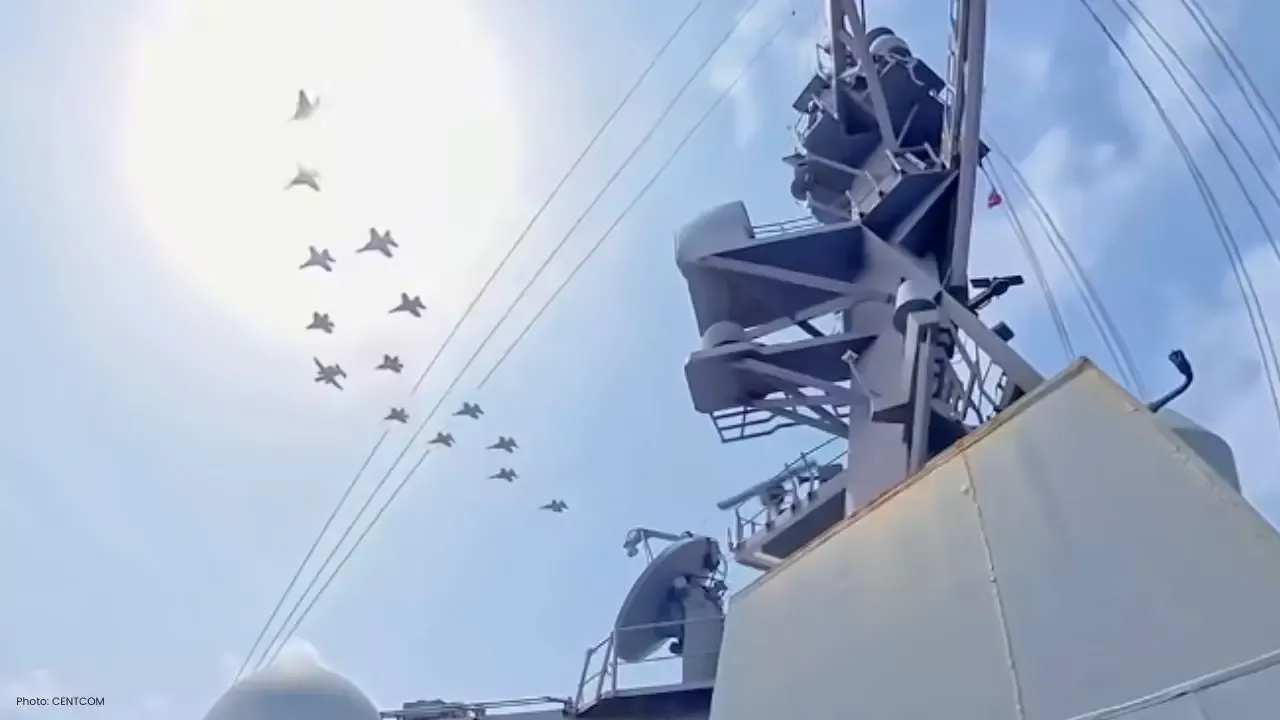
The United States has ramped up its military presence in the Middle East by sending over 20 Navy warships into the region, in response to heightened tensions with Iran. This deployment occurs despite ongoing diplomatic efforts aimed at reducing the risk of further conflict. The U.S. Central Command (CENTCOM) reported that these naval forces are active in supporting regional stability and protecting vital international shipping lanes.
According to CENTCOM, the warships are conducting patrols in crucial waterways across the Middle East, ensuring freedom of navigation and safeguarding commercial shipping. This deployment signifies Washington's dedication to bolstering security in strategic maritime routes essential for international commerce.
This latest movement follows extensive military exercises in the Arabian Sea last month, where U.S. Navy vessels and aircraft operated in close formation. Described by CENTCOM as a show of "unmatched military strength and firepower", these drills were aimed at reassuring partners in the region and highlighting U.S. readiness to tackle emerging threats.
The expanded naval presence comes as relations between the U.S. and Iran continue to deteriorate following recent military events. Washington reportedly conducted significant strikes against Iranian military targets in response to assaults on three commercial vessels in the Strait of Hormuz.
CENTCOM stated that these operations targeted Iranian military installations, cautioning that Iran would face substantial repercussions for threats to international maritime activities. Meanwhile, reports from Iran indicate that eight members of its military forces were casualties of these U.S. strikes in southern Iran, prompting Tehran's claims of U.S. violations of the Memorandum of Understanding (MoU) and warning of decisive actions to safeguard its security.
At the NATO summit in Ankara, President Donald Trump declared that the ceasefire and the MoU with Iran are essentially "over" and labeled Iranian leadership as "sick" while discussing the military actions undertaken.
Iran has condemned the recent expansion of U.S. military assets in the region, arguing that additional naval forces contribute to regional uncertainty rather than ensuring peace. Tehran insists that the escalation of foreign military presence exacerbates tensions.
The Gulf and Arabian Sea remain focal points in the ongoing U.S.-Iran standoff. These waterways are critical for global energy transport, emphasizing their importance for international trade. Instances of maritime traffic disruptions could severely impact global oil markets and shipping movements.










PM Modi Pays Tribute to Mahatma Gandhi, Urges People to Support Khadi
PM Modi pays tribute to Mahatma Gandhi on Gandhi Jayanti and urges citizens to support Khadi and the

Amazon Seeks to Offload $8 Billion in Nvidia Chips to Investors
Amazon plans to move $8 billion in Nvidia chips to investors, using a new financing model to strengt

Samsung Raises Galaxy S26 Prices as Memory Chip Costs Rise
Samsung raises Galaxy S26 prices in South Korea as rising memory chip costs put pressure on smartpho

Lewis Hamilton Calls Singapore Grand Prix One of F1's Toughest Races
Lewis Hamilton discusses the demanding Singapore Grand Prix and brings Plus44 and Almave to Singapor

Denmark's Pandora Opens World's Largest Jewellery Factory in Vietnam
Pandora opens its largest jewellery factory in Vietnam, expanding global production, strengthening s

Gautam Gambhir Questions Batting-Friendly Pitches After India's Record ODI Chase
Gautam Gambhir questions batting-friendly ODI pitches after India’s record chase, calling for a bett

