
You have not yet added any article to your bookmarks!
Join 10k+ people to get notified about new posts, news and tips.
Do not worry we don't spam!
Post by : Anis Farhan
India, a nation deeply rooted in agriculture, has seen its farming methods evolve significantly. Traditionally guided by the seasons and generational wisdom, modern agriculture now harnesses technology as a powerful ally, shifting the landscape dramatically.
Fields are no longer limited to conventional plowing; they are now enhanced with drones that offer real-time monitoring. Gone are the days of solely relying on tactile soil checks; sensors deliver precise readings, allowing farmers to access vital data easily. Today's farmers utilize apps and digital insights to make informed decisions, turning their operations into high-tech ventures.
This transformation isn’t about discarding traditional methods; it's about bolstering them. Technology serves as a tool that enhances Indian agriculture, improving yield, conserving water, and safeguarding ecosystems while ensuring profitability for farmers. This revolution is quiet yet powerful, focusing on a sustainable future.
The farms of tomorrow are being built today — innovative, resource-efficient, and eco-conscious.
Rising uncertainty due to climate change and unpredictable weather patterns push the need for better planning and protection, with technology at the forefront.
With agriculture consuming a significant portion of India's freshwater, innovative irrigation solutions are crucial to conserving this vital resource.
As agricultural lands reduce due to generational divides, adopting micro-farming practices becomes essential for sustainability.
The increasing expenses for seeds, fertilizers, and labor necessitate technology to minimize waste and maximize efficiency.
To meet the needs of a burgeoning population, agriculture must evolve beyond traditional expansion methods.
Technology in agriculture is making the sector appealing, providing new career opportunities for young people in rural regions.
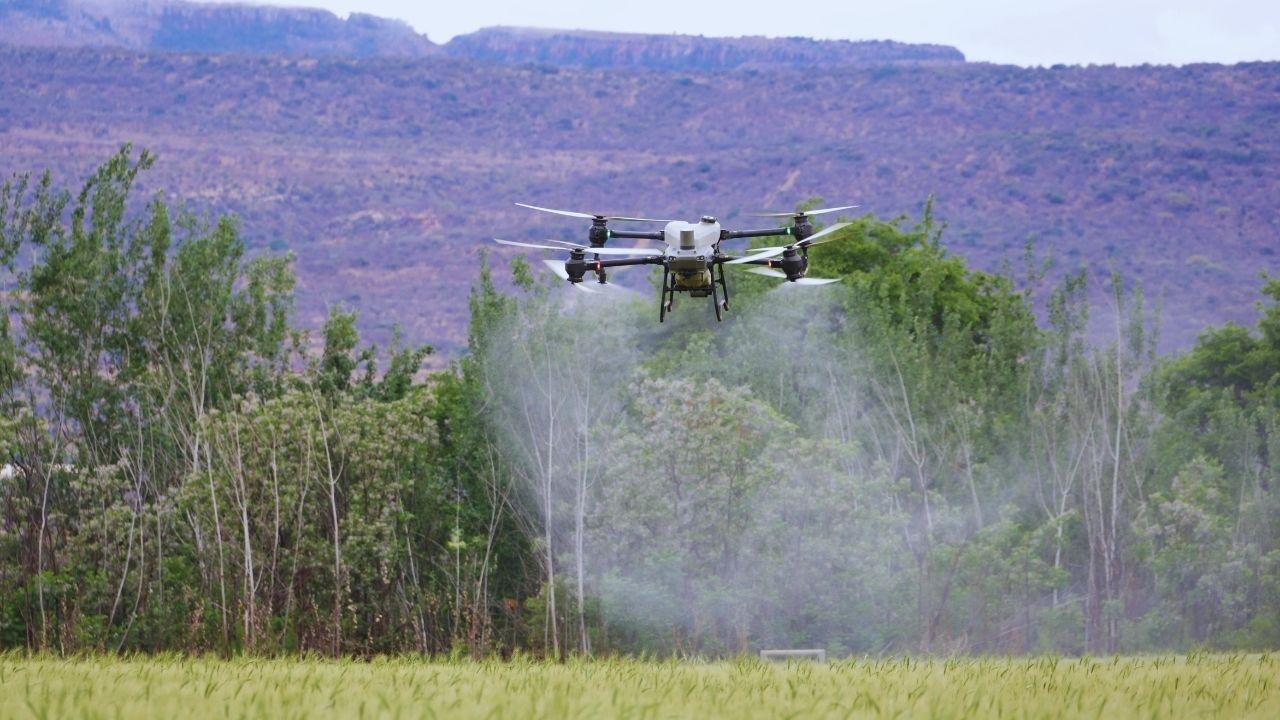
Increasingly, drones are essential tools, transforming manual farming into data-driven insights.
Monitors crop health with aerial imaging
Facilitates efficient pesticide and nutrient spraying
Ensures accurate mapping of fields
Supports uniform irrigation checks
Identifies early pest and disease issues
Assesses damage from storms or floods
Reduces labor costs and hours worked
Minimizes chemical exposure for farmers
Enhances accuracy in spraying
Decreases overall pesticide use
Offers actionable health data
Farmers gain insights previously available only to large agritech companies. A single drone can cover vast areas quickly, potentially saving significant crop value.
Soil sensors can monitor:
Moisture saturation
Nutrient levels
pH levels
Temperature and microbial activity
Farmers stay informed about their crop needs through mobile app data.
Rather than flooding fields, modern systems enable:
Precision drip irrigation
Automated scheduling for water delivery
Moisture-triggered activation
Optimized water distribution methods
Savings in water usage
Enhanced plant vitality
More stable harvests
Minimized fertilizer loss
Boosted soil health and microbial activity
Modern agriculture in India views soil as a living entity, reliant on technology for its preservation.
Micro-farming is about utilizing limited spaces efficiently to grow high-value crops with minimal resources.
Vertical farming setups
Micro-green production racks
Hydroponic and aeroponic systems
Home and terrace gardening
Compact greenhouses
Drip irrigation and UV-protected tunnels
With urbanization and land division, micro-farming provides opportunities to:
Urban farmers
Youth with minimal land
Retirees seeking extra income
Women-led initiatives and local groups
Schools and community projects
Microgreens
Leafy vegetables like spinach and lettuce
Cherry tomatoes
Herbs such as basil and mint
Mushrooms
Strawberries in cooler regions
Aromatic and medicinal plants
Micro-farming bridges the gap between food producers and consumers while enhancing family income.
Farms are now incorporating:
Weather monitoring tools
Automated irrigation controllers
Smart nutrient applicators
Health monitors for livestock
Farm security systems
From planting to market, apps assist farmers with timely alerts on:
Disease risks in specific areas
Forecasted rainfall
Optimum planting timelines
Market prices and crop guidance
Machine learning assists growers in:
Selecting suitable crops
Yield prediction
Identifying plant issues
Mitigating pest threats early
Automated environments optimize humidity and temperature with high-tech lighting, facilitating premium crop production.
Today’s young farmers actively:
Participate in agritech workshops
Engage with online farming content
Connect through farming communities on social media
Market directly to customers
Create brands for their organic products
From hydroponic setups to drone service businesses, farming has become a breeding ground for entrepreneurial initiatives.
Women excel in various fields such as microgreen farming, terrace gardening, floral cultivation, and innovative market linkages.
Apps for crop rotation management
Soil health monitoring tools
Bio-fertilizer and composting units
Systems for water recycling
Tools for efficient rainwater harvesting
Smarter pest detection and targeted application techniques protect both the environment and human health by reducing chemical inputs.
Technology empowers farmers to choose seeds that endure drought stress, schedule irrigation intelligently, and guard crops against frost.
Disparities in access to tech tools remain a hurdle in rural regions, affecting implementation.
Farmers require ongoing education and guidance to effectively utilize new agricultural technologies.
To facilitate scaling, technology must be both affordable and accessible.
Reliable electricity and internet connectivity pose challenges in many rural areas.
AI-powered agricultural robots
Self-driving tractors and drones
Satellite-monitored insurance solutions
Blockchain for farm data
Precision monitoring for livestock
Drones for large-scale planting
Establishing community tech centers for farmers to share resources can promote broader adoption.
Government incentives and educational programs will facilitate smoother transitions into tech-integrated agriculture.
Indian agritech advancements are drawing international attention, with the potential to shape worldwide food systems.
The agriculture landscape in India is undergoing a substantial transformation, becoming intelligent, eco-friendly, and globally connected. As drones soar over fields, soil sensors guide water usage, and micro-farming flourishes in urban spaces, a new breed of farmers merges traditional wisdom with cutting-edge technology, heralding a new era for Indian agriculture.
Ultimately, this shift isn’t solely about enhancing productivity; it's about fostering dignity, environmental stewardship, and sustainable livelihoods, providing farmers with the tools they deserve for their invaluable contributions to society.
A future where agriculture thrives on skill, intelligence, and sustainability is not just an aspiration—it is taking root today, one innovative step at a time.
This article sheds light on the changing trends in agriculture. The effectiveness and impact of technology can vary by region, resources, and training, and farmers should assess local conditions and seek professional advice prior to adopting new technologies.










Spain's Diego Poncelet Sets Skateboarding World Speed Record
Spain's Diego Poncelet reaches 151.83 km/h in a record-breaking downhill skateboard run in Canada, s

Hyundai Recalls 94,622 US Vehicles Over Potential Fire Risk
Hyundai recalls 94,622 US vehicles over overheating seat motors. Check affected Genesis models, fire

Nvidia Pledges $250 Million for UK AI Safety Research
Nvidia will provide $250 million in computing resources over five years to support AI safety researc

Jacob Bethell Returns as England Name Squads for Australia Tour
England name ODI and T20 squads for the Australia tour, with Jacob Bethell returning from injury and

Beauden Barrett Opens Up About Mental Struggles During All Blacks Exile
Beauden Barrett discusses his confidence struggles after missing six tests, his return against Austr

IMF Says AI Investment Supports Global Growth Despite Energy Shock
IMF says AI investment is supporting global growth near 3%, with Asian economies benefiting from ris

