You have not yet added any article to your bookmarks!
Join 10k+ people to get notified about new posts, news and tips.
Do not worry we don't spam!
Post by : Badri Ariffin
Although the geopolitical significance of Greenland is often discussed, a key challenge facing American, NATO, and European objectives lies in its icy barriers.
The formidable Arctic ice creates hazardous conditions that restrict navigation, smother natural resources, and present year-round threats to ships. Navigating around Greenland necessitates a vital asset: icebreakers.
These robust vessels are engineered to penetrate icy waters, forging shipping paths where standard vessels would falter. Yet while Arctic regions are gaining importance in global security and resource extraction, the United States finds itself incredibly under-equipped.
A Decline in U.S. Arctic Capacity
Currently, the U.S. operates a mere trio of icebreakers, with one being nearly obsolete. In contrast, Russia boasts close to 100 ice-capable vessels, including formidable nuclear-powered ships. Canada is progressing toward a fleet of nearly 50, while China has overtaken the U.S. in icebreaker numbers and continues its rapid fleet expansion.
While Washington has agreements in place to procure 11 new icebreakers, optimistic timelines suggest substantial delays ahead.
“For any significant logistical operations in Greenland, the U.S. would face a substantial delay of two to three years before true access is viable,” remarked Alberto Rizzi from the European Council on Foreign Relations.
“Greenland may appear devoid of barriers on a map, but it's predominantly encased in ice.”
The Importance of Greenland
U.S. President Donald Trump has frequently emphasized that Greenland is essential to American security and economic interests. The island's strategic location in the Arctic and its vast reserves of crucial minerals, including rare earth elements vital for modern technology, make it a priority.
At the recent World Economic Forum in Davos, Trump noted that accessing these minerals necessitates drilling through “hundreds of feet of ice.”
However, experts contend that achieving such goals is unrealistic without an adequate fleet of icebreakers for ensuring supply routes remain unobstructed, aiding mining efforts, and shielding military bases.
Ambitious defense initiatives, like the proposed $175 billion “Golden Dome” missile defense infrastructure, would be incredibly challenging to realize without consistent Arctic access.
Few Nations Can Deliver
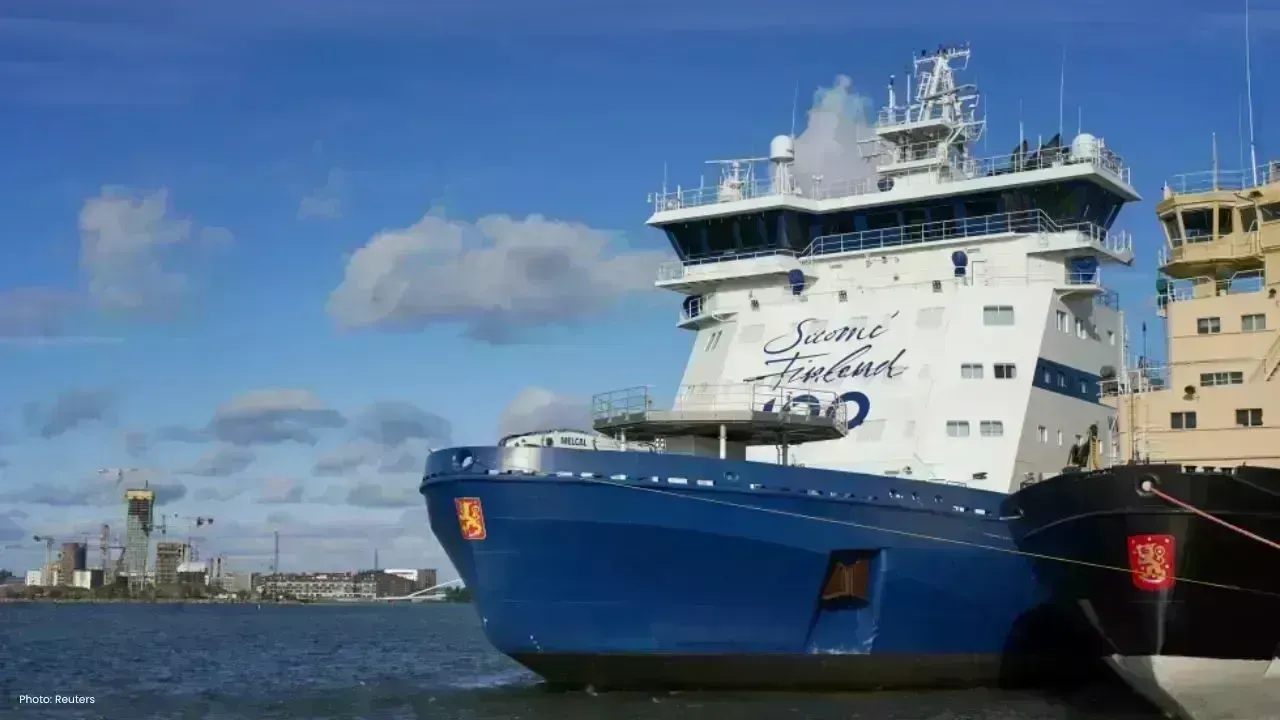
For the U.S. to expand its icebreaker fleet, options are limited. Only a select group of countries possess the expertise to design and construct these vessels: Russia, China, Canada, and Finland.
Notably, Finland stands out as a leader in this field, having built around 60% of the globe's icebreakers and conceptualizing nearly half of the remaining designs from decades of experience in the Baltic Sea.
“Such capabilities are quite specialized,” said Rizzi. “Finland has transformed necessity into strategic economic advantage.”
Canada plays a vital role in this domain, while China is diligently enhancing its advanced polar capabilities.
Ice Pact and Delicate Partnerships
During Trump's initial presidency, emphasis was placed on developing icebreakers. This momentum has continued under President Joe Biden through the Ice PACT agreement with Canada and Finland.
This partnership includes the commissioning of 11 new icebreakers, with four to be constructed in Finland and the remainder in U.S. and Canadian shipyards, utilizing Finnish designs.
However, political tensions surrounding Greenland and trade disputes have put this cooperation at risk—despite experts' consensus that the U.S. has no viable alternatives.
“Collaboration is essential to making this feasible,” emphasized Sophie Arts of the German Marshall Fund. “The U.S. currently lacks a standalone path forward.”
The Costs of Arctic Entitlement
Even with a sufficient number of icebreakers, realizing a robust mining or military presence in Greenland would incur immense costs. Infrastructure development must occur under some of the planet's most formidable conditions. Return on investment could take decades.
“Operating in the Arctic is inherently expensive—transport, construction, maintenance, security—all details are amplified,” explained Arctic expert Marc Lanteigne. “Progress is inherently slow in this region.”
Nevertheless, Denmark and other European allies have indicated a willingness for deeper collaboration, provided that national sovereignty is upheld.
Danish Prime Minister Mette Frederiksen mentioned her support for enhancing Arctic security through U.S.-led initiatives, so long as territorial rights are respected.
The Real Powers in Arctic Access
Despite numerous political declarations, one truth remains clear: present-day Europe—especially Finland—holds the technical expertise essential for Arctic access.
As European Commission President Ursula von der Leyen recently pointed out, Finland is actively supplying icebreakers to the U.S.
“This illustrates that secure Arctic access is attainable only through unity,” she noted.
Following an urgent summit in Brussels, the European Union confirmed enhanced defense investments in Greenland, including the addition of new icebreakers.
The Icy Reality
Absent a modern fleet of icebreakers, U.S. aspirations regarding Greenland remain largely theoretical.
Mineral extraction is unattainable. Military bases lack reliable support. Strategic influence cannot be exerted.
In the Arctic, hardware takes precedence over rhetoric—right now, the United States is still several years away from achieving the necessary operational capabilities.








George Russell Wins Dutch GP Sprint, Boosts Mercedes Morale
George Russell wins the Dutch GP Sprint from pole as Mercedes teammate Kimi Antonelli extends his F1

Australia 50/3 After Bangladesh Bowled Out for 64 in Second Test
Australia reached 50/3 after Bangladesh were bowled out for 64 in the second Test, with Mitchell Sta

Jordan Burroughs Returns to Wrestling with 2028 Olympic Dream
Jordan Burroughs returns to wrestling with Real American Freestyle as the Olympic champion eyes a po

Lamborghini Catches Fire on Singapore's ECP, Causing Heavy Traffic
A Lamborghini caught fire on Singapore's ECP, causing heavy traffic and bus delays. No injuries were

Bangkok Airport Duty-Free Area Flooded by Pipe Burst
A burst water pipe flooded the duty-free shopping area at Bangkok's Suvarnabhumi Airport on July 16,
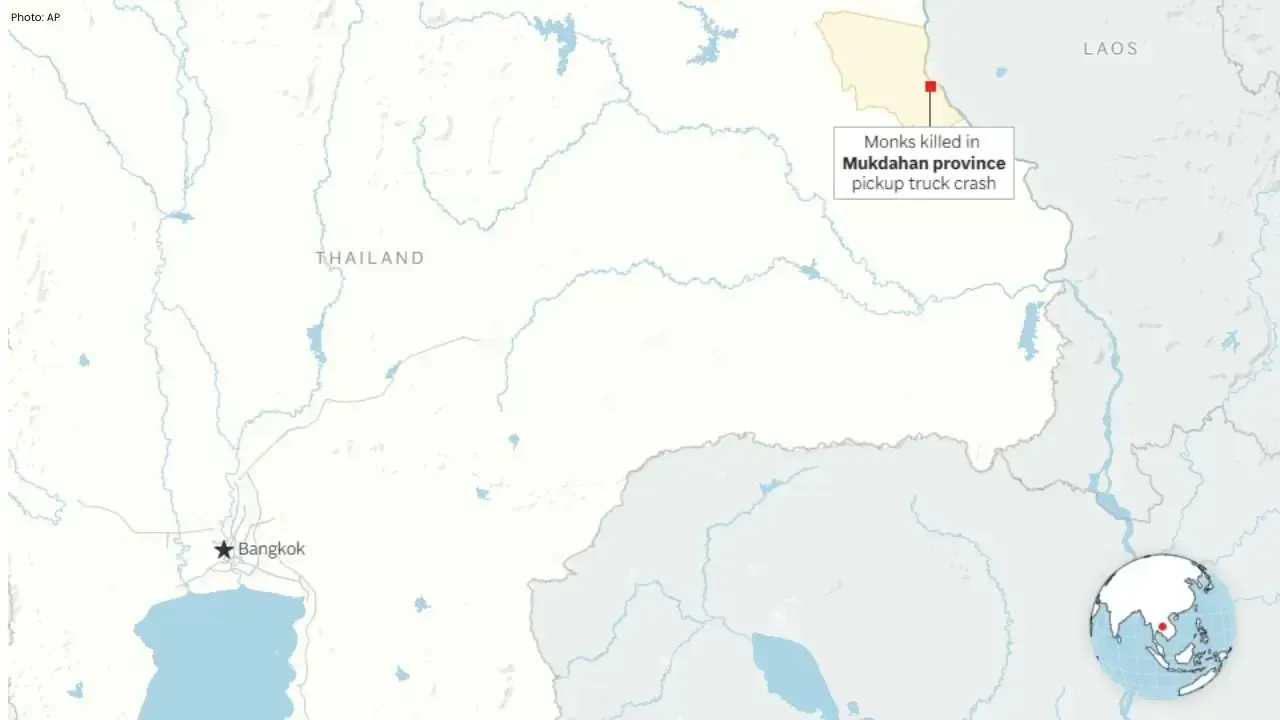
Nine Monks Killed in Thailand Pickup Truck Tragedy
An 11-year-old boy driving a pickup truck crashed into monks during a pilgrimage in northeastern Tha