You have not yet added any article to your bookmarks!
Join 10k+ people to get notified about new posts, news and tips.
Do not worry we don't spam!
Post by : Rohit Dhiman
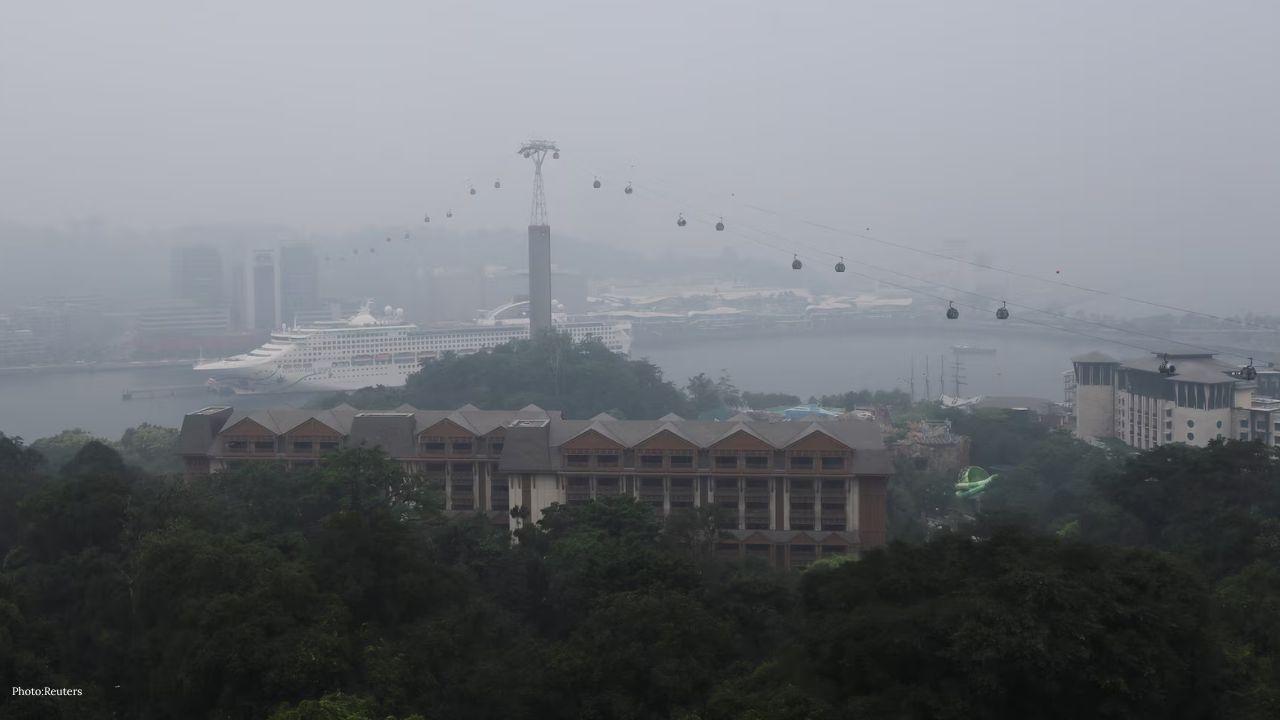
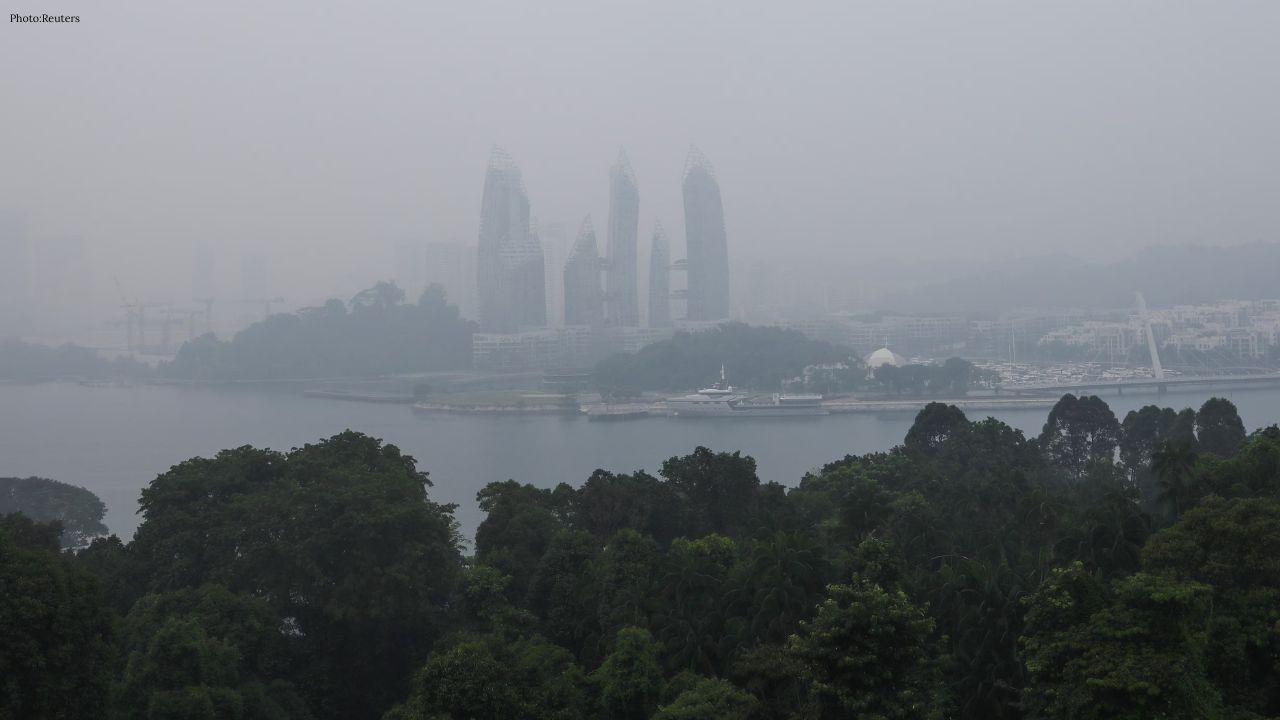
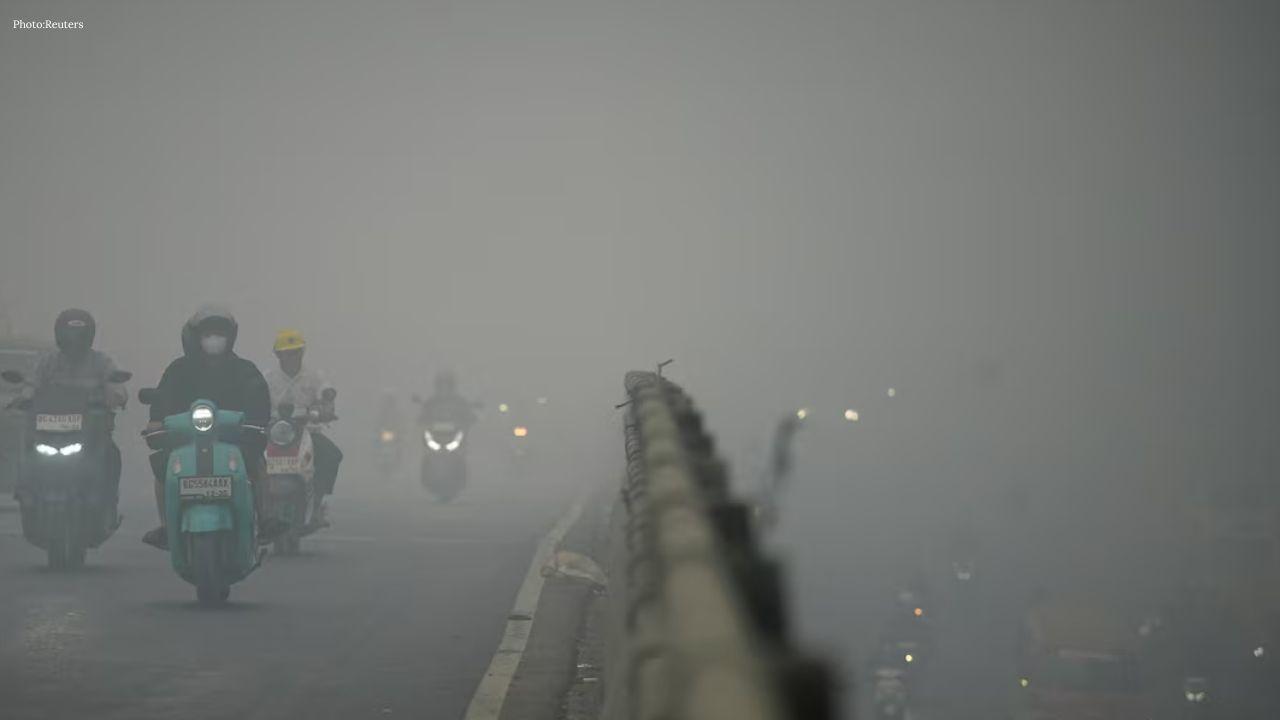
Singapore experienced a modest improvement in air conditions overnight into Wednesday, October 21, 2026. However, pollution levels remained a concern in parts of the country, with elevated hourly fine-particle readings reported in the western and central regions during the morning. The latest update from Singapore’s National Environment Agency (NEA) indicated that the improvement had not completely cleared the haze affecting the island. Although conditions became more favourable in some areas, the overall pollution outlook remained concerning, particularly for people who are sensitive to changes in air quality. According to the agency’s forecast issued on Tuesday evening, October 20, the 24-hour Pollutant Standards Index (PSI) was expected to remain within the unhealthy range on Wednesday, with readings projected between 110 and 180. The situation highlights the continuing impact of smoke haze drifting towards Singapore from fires in Indonesia. Weather conditions, including wind direction and the persistence of dry conditions in parts of southern Kalimantan, could influence how much smoke reaches the city-state over the coming days. For residents, the latest Singapore air quality update means that a slight improvement in readings should not automatically be interpreted as a complete return to healthy conditions.
The western and central parts of Singapore continued to experience unhealthy air quality on Wednesday morning, according to readings published by the NEA. At 11am, the 24-hour PSI stood at 131 in the western region and 116 in the central region. Both readings fell within the unhealthy category, which covers PSI values from 101 to 200. The other three regions recorded comparatively lower readings. The NEA’s regional update showed that the 24-hour PSI ranged from 82 to 97 in the north, east and south, placing those areas in the moderate category at the reported time. The figures indicate that pollution levels were not uniform across Singapore. While some areas experienced relatively better conditions, residents in the west and central districts continued to face a greater air-quality concern. An earlier regional snapshot displayed readings of 129 in the west, 115 in the central region, 97 in the east, 87 in the south and 83 in the north at 9am. These measurements illustrate how readings can vary by location and reporting time. The difference between regional readings also reinforces the importance of checking updates for the relevant area rather than relying on a single national figure.
Fine-particle pollution remained another important part of Wednesday’s air-quality update. The NEA reported that one-hour PM2.5 readings were elevated in the western and central regions at 11am. Across Singapore’s five regions, hourly readings ranged from 33 to 82 during the reported period. PM2.5 refers to fine particles measuring 2.5 micrometres or less in diameter. These particles can enter the respiratory system, making them an important indicator to monitor during periods of smoke haze. The hourly readings also changed throughout the early morning. In the central region, PM2.5 levels fluctuated overnight, falling into the normal band at around 3am before rising again by 7am. In the eastern region, the reading entered the elevated band at approximately 6am but returned to the normal band by 7am. This pattern shows that conditions can change within a relatively short period, even when the broader pollution outlook remains similar. The PM2.5 levels reported during haze episodes are particularly relevant for people deciding whether to exercise outdoors, take part in strenuous activities or spend extended periods outside.
Smoke drifting from Indonesia remains a key factor behind the current Singapore haze situation. The NEA said that smoke haze from fires in Kalimantan could continue moving towards Singapore because winds were forecast to blow from the east-southeast to southeast. The agency also warned that dry weather was likely to persist over southern Kalimantan in the coming days.These conditions could allow additional smoke to travel towards Singapore, potentially limiting the improvement in air quality despite occasional showers. Rainfall was expected over Singapore and the surrounding region. Showers had already been observed in parts of Singapore and nearby areas on Tuesday afternoon. Nevertheless, residual smoke from Kalimantan continued to drift towards the country, while haze was also observed in Sumatra. This means that rainfall alone may not immediately resolve the situation. The movement of smoke, the location of fires and prevailing winds can all influence the amount of haze reaching Singapore.
The NEA’s forecast for Wednesday placed Singapore’s expected 24-hour PSI between 110 and 180. The projected range falls entirely within the unhealthy category under the agency’s published classification. A PSI reading of 0 to 50 is classified as good, while values from 51 to 100 are considered moderate. Readings between 101 and 200 indicate unhealthy conditions, followed by very unhealthy conditions at 201 to 300. Values above 300 fall within the hazardous category. The forecast suggests that even if some regions experience temporary relief, overall air quality could remain a concern throughout the day. Singapore briefly experienced better conditions on Monday, when three of its five regions recorded PSI readings in the moderate range. It was the first time in more than a week that this had occurred in three regions simultaneously. Before that improvement, the last reported instance of moderate air quality in Singapore had been on October 9.
Periods of air pollution caused by smoke haze can affect people differently depending on their health, age, activity level and duration of exposure. The NEA advises older adults, pregnant women and children to reduce prolonged or strenuous outdoor physical activity when the 24-hour PSI reaches the unhealthy range. People living with chronic illnesses, particularly heart or lung conditions, are also advised to avoid extended or strenuous outdoor exertion during these conditions. The concern is not limited to people who exercise outdoors. Activities that involve sustained physical effort can increase breathing rates and the amount of air inhaled, potentially increasing exposure to airborne particles.
Residents can take several practical steps while haze persists:
Check the latest official PSI and one-hour PM2.5 readings before planning outdoor activities.
Reduce prolonged or strenuous exercise outside when pollution levels are unhealthy.
Consider moving exercise sessions indoors when outdoor conditions are unsuitable.
Pay attention to symptoms such as breathing discomfort and seek medical advice when necessary.
Follow health guidance issued by the relevant authorities, particularly if living with an existing heart or respiratory condition.
These precautions can help residents make more informed decisions while air quality remains variable across the country.
Singapore’s Ministry of Health (MOH) advises the public to use the one-hour PM2.5 readings when assessing immediate outdoor exposure and deciding whether a mask may be necessary. When hourly readings enter the high band, vulnerable individuals, including older adults, pregnant women and people with chronic heart or lung conditions, should avoid outdoor activities, according to the ministry. For those who need to go outside during these conditions, a well-fitting N95 mask or an equivalent respirator may help reduce exposure to haze particles. The ministry also states that when hourly PM2.5 readings reach the very high band of 251 or above, healthy individuals should minimise all outdoor activities. People who must go outside may also consider using an N95 mask for protection. However, the guidance does not mean that everyone needs to wear an N95 mask throughout the day. MOH says these masks are generally unnecessary for routine travel between home and school or work, as well as for indoor environments.
Read Also: Ravi Shastri Urges India to Manage Jasprit Bumrah Ahead of 2027 World Cup
Singapore’s air-quality outlook will depend partly on weather conditions and the movement of smoke from Indonesia. Although showers are expected in Singapore and the surrounding region, dry conditions in southern Kalimantan could allow smoke haze to continue travelling towards the island. Winds from the east-southeast to southeast were identified by the NEA as a factor that could carry smoke in Singapore’s direction. Consequently, the improvement observed overnight should be treated as a limited recovery rather than confirmation that the haze episode has ended. Residents can monitor updates from the NEA to track changes in regional PSI readings and hourly PM2.5 concentrations. These measurements provide different but complementary information about the wider pollution situation and immediate exposure conditions. People with children, older family members or relatives with chronic respiratory and cardiovascular conditions may find it particularly useful to check the latest readings before arranging outdoor activities.







Toyota Recalls 105,794 US Land Cruiser Hybrids Over Fire Risk
Toyota recalls 105,794 Land Cruiser Hybrid vehicles in the US over a potential fuel leak and fire ri

Mohammed Shami Remains Determined to Return to India Team
Mohammed Shami remains hopeful of an India cricket team comeback after missing the New Zealand tour,

Ravi Shastri Urges India to Manage Jasprit Bumrah Ahead of 2027 World Cup
Ravi Shastri urges India to manage Jasprit Bumrah’s workload and prioritise Test cricket to keep the

Davidovich Fokina Wins Shanghai Masters for Third 2026 Title
Alejandro Davidovich Fokina beats Rafael Jodar to win the Shanghai Masters 2026, securing his third
Haze Keeps Air Quality Unhealthy Across Central, Southern Malaysia
Malaysia haze persists as Johan Setia records an API of 172, with several areas in Selangor, Negeri

Brandon Figueroa Stripped of WBA Featherweight Title After Missing Weight
Brandon Figueroa loses his WBA featherweight title after weighing 1.4 pounds over the limit before h