You have not yet added any article to your bookmarks!
Join 10k+ people to get notified about new posts, news and tips.
Do not worry we don't spam!
Post by : Rohit Dhiman
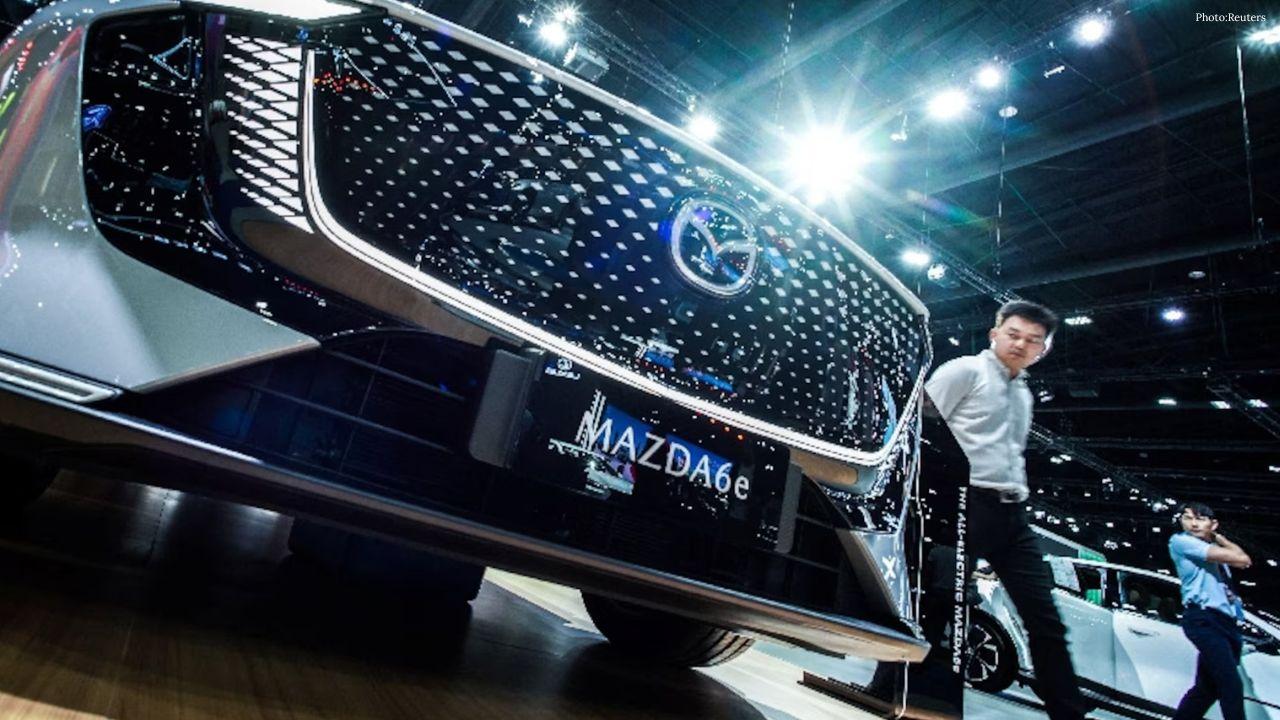
BANGKOK: Thailand is preparing to increase the excise tax imposed on imported electric vehicles as the government looks to strengthen domestic automobile manufacturing and attract more investment into the country's growing automotive sector. The decision was agreed by Thailand's electric vehicle board, according to a finance ministry official. The new framework is expected to create different tax levels depending on how and where vehicles are manufactured, with completely imported cars facing the highest rate. Finance official Pornchai Thiraveja said fully built vehicles brought into Thailand from overseas would face a higher rate than the existing 10 per cent excise tax. The government has not yet announced the final rate. The move represents a shift in Thailand's approach to the rapidly expanding electric vehicle market.
Under the planned structure, vehicles that are completely manufactured overseas and imported into Thailand will be placed in the highest tax category. These vehicles, commonly referred to as completely built units, are currently subject to an excise tax of 10 per cent. The new rate will be higher, although the exact percentage is expected to be determined later this month. The government believes a higher tax burden on fully imported vehicles could encourage international automakers to shift more manufacturing and assembly activity to Thailand. Vehicles brought into the country for testing will receive a lower tax treatment. A separate lower rate is also expected for vehicles imported specifically for local assembly or production.
Electric vehicles manufactured within Thailand using locally sourced components are expected to receive the lowest tax rate under the proposed framework. The policy is aimed at increasing domestic participation in the automotive supply chain. Thailand wants more components, technology, manufacturing expertise and investment to be developed locally as the industry moves toward electric mobility. The government has also indicated that the new policy will include a grace period. This will give automakers additional time to adjust their operations and prepare for the new tax structure. However, officials have not yet decided how long the transition period will last. Finance Ministry Permanent Secretary Lavaron Sangsnit said the final tax rate would be decided before the end of September.
Thailand's policy shift comes as consumer interest in cleaner vehicles continues to rise. During the first seven months of 2026, electric and hybrid vehicles together represented 55 per cent of new vehicle registrations, according to Thailand's Board of Investment. This marked an important change in the country's automobile market because registrations of electric vehicles, hybrids and plug-in hybrids collectively moved ahead of vehicles powered solely by traditional internal combustion engines. The figures demonstrate how quickly consumer preferences are changing in Thailand. The growing demand is also encouraging international manufacturers to expand their presence in the country's electric mobility sector.
Thailand's authorities are seeking to ensure that rising consumer demand produces lasting economic benefits rather than simply increasing imports. Narit Therdsteerasukdi, head of the Board of Investment, said the country's automotive transition needs to convert increasing demand into long-term investment, locally developed technology and high-quality employment. The government therefore wants automakers to develop deeper production networks within Thailand. This includes encouraging investment in vehicle assembly, batteries, components and related technologies. A stronger domestic supply chain could also reduce dependence on imported parts over time.
Thailand has already attracted substantial investment into its electric vehicle ecosystem. Cumulative approvals from the Board of Investment had reached US$4.59 billion across 189 projects by August 2026. These projects cover different areas of the emerging electric mobility industry and reflect the government's effort to establish Thailand as a regional centre for next-generation vehicle manufacturing. The latest tax proposal is expected to influence how manufacturers structure future investments. Companies that choose to produce vehicles and source components locally could benefit from a more favourable tax environment, while businesses that rely primarily on imported finished vehicles could face higher costs.
Thailand has long been an important manufacturing and export base for the global automobile industry. Major manufacturers including BYD and Toyota have a significant presence in the country's automotive market. The rise of Chinese electric vehicle manufacturers has added a new dimension to Thailand's traditional automotive industry. International companies are increasingly competing to establish production facilities as demand for battery-powered vehicles grows across Southeast Asia. Thailand's existing manufacturing infrastructure, skilled workforce and established supplier network make the country an attractive location for companies seeking to build vehicles for both domestic consumption and export.
Read Also: Trump Offers US$5,000 to Americans if Republicans Win Midterms
The proposed policy could also affect the prices of electric vehicles sold in Thailand. Imported models that are completely manufactured abroad could become more expensive if the government significantly increases their tax burden. By contrast, vehicles assembled or produced locally could benefit from lower rates. This difference could influence purchasing decisions among consumers and encourage manufacturers to increase local production. The government will need to balance two objectives: keeping electric vehicles affordable enough to maintain strong consumer demand while encouraging companies to invest more heavily in domestic manufacturing.
Thailand's automotive sector is undergoing a major transformation as manufacturers respond to global demand for electric mobility. For decades, the country has been one of Southeast Asia's key automobile production and export centres. The emergence of electric vehicles has created both a challenge and an opportunity for the industry. Authorities want to preserve Thailand's manufacturing advantage while ensuring that the country remains competitive in the new technology-driven automotive market. The planned EV import tax increase is therefore not simply a revenue measure. It is part of a wider strategy to encourage investment, technology transfer and local manufacturing.
Completely imported vehicles are expected to face the highest rate under the proposed system. Vehicles brought in for testing or local assembly will receive more favourable treatment. Cars produced in Thailand with a greater share of locally sourced components are expected to receive the lowest tax burden. The final rates have not yet been announced, and automakers are expected to receive a transition period to adjust to the new system. The government will determine the final structure later this month.





Singapore Haze Returns as Central Region Air Quality Turns Unhealthy
Singapore haze returns as central air quality worsens, with Singapore air quality entering the unhea

Thailand to increase tax on EV imports, official says
Thailand will raise EV import tax to encourage local EV production, with different rates based on ve

Samsung Prepares for Apple’s Foldable iPhone Challenge in Global Market
Samsung faces Apple’s $1,999 foldable iPhone as the foldable phone market heats up, with Samsung Gal
Kimi Raikkonen's Son Robin Joins Red Bull Driver Development Programme
Kimi Raikkonen's son Robin joins the Red Bull Junior Team, marking a major step in his karting caree

Lionel Messi Agrees Deal to Buy Spanish Second-Tier Club Eldense
Lionel Messi agrees to buy Spanish club Eldense as he expands his football ownership portfolio with

Santner rejects BBL deal to focus on New Zealand schedule
Mitchell Santner rejects a lucrative BBL deal to focus on New Zealand cricket, captaincy and upcomin