
You have not yet added any article to your bookmarks!
Join 10k+ people to get notified about new posts, news and tips.
Do not worry we don't spam!
Post by : Anis Farhan
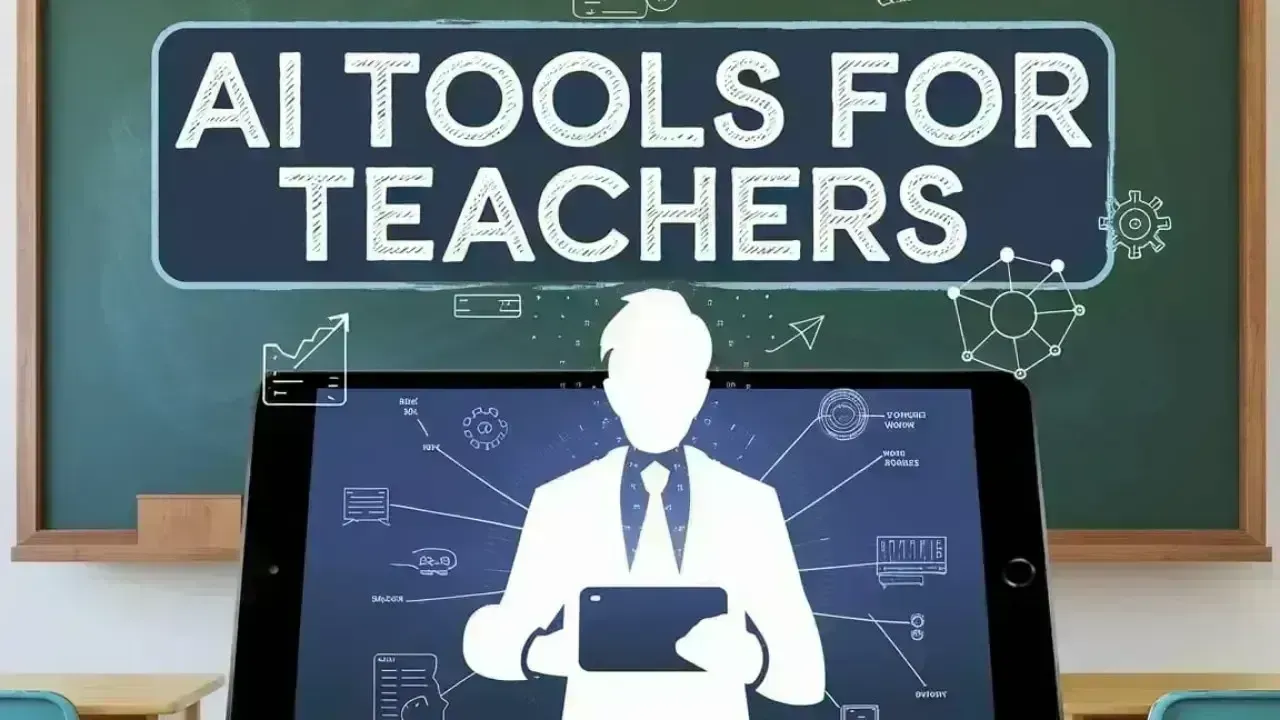
The landscape of educational technology has continuously evolved, starting from digital classrooms to adaptive learning systems. Now, a new phase is emerging, one that focuses on empowering teachers as pivotal players in educational innovation. The rise of artificial intelligence tailored for educators is becoming a game-changer in modern pedagogy.
Unlike earlier educational tools aimed mainly at students, AI for teachers addresses the most labor-intensive and repetitive tasks associated with teaching, from grading and lesson planning to communication and administrative duties. This marks a significant transformation in how educational work is organized and supported.
Historically, investments in educational technology have centered on enhancing student experiences through gamified learning and personalized tools. Although valuable, many of these resources have inadvertently burdened teachers with the challenge of mastering new systems and managing additional data.
This created a scenario where educators became more like operators of technological solutions rather than beneficiaries, leading to increased burnout and attrition.
Education extends beyond just transmitting facts; it involves intricate planning, empathy, adaptability, and constant evaluation under pressure. AI is designed to assist in this complex endeavor by automating mundane tasks and bolstering teacher decision-making.
AI reimagines educational technology from requiring teachers to use tools to acting as collaborative assistants that promote their effectiveness.
AI designed for teachers goes beyond generic automation or chatbots. It comprises purpose-built platforms that are deeply rooted in educational standards, classroom dynamics, and curricular goals.
These solutions are adept at recognizing grade levels, learning objectives, and diverse student needs, allowing them to operate effectively within the everyday responsibilities of educators.
Rather than replacing educators, AI serves as a supportive partner. It aids in drafting, organizing, and analyzing educational content while maintaining the educator's authority. This technology enhances professional discretion without undermining it.
Creating curriculum-aligned lesson plans can be a daunting task for teachers. AI tools can swiftly formulate lesson frameworks that conform to established competencies and assessment criteria.
This helps teachers transition from starting with blank slates to having customizable outlines, thus minimizing preparation time.
AI can provide differentiated versions of lessons to cater to varied learning abilities without increasing the teachers’ workload. Hence, personalized education becomes practical.
Grading remains one of the most taxing aspects of teaching. AI solutions can analyze assessments based on rubrics specified by teachers. Importantly, educators can review and modify AI-generated grades, ensuring fairness.
Instead of generic comments, AI can provide specific critiques that help students improve, thus freeing educators to offer high-quality feedback, even amid large classes.
AI can scrutinize various performance metrics to identify students who may require additional support, enabling teachers to intervene promptly.
This approach turns data from an overwhelming resource into valuable insights.
By spotting trends in understanding and involvement, AI offers suggestions for adjustments in teaching styles, pacing, or content delivery—fostering evidence-based reflective practices.
The time spent drafting communications can detract from educators' instructional focus. AI can automate the creation of efficient communications, facilitating improved transparency while preserving personalized touches.
Redundant paperwork can hinder teaching. AI can streamline essential documentation processes while ensuring accuracy and consistency, liberating teachers to prioritize direct teaching.
AI can assist in crafting tailored accommodations for students with learning differences, creating a manageable framework for inclusivity.
With AI, accessible educational resources such as simplified texts or alternative formats can be assembled, ensuring that teachers do not need advanced technical skills.
AI can serve as a discreet teaching mentor, offering guidance without the hassle of scheduling conflicts.
Through evaluation of student feedback and lesson outcomes, AI prompts educators to reflect and recommends professional development resources tailored to their context.
With global teacher shortages and rising stress levels, AI presents solutions by alleviating workload and time constraints—issues that traditional technology cannot resolve.
Unlike conventional educational resources that require physical expansion, AI can efficiently scale across vast educational systems, offering support to a multitude of educators.
AI will depend on sensitive data, necessitating robust governance and transparency to safeguard against misuse.
Without careful design, AI might perpetuate existing biases, making it crucial for educators to maintain a critical stance towards AI outputs.
AI systems must boost teacher control rather than impose restrictive frameworks on teaching methodologies.
In the future, AI will be embedded within lesson planning tools and grading systems, functioning seamlessly in the backdrop.
As AI automates routine chores, educators will dedicate more time to mentorship and creativity, enriching the teaching endeavor.
Adopting AI for teachers yields improved educational results without a proportional rise in costs, making it appealing to public education systems.
When educators receive the empowerment they need, the whole ecosystem thrives—students achieve greater learning, and institutions become more efficient.
Grasping AI's capabilities is vital for educators. Embracing collaboration with AI can enhance their professional journey.
Educators should play a pivotal role in the creation and refinement of AI tools to ensure that technological innovations meet genuine educational requirements.
AI for teachers signifies a major reevaluation of educational technology priorities. Instead of forcing educators to adapt to tools, it seeks to tailor these tools to educate. By lightening the administrative load and enhancing personalization and growth opportunities, AI is poised to reshape teaching and learning in the 21st century.








Google Signs 3.6-GW Power Deal With Constellation Energy in US
Google signs a 3.6-GW power deal with Constellation Energy, including nuclear power upgrades to supp

Harmanpreet Kaur Steps Down as India Captain Across All Formats
Harmanpreet Kaur steps down as India captain across all formats after a remarkable leadership journe

Michael Bracewell Chooses Casual Contract, Targets BBL Opportunity
Michael Bracewell moves to a casual contract as he eyes a BBL opportunity while remaining available

Tuchel Says Alex Scott Can Challenge Declan Rice for England Midfield Spot
Thomas Tuchel says Alex Scott can challenge Declan Rice for an England midfield place after his impr

Air Quality Turns Unhealthy in Central and Western Singapore Amid Haze
Singapore haze pushes PSI above 100 in central and western areas as smoke from regional hotspots rai

PM Modi Pays Tribute to Mahatma Gandhi, Urges People to Support Khadi
PM Modi pays tribute to Mahatma Gandhi on Gandhi Jayanti and urges citizens to support Khadi and the

