You have not yet added any article to your bookmarks!
Join 10k+ people to get notified about new posts, news and tips.
Do not worry we don't spam!
Post by : Badri Ariffin
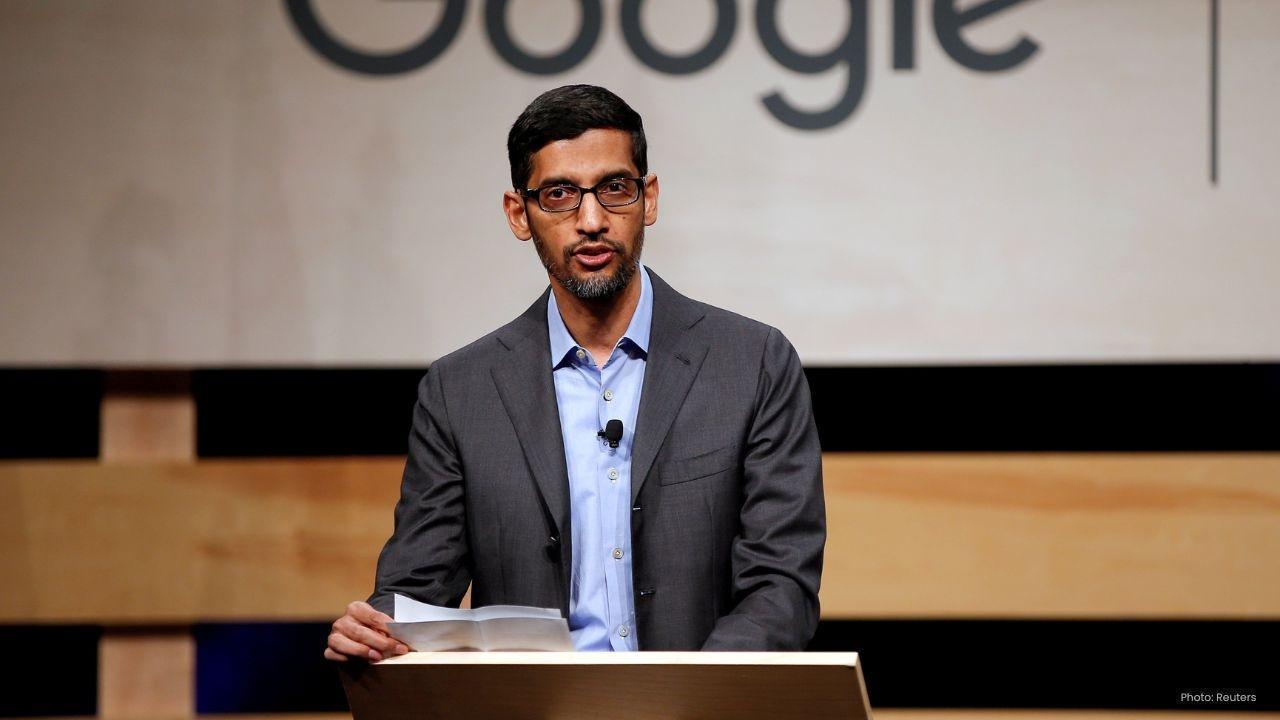
The rapid investment growth in artificial intelligence (AI) is generating excitement but also raising alarms within the tech industry. Sundar Pichai, CEO of Alphabet — Google’s parent company — recently cautioned about the risks of a potential AI bubble bursting, emphasizing that no company, including Google, is entirely secure from these threats.
The AI sector has seen a dramatic escalation in investments and valuations. Alphabet’s market worth doubled to an impressive $3.5 trillion over just seven months, while Nvidia, a dominant player in AI chips, surged to a market valuation of $5 trillion. Such rapid growth has led some analysts to express concern over possible excessive enthusiasm and overblown expectations.
Pichai referred to the current AI surge as an “extraordinary moment,” although he pointed out hints of “irrationality” amidst the fervor. Drawing comparisons to the dotcom bubble of the late 1990s, he warned that AI investments might overshoot before transitioning to a more sustainable growth phase, yet he remains optimistic about the long-term impact of AI technologies.
Pichai articulated that Google’s distinct strategy positions it favorably. Through controlling a comprehensive technology stack — from creating custom AI chips to managing data and developing sophisticated models — Alphabet is better equipped to navigate market fluctuations compared to companies leaning heavily on third-party suppliers.
Investment Plans Beyond the US
Alphabet is broadening its horizons beyond the U.S. Recently, the corporation declared a £5 billion investment in the UK over the next two years, focusing on enhancing AI research and infrastructure. This initiative includes bolstering operations at DeepMind, Google’s premier AI research lab located in London, and local training of AI models — a crucial step towards positioning the UK as a frontrunner in global AI innovation.
Energy Concerns and Climate Targets
In the midst of the AI surge, Pichai raised important issues regarding the industry’s substantial energy consumption. Last year, AI technologies represented around 1.5% of global electricity usage, a figure anticipated to rise. This growing demand is hindering progress towards Alphabet’s climate objectives, though the company remains steadfast in its commitment to achieve net-zero emissions by 2030 through innovative energy solutions.
AI’s Influence on Employment and Society
The advent of AI is set to transform the workplace. Pichai designated AI as “the most profound technology” humanity has ever developed, recognizing that it brings inherent challenges. Certain jobs may change or evolve, necessitating that workers adapt by effectively utilizing AI tools. Those willing to embrace this transformation are likely to excel in their professions, while traditional roles such as teachers and physicians may persist but will require enhanced skills facilitated by AI.










Hyundai raises profit target, expands hybrid lineup in the US
Hyundai hybrid cars get a major boost as the automaker raises its profit margin target and plans new

Josh Kerr and Jakob Ingebrigtsen Set for 1,500m Rivalry Rematch
Josh Kerr and Jakob Ingebrigtsen will renew their 1,500m rivalry at the Ultimate Championship in Bud

PSG Coach Luis Enrique Urges Players to Step Outside Comfort Zone
PSG coach Luis Enrique says players must leave their comfort zone and keep improving as the club tar

China’s Tiangong Sets New 400m Record at Robot Olympics
China’s Tiangong robot sets a new 400m record at the Robot Olympics, beating a South African robot i

George Russell Wins Dutch GP Sprint, Boosts Mercedes Morale
George Russell wins the Dutch GP Sprint from pole as Mercedes teammate Kimi Antonelli extends his F1

Australia 50/3 After Bangladesh Bowled Out for 64 in Second Test
Australia reached 50/3 after Bangladesh were bowled out for 64 in the second Test, with Mitchell Sta