
You have not yet added any article to your bookmarks!
Join 10k+ people to get notified about new posts, news and tips.
Do not worry we don't spam!
Post by : Saif Rahman
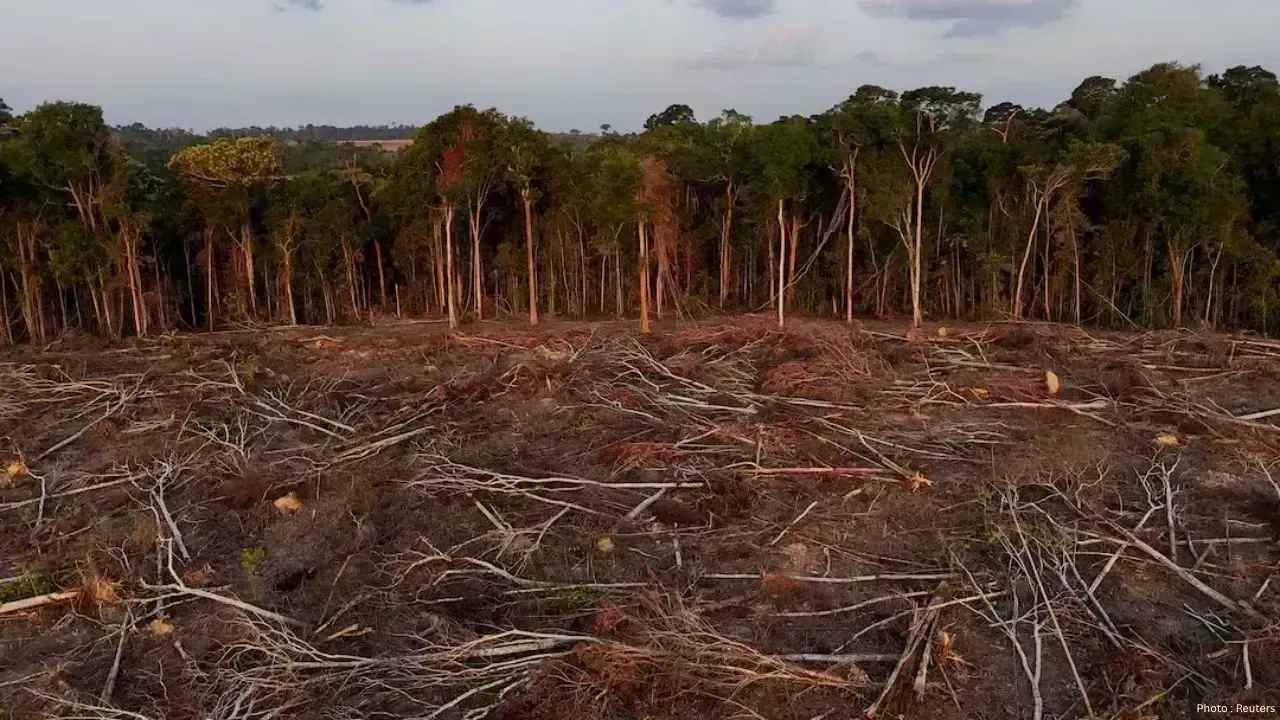
A recent international report highlights a decrease in tropical forest loss in 2025 compared to the record levels of the previous year. While this development is viewed positively, experts caution that the overarching deforestation crisis is far from resolution.
In 2025, an estimated 4.3 million hectares of tropical primary forest were lost globally, reflecting a 36% reduction from the unprecedented loss seen in 2024. This improvement suggests that effective policies in various nations can significantly impact forest preservation.
Brazil, in particular, has seen notable advancements due to enhanced environmental measures. Increased enforcement against illegal logging and fortified protection programs have contributed to a marked decline in forest loss in critical rainforest zones.
Yet, the situation remains dire. Analysts emphasize that the current deforestation rate still far exceeds what is necessary to achieve the global climate objectives established for 2030. In essence, forests continue to be vanquished at a pace greater than their ability to recover or be secured.
Agricultural expansion remains the primary driver of forest destruction, as vast sections of tropical forests are cleared for farming and livestock. Additionally, many local communities rely on these forested areas for their livelihood, further intensifying the strain on natural ecosystems.
Climate change compounds the challenges, as rising temperatures and altered rainfall patterns increase the frequency and severity of forest fires, decimating large areas of forest rapidly. Such incidents are becoming more common and difficult to manage in particular regions.
Another troubling factor is the lack of uniform progress worldwide. While certain countries have successfully curbed forest loss, others continue to experience significant deforestation due to inadequate law enforcement, economic pressures, or agricultural expansion. This disparity hampers global efforts to improve forest conservation.
Forests play a crucial role by sequestering carbon, providing habitats for wildlife, and stabilizing the Earth's climate. The destruction of forests not only leads to a loss of biodiversity but also enhances the release of carbon dioxide into the atmosphere, exacerbating global warming.
Experts warn that although the recent downturn in forest loss is encouraging, it must not lead to complacency. The world is currently off course for achieving the long-term objective of halting and reversing deforestation by the year 2030.
The takeaway from this latest information is unmistakable: while progress is achievable, it needs to be expedited and approached with consistency. Enhanced policies, robust enforcement, and global collaboration are imperative to safeguard the remaining tropical forests.










PM Modi Pays Tribute to Mahatma Gandhi, Urges People to Support Khadi
PM Modi pays tribute to Mahatma Gandhi on Gandhi Jayanti and urges citizens to support Khadi and the

Amazon Seeks to Offload $8 Billion in Nvidia Chips to Investors
Amazon plans to move $8 billion in Nvidia chips to investors, using a new financing model to strengt

Samsung Raises Galaxy S26 Prices as Memory Chip Costs Rise
Samsung raises Galaxy S26 prices in South Korea as rising memory chip costs put pressure on smartpho

Lewis Hamilton Calls Singapore Grand Prix One of F1's Toughest Races
Lewis Hamilton discusses the demanding Singapore Grand Prix and brings Plus44 and Almave to Singapor

Denmark's Pandora Opens World's Largest Jewellery Factory in Vietnam
Pandora opens its largest jewellery factory in Vietnam, expanding global production, strengthening s

Gautam Gambhir Questions Batting-Friendly Pitches After India's Record ODI Chase
Gautam Gambhir questions batting-friendly ODI pitches after India’s record chase, calling for a bett

