
You have not yet added any article to your bookmarks!
Join 10k+ people to get notified about new posts, news and tips.
Do not worry we don't spam!
Post by : Rameen Ariff
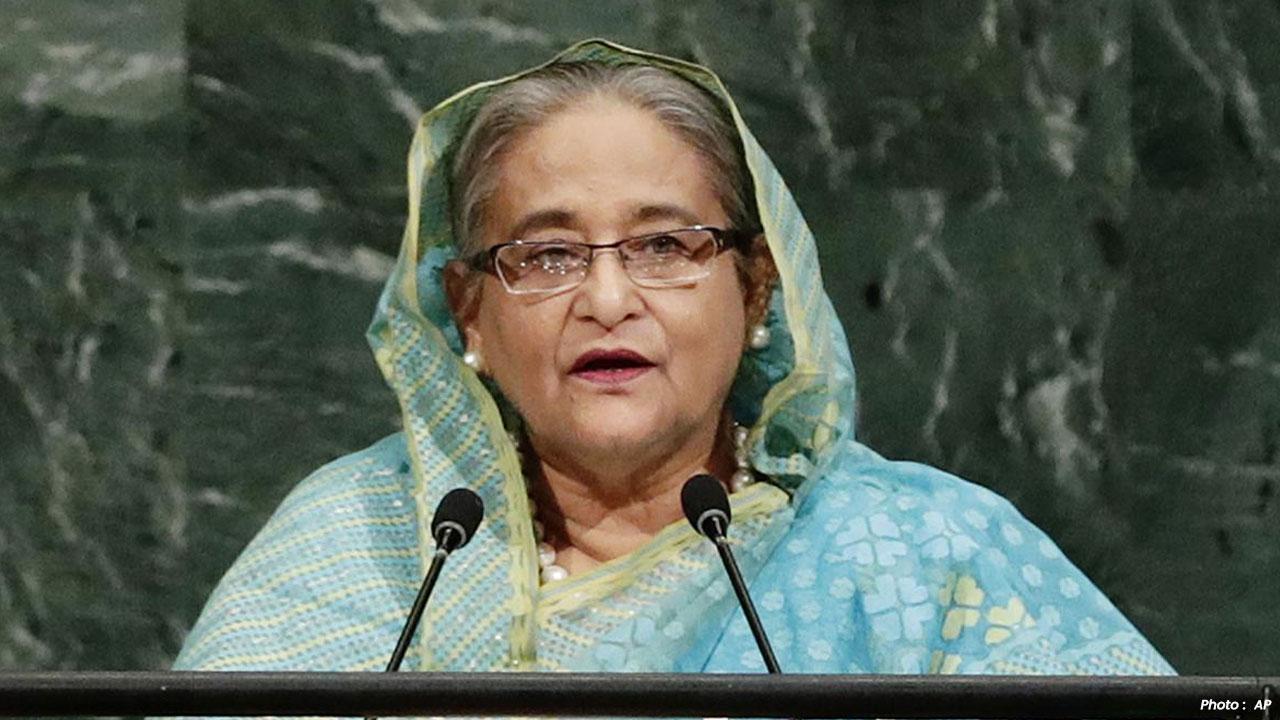
Bangladesh’s Election Commission has barred former Prime Minister Sheikh Hasina and several of her family members from voting in the upcoming national elections scheduled for February 2026. The decision comes after Hasina was ousted from power in August 2024, and her political party, the Awami League, faces restrictions under the interim government.
Sheikh Hasina, who led Bangladesh for more than two decades, lost power following a student-led uprising on August 5, 2024. The interim government, led by Nobel laureate Muhammad Yunus as Chief Adviser, has since suspended the activities of the Awami League and initiated legal actions against its leaders for their alleged involvement in political unrest.
The Election Commission confirmed that Hasina’s National Identity Card (NID) has been locked. This action makes her ineligible to vote, including through new postal ballot facilities for overseas Bangladeshis. The NIDs of several family members, including her sister Sheikh Rehana, son Sajeeb Wazed Joy, and daughter Saima Wazed Putul, have also been blocked.
Locking an NID prevents an individual from registering for voting. In this case, Sheikh Hasina and her family members cannot cast their votes, either in Bangladesh or abroad. The commission explained that the action was taken in line with existing laws and regulations governing electoral eligibility, though critics argue that it has strong political undertones.
The decision has drawn sharp criticism from political analysts, human rights groups, and Awami League supporters.
Critics’ View: Many say that barring a former Prime Minister and her family from voting undermines democratic values and the fundamental right of citizens to participate in elections. They see this as part of a broader crackdown on opposition parties.
Supporters’ View: The Awami League and Sheikh Hasina’s supporters describe the move as politically motivated, calling it an attempt to weaken the party’s influence ahead of elections.
Government Response: Authorities insist that the action is legal and in accordance with the rules set by the Election Commission.
This decision adds uncertainty to Bangladesh’s political scenario. Analysts note that elections without participation from key opposition figures may not reflect the full will of the people. International observers have expressed concern about the fairness and transparency of the upcoming February elections.
The move also raises questions about the balance between maintaining law and order and ensuring democratic freedoms. Political tensions remain high, with many watching how the situation unfolds in the coming months.
The February 2026 elections are shaping up to be crucial for Bangladesh’s future. With Sheikh Hasina and other opposition leaders restricted from voting, the political environment remains uncertain. Analysts believe that how the interim government manages opposition participation and ensures a free and fair electoral process will be closely monitored both domestically and internationally.
Bangladesh now faces a delicate challenge: maintaining stability while respecting democratic rights, amid growing political tensions and international attention.







Meta Bans TikTok Ads on Facebook and Instagram in Seven Countries
Meta has banned TikTok ads in seven countries, escalating competition over social media users, adver

ASML and Zeiss Target Next-Generation Chip Technology in 10 Years
ASML and Carl Zeiss are developing Hyper NA technology to print smaller chip circuits, with the next

Rabada Misses First Australia Test as South Africa Pick Two Spinners
Kagiso Rabada misses the opener as South Africa vs Australia begins, with Anrich Nortje returning an

Starc Compares Australia's Tough Year to McIlroy's Major Sweep
Mitchell Starc says Australia winning three away Test series and the World Cup would match Rory McIl

France’s Sesterce Plans $11 Billion AI Data Centre in Finland
Sesterce plans a $11 billion AI data centre in Finland, with major expansion, green energy plans and

Danaher to Launch AI-Powered Autonomous Research Lab in 2027
Danaher plans an AI research lab for 2027, combining robotics and automation to speed up drug discov

