
You have not yet added any article to your bookmarks!
Join 10k+ people to get notified about new posts, news and tips.
Do not worry we don't spam!
Post by : Rohit Dhiman
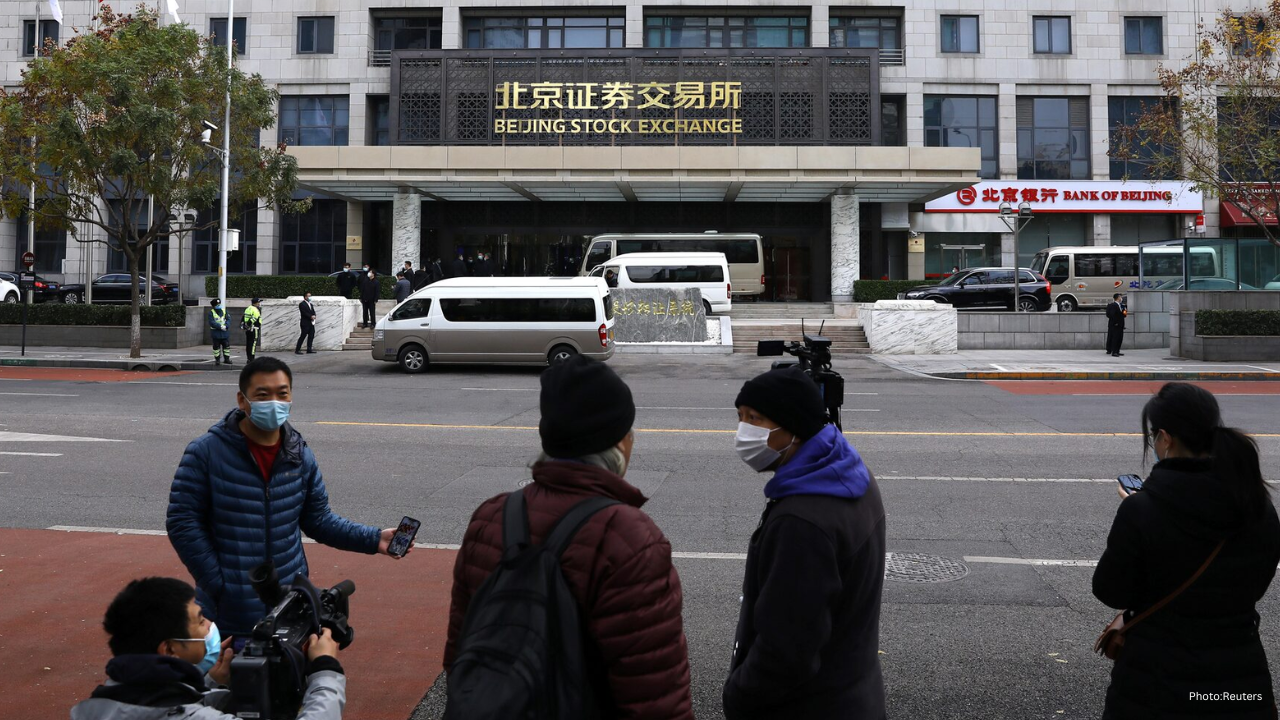
China has introduced a fresh set of financial measures aimed at preventing further declines in its struggling stock market, as authorities attempt to restore investor confidence and stabilise financial conditions. The latest intervention includes measures to improve market liquidity, reduce borrowing costs for share repurchases and encourage financial institutions to increase their investments in equities. The announcement comes after a difficult October for Chinese equities, when the benchmark CSI300 Index recorded a significant monthly decline. The index fell 8.5 per cent during the month, marking its worst monthly performance since early 2016. The downturn has raised concerns about the health of the world’s second-largest economy, where weak consumer spending, a prolonged property sector crisis and uncertainty surrounding technology companies have continued to affect market sentiment. The new measures are intended to make it easier for financial institutions and listed companies to access funding and purchase shares. However, financial analysts believe the intervention may provide only temporary relief unless China’s economic fundamentals begin to improve.
Chinese authorities have announced several initiatives designed to increase liquidity, encourage share purchases and provide financial support to companies and institutional investors. The measures primarily focus on making funds more accessible and reducing the financial burden associated with purchasing shares. Central Bank Introduces Liquidity Support for Financial Institutions The People’s Bank of China (PBOC) is expanding access to funding for major financial institutions through a mechanism known as a swap facility. Under this arrangement, securities companies, investment fund managers and insurance companies can exchange assets they already hold, including government and corporate bonds, for more liquid assets supplied through the central bank. These liquid assets can subsequently be used to obtain financing for purchasing stocks. The mechanism allows financial institutions to access additional funds without selling their existing investments, potentially providing greater flexibility during periods of market volatility. The central bank announced another round of swap operations on November 3, with the potential to channel more than 100 billion yuan, equivalent to approximately US$15 billion, into the market.
Another major component of Beijing’s intervention involves reducing borrowing costs for companies that repurchase their own shares. The PBOC has lowered the interest rate on its special lending facility for share buybacks and increases in shareholdings from 1.25 per cent to 1 per cent. The programme, originally introduced in 2024, is also being converted into a permanent arrangement rather than remaining a temporary initiative. Under the scheme, banks can obtain financing from the central bank at reduced rates and provide loans to listed companies for purchasing their own shares. These transactions, commonly known as share buybacks, can potentially support stock prices by reducing the number of shares available in the market. The lower interest rate is expected to make such purchases more financially attractive for companies. However, market observers have warned that share repurchases do not automatically guarantee an increase in stock prices. Companies could potentially increase their borrowing to finance buybacks while their share prices continue to decline. This means the effectiveness of the programme will depend on broader market conditions and the financial strength of participating businesses.
China’s financial regulators are also encouraging large companies and investment funds to increase their participation in the stock market. The China Securities Regulatory Commission has urged major companies included in important stock market indices, along with leading technology businesses, to consider repurchasing shares. The objective is to provide additional demand for equities and help stabilise the market value of major companies. Regulators are also encouraging newly established exchange-traded funds to accelerate their stock purchases. Investment fund managers have been urged to consider increasing their investments during market downturns. Exchange-traded funds, commonly known as ETFs, allow investors to gain exposure to multiple companies through a single investment product. These funds generally track a group of stocks or a particular market index. By encouraging purchases from institutional investors and major companies, authorities hope to reduce selling pressure and prevent sharp market declines. The broader strategy reflects Beijing’s attempt to strengthen demand for Chinese equities during a period of uncertainty.
The recent market decline reflects a combination of economic challenges, weak investor confidence and uncertainty surrounding major industries. Although technology and artificial intelligence stocks have experienced substantial pressure, analysts believe the broader problems extend beyond these sectors. China’s economy has been dealing with sluggish domestic consumption, persistent weakness in the property sector and low inflation. These conditions have affected business performance and created uncertainty about future corporate earnings. Weak Consumer Spending Continues to Affect Economic Growth Domestic consumption remains an important factor influencing China’s economic outlook. When consumers reduce spending, businesses may struggle to increase sales and generate higher revenues. Weak demand can also limit companies’ ability to raise prices, particularly when competition remains intense. This creates pressure on corporate profitability and can make investors more cautious about purchasing shares. According to official data released in October, China’s consumer inflation stood at 0.9 per cent in September. Low inflation can reflect weak demand and may make it more difficult for businesses to improve their financial performance. Investors looking for stronger returns may consequently consider opportunities in other markets. This situation adds another challenge for Chinese authorities as they attempt to restore confidence in domestic equities.
China’s prolonged property sector debt crisis remains another significant concern. The real estate industry has experienced extended financial pressure, affecting confidence across the broader economy. The property market is closely connected to household wealth, consumer spending and business activity. Persistent weakness in the sector can therefore influence investor expectations and economic growth. Even with additional stock market liquidity, concerns about property sector stability may continue to affect financial markets. Analysts believe that improvements in the wider economic environment will be necessary to support a stronger recovery. Technology and Artificial Intelligence Stocks Add to Market Uncertainty Technology shares have played a major role in the recent market volatility. Investors have become increasingly cautious about technology and artificial intelligence-related businesses, particularly amid concerns about valuations and future profitability. Although artificial intelligence has attracted substantial investment and market attention, analysts have warned that high valuations could create additional risks
The latest intervention reflects growing concerns about financial stability and the possibility of a prolonged decline in share prices. Authorities appear to be prioritising stability rather than attempting to immediately trigger a major market rally. Financial institutions and state-backed investment funds have already participated in efforts to support Chinese equities. According to a report published by Bloomberg on October 16, regulators had encouraged state-backed investment funds to accelerate stock purchases. Bloomberg Intelligence estimated that these investors purchased approximately US$15 billion worth of shares through exchange-traded funds between October 9 and October 20. These purchases indicate that authorities have been attempting to support market conditions through institutional investment. The latest measures are part of a broader effort to prevent a prolonged decline from creating additional pressure on the financial system. Analysts believe the government is concerned that sustained market weakness could affect investor confidence and create wider financial risks. The intervention therefore appears focused on preventing further deterioration rather than guaranteeing a sustained upward movement.
Financial analysts generally expect the new measures to provide some short-term support. By improving liquidity and lowering borrowing costs, Beijing may make it easier for financial institutions and companies to purchase shares. The announcement itself may also reassure investors that authorities are prepared to intervene if market conditions deteriorate further. However, analysts have warned that the measures are unlikely to produce a lasting recovery without stronger economic growth. Kenneth Goh, director of private wealth management at UOB Kay Hian, indicated that the immediate objective was to stabilise the market rather than generate a major rally. The measures could help improve sentiment by making funding more accessible for share purchases. However, investor confidence will also depend on corporate earnings, domestic demand and expectations about the future direction of the economy.
One of the most important factors influencing a sustainable stock market recovery is the performance of listed companies. If businesses continue to experience weak demand and limited profit growth, investors may remain reluctant to purchase shares. Even if financial institutions have access to additional liquidity, they must still evaluate whether investments offer attractive returns. Analysts believe that improvements in corporate earnings would provide a stronger foundation for higher stock valuations. The same principle applies to technology and AI-related companies, where investors are increasingly focused on future profitability. A recovery driven mainly by financial support may struggle to continue if companies cannot demonstrate stronger business performance.
The latest measures were followed by an improvement in Chinese stock market performance. Chinese equities rallied on Monday after the announcement of the support measures, providing an early indication that the intervention had helped improve investor sentiment. The Shanghai Composite Index increased by 1.1 per cent, marking its biggest one-day percentage gain since August 27. The Shenzhen Component Index advanced 1.6 per cent, while Hong Kong’s Hang Seng Index gained 0.4 per cent. These gains suggested that investors welcomed the government’s decision to introduce additional support. However, analysts have cautioned against interpreting the initial rebound as evidence of a lasting recovery. Market gains following policy announcements can be temporary if underlying economic challenges remain unresolved. The performance of Chinese equities in the coming weeks will depend on whether investors continue to respond positively to the new measures and whether economic conditions begin to improve.
Financial analysts believe Chinese authorities could introduce additional measures if market conditions remain weak. Potential options include further reductions in borrowing costs, expanded liquidity facilities and additional incentives for institutional investors to purchase shares. Authorities could also encourage state-backed funds to increase their participation in the stock market through exchange-traded funds. Such steps would provide additional support if the current measures fail to prevent another significant decline. However, analysts have pointed out that China has previously introduced similar initiatives. The country launched liquidity support measures in October 2024 and January 2025. According to Reuters, the central bank provided a combined 105 billion yuan through earlier swap operations. Those interventions helped stabilise stock prices temporarily, but their impact weakened when broader economic conditions failed to improve sufficiently. This history suggests that repeated financial support may not be enough to create a sustainable market recovery.
China’s earlier efforts to support equities provide a useful comparison with the latest measures. Financial interventions can improve liquidity, encourage purchases and reduce pressure during periods of sharp market declines. However, the longer-term impact depends on whether businesses and the broader economy begin to perform more strongly. If economic growth remains weak, investors may continue to question the value of Chinese equities. The latest measures could therefore provide authorities with additional time to address underlying challenges. A lasting recovery would require improvements in domestic consumption, business profitability and confidence in future economic growth. The effectiveness of the current intervention will ultimately depend on whether financial support is accompanied by meaningful improvements in the wider economy.
Read Also: Phil Foden Confident of Returning to Top Form After Difficult Spell
The coming weeks could provide important indications about the direction of China’s stock market.
Investors are likely to monitor several developments:
Whether Chinese equities maintain their recent gains.
Whether institutional investors increase stock purchases.
Whether corporate earnings begin to improve.
Whether consumer demand strengthens.
Whether technology and AI-related valuations become more stable.
Whether Beijing introduces additional financial support.
These factors could help determine whether the current rebound develops into a more sustained recovery or remains a temporary response to government intervention. For investors, the distinction between short-term market support and long-term economic improvement will remain particularly important.
Beijing’s latest measures represent a significant attempt to prevent further losses in China’s stock market. The combination of liquidity support, lower borrowing costs for share buybacks and encouragement for institutional investors could help stabilise prices in the short term. The initial market reaction suggests that investors have welcomed the government’s intervention. However, financial analysts remain cautious about the possibility of a lasting recovery. Weak consumption, property sector difficulties, low inflation and uncertainty surrounding technology investments continue to create challenges.









Djokovic Eyes Strong Season Finish as Health Improves Ahead of Paris Masters
Novak Djokovic reports improved health and performance as he targets a strong Paris Masters finish a

SpaceX in Talks to Buy Boost Mobile or Use Its Network
SpaceX reportedly explores a Boost Mobile deal with EchoStar to expand Starlink Mobile and challenge

Erik ten Hag Warns Manchester United Face Real Relegation Risk
Erik ten Hag warns Manchester United face relegation danger after falling to 17th in the Premier Lea

Auqib Nabi Added to India Squad for First Three New Zealand ODIs
Auqib Nabi replaces injured Prasidh Krishna in India's squad for the first three New Zealand ODIs, s

OpenAI Cuts Funding Target by $10 Billion Amid Tech Stock Selloff
OpenAI reportedly reduces its funding target to $20 billion as tech stocks fall, with investors reas

McCullum Backs Harry Brook Despite England's Pakistan Tri-Series Failure
Brendon McCullum backs Harry Brook after England's Pakistan tri-series exit, praising his tactical s