
You have not yet added any article to your bookmarks!
Join 10k+ people to get notified about new posts, news and tips.
Do not worry we don't spam!
Post by : Rohit Dhiman
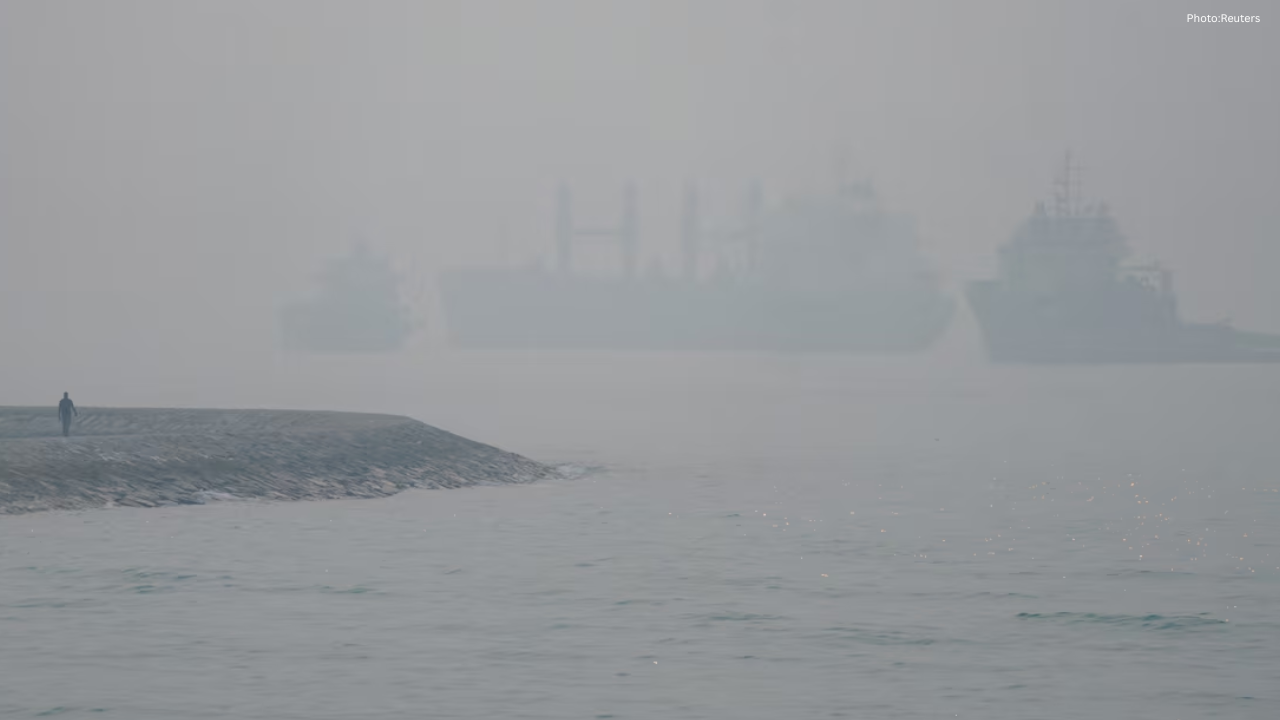
Singapore is preparing to push for stronger regional cooperation against recurring air pollution as it gets ready to assume the chairmanship of the Association of Southeast Asian Nations (ASEAN) in 2027. The country plans to work closely with neighbouring nations to improve the implementation of existing agreements, strengthen cross-border coordination and address the causes of seasonal smoke pollution affecting several parts of Southeast Asia. Singapore's Minister for Sustainability and the Environment, Grace Fu, announced the government's priorities during parliamentary discussions on November 3, 2026, as the region continues to face concerns over transboundary haze. She said Singapore would support discussions among ASEAN members and share its approach towards taking action against companies found responsible for activities contributing to haze pollution. One of the key priorities will be strengthening the regional framework for managing forest fires and smoke pollution. Singapore also intends to ratify an agreement establishing a coordinating centre in Indonesia, which is expected to improve cooperation among participating countries. The announcement comes after Indonesia informed Singapore that it could manage the ongoing situation without assistance from foreign firefighting teams.
A major part of Singapore's proposed strategy involves supporting the establishment of a regional coordinating centre in Indonesia to improve cooperation in managing forest fires and transboundary haze. According to Grace Fu, the centre will become operational under the agreement once at least six ASEAN member states have ratified the arrangement. Singapore plans to submit its formal instrument of ratification within the next few days and will encourage other ASEAN countries to complete the necessary procedures. The proposed centre is intended to strengthen communication and coordination between governments when forest fires occur and smoke spreads across national borders. It could also provide a framework for countries to coordinate responses, exchange information and improve regional preparedness during periods of severe haze. The location of the centre in Indonesia is significant because the country has experienced major forest and land fires that have contributed to regional air pollution in previous years. By improving cooperation through a dedicated regional mechanism, ASEAN members hope to develop a more coordinated approach towards fire prevention and emergency management.
The ASEAN Agreement on Transboundary Haze Pollution is a regional environmental treaty adopted in 2002 to address air pollution caused by fires and land burning that affect neighbouring countries. It is the region's first legally binding agreement specifically designed to tackle transboundary haze. The agreement provides a framework for ASEAN members to cooperate in preventing and monitoring fires, sharing information, improving preparedness and responding to pollution incidents. Its central objective is to reduce the environmental and health consequences of smoke pollution that travels across international borders. Despite the existence of the agreement for more than two decades, haze remains a recurring concern in Southeast Asia. Singapore's latest announcement indicates that the government wants to move beyond simply maintaining the agreement and focus on improving its practical implementation. Malaysia has also recently called for the regional bloc to revisit the agreement and strengthen its effectiveness.
Alongside regional diplomatic efforts, Singapore and Indonesia have taken steps to investigate companies potentially connected to forest fires. On October 27, 2026, the two countries announced the establishment of a joint task force to examine businesses linked to fires that may contribute to transboundary haze. The initiative is intended to strengthen cooperation between the authorities of both countries and improve the handling of investigations involving companies operating across national boundaries. Singapore has also taken steps to examine businesses that may have contributed to environmental pollution. The authorities have reportedly engaged with senior representatives of several companies and sought their cooperation in ongoing investigations. A specialist panel is also being established in Singapore to examine companies that may be connected to transboundary haze incidents. The joint approach reflects the importance of identifying the activities and responsibilities of businesses whose operations may contribute to forest and land fires. For Singapore, cooperation with Indonesia is particularly important because environmental incidents in one country can have consequences for air quality and public health in neighbouring territories.
The latest developments also follow a decision by Indonesia not to accept Singapore's offer of firefighting assistance during the current haze situation. Grace Fu told Parliament that Indonesian authorities informed Singapore on October 19 that they were capable of managing the situation and did not require outside assistance. Singapore had indicated its readiness to provide support if the situation required additional resources. However, Indonesia decided that it could handle the circumstances using its own capabilities. Fu said Singapore respects Indonesia's sovereignty and its assessment of the assistance required. She explained that Singapore remains prepared to help if preventive measures prove insufficient and if support is requested and welcomed by Indonesian authorities. The minister also confirmed that the Singapore government has communicated its position to Indonesian counterparts through discussions at different levels. Her remarks highlighted Singapore's approach of offering regional assistance while recognising the authority of individual ASEAN countries to make decisions regarding their domestic emergency response.
Singapore's incoming ASEAN chairmanship is expected to place greater attention on the role of companies and commercial activities in preventing transboundary haze. Grace Fu said Singapore would share its approach to taking action against companies responsible for pollution-related activities. The government has indicated that it wants stronger implementation of existing environmental commitments rather than relying entirely on emergency responses after fires have already spread. Investigations into companies potentially connected to forest fires are part of this broader approach. The joint task force with Indonesia is expected to support cooperation in examining businesses and improving communication between the two governments. Singapore's approach also involves encouraging companies to cooperate with investigations and addressing activities that may contribute to recurring fires. This is important because forest and land fires can have consequences far beyond the locations where they begin.
Singapore's proposed regional strategy will not be limited to firefighting and investigations. The government also intends to work with ASEAN members on initiatives addressing the underlying causes of haze pollution. These include sustainable land management, responsible peatland management and improved guidelines for crop burning. Peatlands are particularly important because they contain large amounts of organic material that can burn for extended periods when conditions become dry. Fires in peatland areas can produce substantial quantities of smoke and create serious challenges for firefighting teams. Preventing fires in these areas requires long-term planning, monitoring and responsible land-use practices. Sustainable agricultural practices are also important because uncontrolled burning can contribute to pollution and increase the risk of larger fires. By strengthening guidelines and encouraging more responsible land management, ASEAN countries can work towards reducing the likelihood of recurring haze episodes. Singapore believes that addressing these underlying issues is essential to achieving lasting improvements in regional air quality.
Read Also: Djokovic Eyes Strong Season Finish as Health Improves Ahead of Paris Masters
Transboundary haze has remained a major environmental concern in Southeast Asia for many years. During periods of dry weather, fires associated with land clearing, agricultural activities and peatland burning can generate smoke that spreads across national borders. Singapore and neighbouring countries, including Malaysia and Indonesia, have experienced the effects of regional haze at different times. The consequences are not limited to reduced visibility. Prolonged exposure to polluted air can increase respiratory risks, aggravate existing health problems and affect people who are particularly vulnerable, including children, older adults and individuals with respiratory conditions. Haze can also disrupt outdoor activities, tourism, transportation and business operations. When air pollution becomes severe, governments may need to issue health advisories and introduce additional precautions for residents. The recurring nature of the problem has made regional coordination an important part of environmental policy discussions. Singapore's decision to make haze control a priority during its 2027 ASEAN chairmanship reflects the government's intention to strengthen collective efforts rather than rely solely on individual national responses.
Singapore's upcoming ASEAN chairmanship provides an opportunity to place regional environmental cooperation higher on the bloc's agenda. The country plans to use its position to encourage member states to strengthen the implementation of the transboundary haze agreement and support the proposed coordinating centre in Indonesia. Its priorities also include improving cooperation on fire prevention, sustainable land management and corporate accountability. The chairmanship could provide a platform for ASEAN countries to discuss practical measures and identify areas where existing regional commitments need stronger implementation. However, progress will depend on the willingness of member states to cooperate and complete the necessary legal and administrative steps. The proposed regional centre, for example, cannot come into force until the agreement receives ratification from at least six ASEAN members. Singapore's planned ratification is therefore an important step, but wider participation will be necessary to move the initiative forward. The government is expected to encourage other member states to support the process as preparations for the 2027 chairmanship continue.








Djokovic Eyes Strong Season Finish as Health Improves Ahead of Paris Masters
Novak Djokovic reports improved health and performance as he targets a strong Paris Masters finish a

SpaceX in Talks to Buy Boost Mobile or Use Its Network
SpaceX reportedly explores a Boost Mobile deal with EchoStar to expand Starlink Mobile and challenge

Erik ten Hag Warns Manchester United Face Real Relegation Risk
Erik ten Hag warns Manchester United face relegation danger after falling to 17th in the Premier Lea

Auqib Nabi Added to India Squad for First Three New Zealand ODIs
Auqib Nabi replaces injured Prasidh Krishna in India's squad for the first three New Zealand ODIs, s

OpenAI Cuts Funding Target by $10 Billion Amid Tech Stock Selloff
OpenAI reportedly reduces its funding target to $20 billion as tech stocks fall, with investors reas

McCullum Backs Harry Brook Despite England's Pakistan Tri-Series Failure
Brendon McCullum backs Harry Brook after England's Pakistan tri-series exit, praising his tactical s