
You have not yet added any article to your bookmarks!
Join 10k+ people to get notified about new posts, news and tips.
Do not worry we don't spam!
Post by : Rohit Dhiman
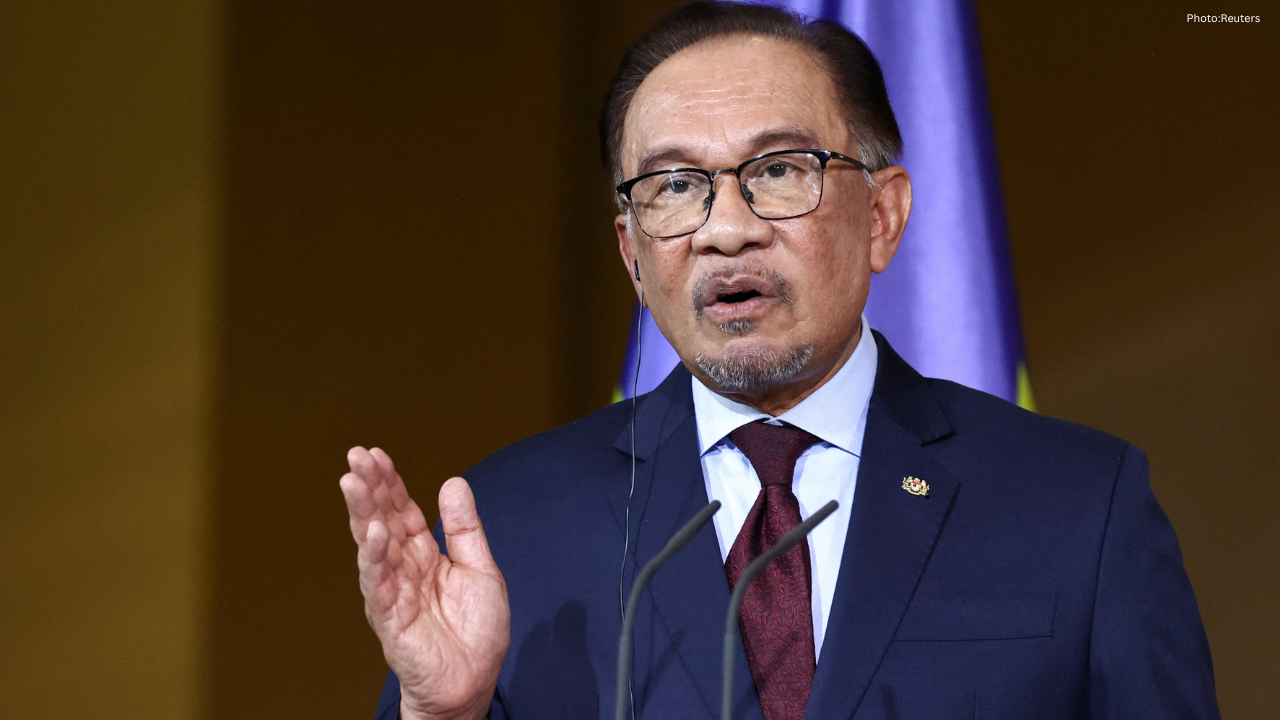
Malaysia has significantly reduced its financial exposure from two abandoned pipeline projects after reaching a loan restructuring agreement with the Export-Import Bank of China, commonly known as Cexim. Prime Minister Anwar Ibrahim said the agreement has brought the country's potential losses down from RM8 billion to approximately RM3 billion, allowing a substantial portion of the outstanding loan financing to be redirected towards a major water supply infrastructure project. The agreement involves repurposing loans originally secured for the cancelled Trans-Sabah Gas Pipeline (TSGP) and multi-product pipeline projects. Instead of continuing to carry the financial burden associated with the abandoned developments, the Malaysian government has arranged for RM5 billion of the financing to support the Northern Perak Water Supply Scheme (NPWSS). Anwar explained that without this arrangement, the government would have remained responsible for repaying the loans associated with the two cancelled projects, resulting in a much higher financial loss. The prime minister said the remaining RM3 billion represents expenses and liabilities associated with the earlier projects, including compensation to contractors for preliminary work and other related costs.
Explaining the financial implications of the agreement, Anwar said Malaysia would have faced losses of around RM8 billion if the government had not secured the arrangement with Cexim. The new agreement has enabled the government to recover or repurpose RM5 billion from the original financing commitments. This means that instead of treating the entire amount as a financial burden connected to projects that are no longer moving forward, the government can use the available financing for another development project. The prime minister clarified that the reduction does not mean all financial obligations have disappeared. Malaysia will still have to account for approximately RM3 billion in expenses associated with the cancelled pipeline developments. These costs include compensation for contractors, preliminary construction activities and other expenditures incurred during the earlier stages of the projects. The arrangement therefore represents a change in how the original financing will be used rather than a complete cancellation of the country's financial responsibilities.
The agreement involves the Export-Import Bank of China, a financial institution owned by the Chinese government that provides financing for international trade, infrastructure and development-related activities. According to Malaysia's Finance Ministry, the loan repurposing agreement was signed on October 30 by Suria Strategic Energy Resources Sdn Bhd and Cexim. Suria Strategic Energy Resources is a company under Ministry of Finance Incorporated (MoF Inc). The agreement provides a framework for redirecting the original loan financing towards the Northern Perak Water Supply Scheme. This arrangement is particularly important because the original financing was linked to projects that had been cancelled after facing controversy and changes in government policy. By restructuring the use of the financing, Malaysia can move forward with a different infrastructure priority without treating the entire original loan amount as an unrecoverable expense. The agreement also highlights the role of financial negotiations in managing liabilities arising from large infrastructure projects.
The financial arrangement is connected to two major infrastructure developments that were originally initiated in 2016. These included the Trans-Sabah Gas Pipeline and a multi-product pipeline project. The projects were intended to form part of Malaysia's energy transportation infrastructure, with the Trans-Sabah Gas Pipeline designed to support the movement of natural gas. However, both developments became subject to political and financial scrutiny. In August 2018, the Pakatan Harapan-led government cancelled the two projects following a review of their implementation and financial arrangements.The cancellation left the government with loan-related obligations despite the projects no longer proceeding as originally planned. The situation became more complicated in 2021 when the administration led by Muhyiddin Yassin revived the Trans-Sabah Gas Pipeline project, which had an estimated value of RM4.06 billion. However, the government led by Anwar Ibrahim subsequently decided to cancel the project again in 2025. The repeated changes in policy meant that Malaysia continued to face financial questions over the original financing, completed preliminary work and contractual commitments. The latest Cexim agreement is intended to address part of that financial burden by redirecting the available loan financing towards a different national infrastructure requirement.
The most significant outcome of the new arrangement is the planned development of the Northern Perak Water Supply Scheme. The project is expected to improve water transportation and supply capacity across northern Perak while also supporting industrial and agricultural requirements. Under the proposed arrangement, raw water will be transferred from Sungai Perak to the Bukit Merah Dam. The development will also include the construction of water treatment facilities in Kamunting and Bogak. These facilities are intended to improve the processing and distribution of water to different areas. The scheme is particularly important for communities and industries that require a dependable water supply to support daily activities and long-term development. By redirecting financing from the cancelled pipeline projects, the government aims to ensure that the original financial commitments can support infrastructure with a different development purpose. The project will involve cooperation with Chinese companies, while the government has indicated that contracts will be awarded through an open tender process. Local contractors will also be eligible to participate in the project.
The Northern Perak Water Supply Scheme has been planned with substantial water distribution targets.
According to the details shared by Anwar, the project aims to provide:
700 million litres of treated water per day to northern Perak.
300 million litres of water per day to Penang.
500 million litres of raw water per day for agricultural irrigation.
These targets demonstrate the wider regional importance of the scheme. Northern Perak is expected to receive a significant share of the water supply, supporting residential communities and industrial development. The proposed allocation for Penang is also important because the state has growing water requirements linked to households, commercial activities and industrial operations. Meanwhile, the allocation for agricultural irrigation is expected to support farming activities and improve access to water for agricultural purposes. The scheme is designed to address several infrastructure requirements through a single major water development programme. However, the stated figures represent the project's planned supply capacity and targets, rather than confirmation that the full distribution system is already operational.
One of the important beneficiaries identified by the government is the Kerian industrial area in northern Perak. Reliable water infrastructure is essential for industrial development because manufacturing facilities and other businesses depend on consistent supplies for production and daily operations. Insufficient water availability can affect industrial expansion, investment decisions and the ability of companies to maintain their operations. The Northern Perak Water Supply Scheme is intended to strengthen the region's infrastructure capacity and support future economic activity. Improved water availability could also help create a more favourable environment for businesses considering investment in the area. For local communities, the project is expected to contribute to broader improvements in water distribution and infrastructure planning. Its importance therefore extends beyond the immediate construction work, as the scheme is intended to support long-term regional development.
Anwar also explained that the Northern Perak water project would be developed in partnership with Chinese companies. However, he clarified that project contracts would be awarded through an open tender process. Local Malaysian contractors are expected to have opportunities to participate in the construction and implementation work. This approach is intended to allow companies to compete for project-related contracts while creating opportunities for domestic businesses. The participation of local contractors could also support employment, technical development and the involvement of Malaysian companies in major infrastructure projects. At the same time, cooperation with Chinese companies is expected to bring investment, expertise and project-related capabilities. The government's approach combines international financial and business cooperation with opportunities for domestic participation. Further details regarding individual contracts, project timelines and participating companies will be important as the scheme moves towards implementation.
The reduction from RM8 billion to RM3 billion is an important financial development, but it is necessary to understand what the remaining amount represents. The RM3 billion figure is associated with costs arising from the original pipeline projects. These include compensation payable to contractors for preliminary work and other related expenses. In other words, the government has not eliminated every financial liability connected to the cancelled developments. Instead, the Cexim arrangement has enabled Malaysia to redirect RM5 billion in financing towards a different infrastructure project. This distinction matters because the agreement changes the purpose of the financing rather than simply erasing the original financial obligations. The government will still need to account for the remaining costs while ensuring that the new water infrastructure project is implemented according to its intended objectives. The financial outcome will also depend on the project's execution, contract management and long-term operating arrangements.
The Cexim agreement has implications beyond the immediate financial position of the two cancelled pipeline projects. First, it provides a way to redirect financing towards a development priority that addresses water requirements in northern Malaysia. Second, the Northern Perak Water Supply Scheme could support industrial activity, particularly in the Kerian region, where reliable infrastructure is important for business expansion. Third, the planned water allocation for Penang could contribute to meeting regional supply requirements. The agricultural allocation is another important component, as reliable irrigation infrastructure can support farming communities and agricultural production. The arrangement also demonstrates how governments can negotiate changes to the use of existing project financing when original development plans are cancelled. However, the success of the agreement will ultimately depend on transparent financial management, effective project implementation and the ability to deliver the planned water supply targets. For Malaysia, the immediate objective is to reduce the financial burden of the abandoned projects while putting the redirected financing towards infrastructure with long-term economic and social benefits.
Read Also: Djokovic Eyes Strong Season Finish as Health Improves Ahead of Paris Masters
The latest agreement places the Northern Perak Water Supply Scheme at the centre of the government's effort to repurpose financing originally linked to the cancelled pipeline projects. The development is expected to require coordination between government agencies, financial institutions, Chinese companies and local contractors. The construction of water treatment plants, raw water transportation facilities and distribution infrastructure will be important components of the programme. The government will also need to ensure that the tendering process remains transparent and that project implementation meets the planned requirements. For residents of northern Perak and businesses in the region, the project's progress will be important in determining when the proposed improvements in water supply become available. The agreement has reduced the reported financial exposure from RM8 billion to RM3 billion, according to Anwar.






Djokovic Eyes Strong Season Finish as Health Improves Ahead of Paris Masters
Novak Djokovic reports improved health and performance as he targets a strong Paris Masters finish a

SpaceX in Talks to Buy Boost Mobile or Use Its Network
SpaceX reportedly explores a Boost Mobile deal with EchoStar to expand Starlink Mobile and challenge

Erik ten Hag Warns Manchester United Face Real Relegation Risk
Erik ten Hag warns Manchester United face relegation danger after falling to 17th in the Premier Lea

Auqib Nabi Added to India Squad for First Three New Zealand ODIs
Auqib Nabi replaces injured Prasidh Krishna in India's squad for the first three New Zealand ODIs, s

OpenAI Cuts Funding Target by $10 Billion Amid Tech Stock Selloff
OpenAI reportedly reduces its funding target to $20 billion as tech stocks fall, with investors reas

McCullum Backs Harry Brook Despite England's Pakistan Tri-Series Failure
Brendon McCullum backs Harry Brook after England's Pakistan tri-series exit, praising his tactical s