You have not yet added any article to your bookmarks!
Join 10k+ people to get notified about new posts, news and tips.
Do not worry we don't spam!

Post by : Anis Farhan
In an era where images and videos dominate how we consume information, seeing was once believing. A photo or a video clip carried an inherent sense of truth — proof that something had truly happened. But with the rise of deepfakes — hyper-realistic videos or voices generated by artificial intelligence — that certainty is evaporating.
Deepfakes use advanced machine learning models, particularly Generative Adversarial Networks (GANs), to superimpose faces, mimic voices, and recreate real people doing or saying things they never did. What was once a Hollywood-level special effect now sits on laptops and smartphones, accessible to anyone with basic coding skills. The implications are staggering — from fake political speeches to celebrity impersonations, misinformation has found its most powerful disguise.
Deepfakes rely on AI models trained with thousands of real images or audio samples. These systems learn to reproduce patterns — facial movements, tone, lighting, and speech — until the final output becomes nearly indistinguishable from genuine footage.
Two neural networks work in tandem: one creates fake content (the generator), and the other checks for flaws (the discriminator). Over time, they refine each other’s performance, producing visuals so convincing that even experts can struggle to detect manipulation.
Originally, this technology was developed for harmless creative pursuits — film dubbing, digital avatars, and entertainment. But like all powerful tools, it has been weaponized. The same algorithms that make digital art possible are now used to spread disinformation, defame individuals, and erode public trust.
The most alarming consequence of deepfakes lies in how they manipulate perception. In the political arena, a fake video of a leader declaring war or making offensive statements could destabilize governments or financial markets overnight. In personal contexts, fabricated explicit content has already been used to harass and blackmail individuals, with devastating psychological effects.
A study by cybersecurity researchers found that nearly 90% of all deepfakes online are pornographic and non-consensual, targeting mostly women. Beyond personal harm, this trend raises urgent questions about consent, privacy, and digital identity.
Even beyond malicious uses, deepfakes have created a deeper, more insidious problem — the liar’s dividend. This occurs when genuine footage can be dismissed as fake simply because the technology exists to fake it. In short, even real evidence can be denied, creating a crisis of credibility.
The spread of misinformation is nothing new, but deepfakes elevate it to an unprecedented scale. During election seasons, fake videos can manipulate public opinion faster than fact-checkers can respond. A single viral clip can influence millions before it’s debunked.
In 2024, several countries reported deepfake-related election interference, where fake videos circulated of politicians endorsing controversial policies or making inflammatory remarks. In an age where social media drives perception, the consequences of even one convincing deepfake can be catastrophic.
For journalists, the stakes are equally high. The traditional tools of verification — timestamps, metadata, eyewitness accounts — are no longer enough. Media outlets now rely on forensic AI tools that analyze visual inconsistencies, but the technology is in a constant race against ever-improving fake generators.
Interestingly, not all deepfake applications are harmful. In the entertainment industry, filmmakers use AI-generated likenesses to de-age actors, recreate historical figures, or bring deceased performers back to the screen. Deepfakes have also revolutionized localization, allowing actors’ lips to sync perfectly across dubbed languages.
Video game developers are experimenting with AI-generated characters that mirror real-world movements and expressions. Musicians are even using voice-synthesis tools to create virtual collaborations between artists who never recorded together.
This duality — innovation versus exploitation — defines the deepfake dilemma. While it opens creative doors, it simultaneously blurs ethical lines, forcing industries to confront questions about consent, ownership, and the authenticity of art itself.
As deepfakes become more sophisticated, tech companies and researchers are developing countermeasures to detect and flag manipulated content. AI-based detection tools can now identify micro-level distortions invisible to the human eye — unnatural blinking patterns, inconsistent lighting, or mismatched shadows.
Social media platforms have also begun implementing policies to remove or label synthetic media. YouTube, Meta, and X (formerly Twitter) have introduced verification mechanisms and watermarking requirements for AI-generated content. However, enforcement remains inconsistent, especially as fake videos spread across decentralized networks and encrypted messaging apps.
In the long run, experts argue that technology alone cannot solve the deepfake crisis. Education and awareness are equally crucial. A digitally literate public that questions what it sees and seeks verified sources may be the strongest defense against manipulation.
The psychological implications of deepfakes go beyond misinformation. The human brain is wired to trust visual input. When that foundation is shaken, it breeds skepticism and confusion. People begin to doubt not only media but each other.
This erosion of trust has societal consequences. Relationships, reputations, and institutions can all suffer when truth itself becomes negotiable. The result is what some psychologists call “truth decay” — a gradual breakdown of shared reality, where facts lose their collective meaning.
For victims of deepfake harassment, the emotional toll can be devastating. Being digitally cloned, especially in compromising contexts, can lead to severe anxiety, depression, and isolation. As cases rise globally, lawmakers are racing to address the gap between technology and regulation.
Legislation around deepfakes remains fragmented. Some countries, like the United States and the United Kingdom, have introduced laws penalizing the malicious use of synthetic media, particularly in cases involving defamation or explicit content.
However, regulating deepfakes raises complex ethical dilemmas. Where does free expression end and deception begin? Should artists using AI for satire or parody be restricted under the same laws that target misinformation?
Experts warn that overly broad regulation could stifle innovation, while weak policies could embolden misuse. Achieving a balance between creative freedom and accountability is one of the great policy challenges of the coming decade.
As deepfake technology continues to evolve, humanity faces a fundamental question: in a world where anything can be faked, how do we decide what’s real? The answer lies not only in better algorithms but in rebuilding trust — in institutions, journalism, and human judgment.
Media organizations are adopting blockchain-based verification systems to certify the authenticity of videos. Governments are investing in digital forensics units to track synthetic content. But ultimately, the power lies with individuals — to pause, verify, and think critically before sharing.
In the long run, the deepfake era might not destroy truth entirely — it may redefine it. Humanity will learn to rely less on appearances and more on credible sources, transparency, and discernment. Perhaps, paradoxically, the age of deception will lead us to a deeper form of digital honesty.
This article aims to provide an overview of the growing influence of deepfake technology and its implications for society, media, and governance. It is intended for informational purposes and does not serve as legal or professional advice.




G7 to Hold AI Cybersecurity Exercises to Protect Financial Systems
G7 finance leaders will conduct AI cybersecurity exercises to prepare for cyber attacks and protect

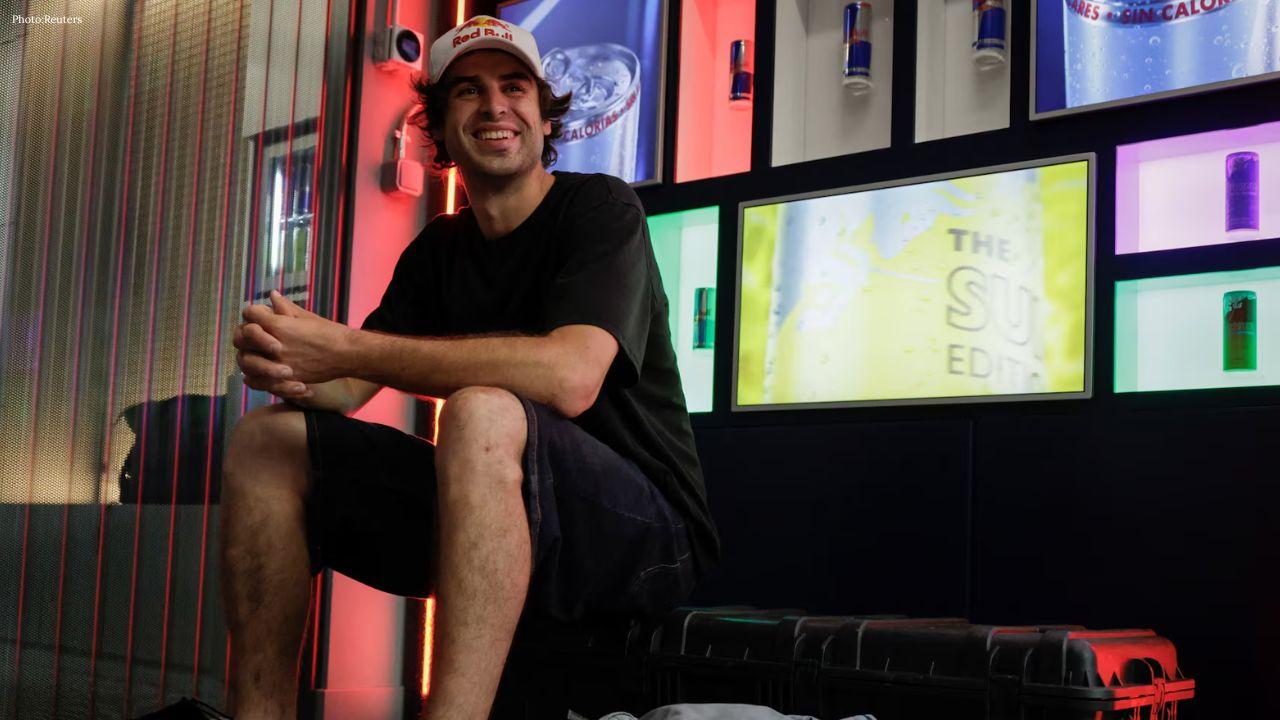
Spain's Diego Poncelet Sets Skateboarding World Speed Record
Spain's Diego Poncelet reaches 151.83 km/h in a record-breaking downhill skateboard run in Canada, s

Hyundai Recalls 94,622 US Vehicles Over Potential Fire Risk
Hyundai recalls 94,622 US vehicles over overheating seat motors. Check affected Genesis models, fire
Nvidia Pledges $250 Million for UK AI Safety Research
Nvidia will provide $250 million in computing resources over five years to support AI safety researc

Jacob Bethell Returns as England Name Squads for Australia Tour
England name ODI and T20 squads for the Australia tour, with Jacob Bethell returning from injury and

Beauden Barrett Opens Up About Mental Struggles During All Blacks Exile
Beauden Barrett discusses his confidence struggles after missing six tests, his return against Austr